

 Phoenix 24
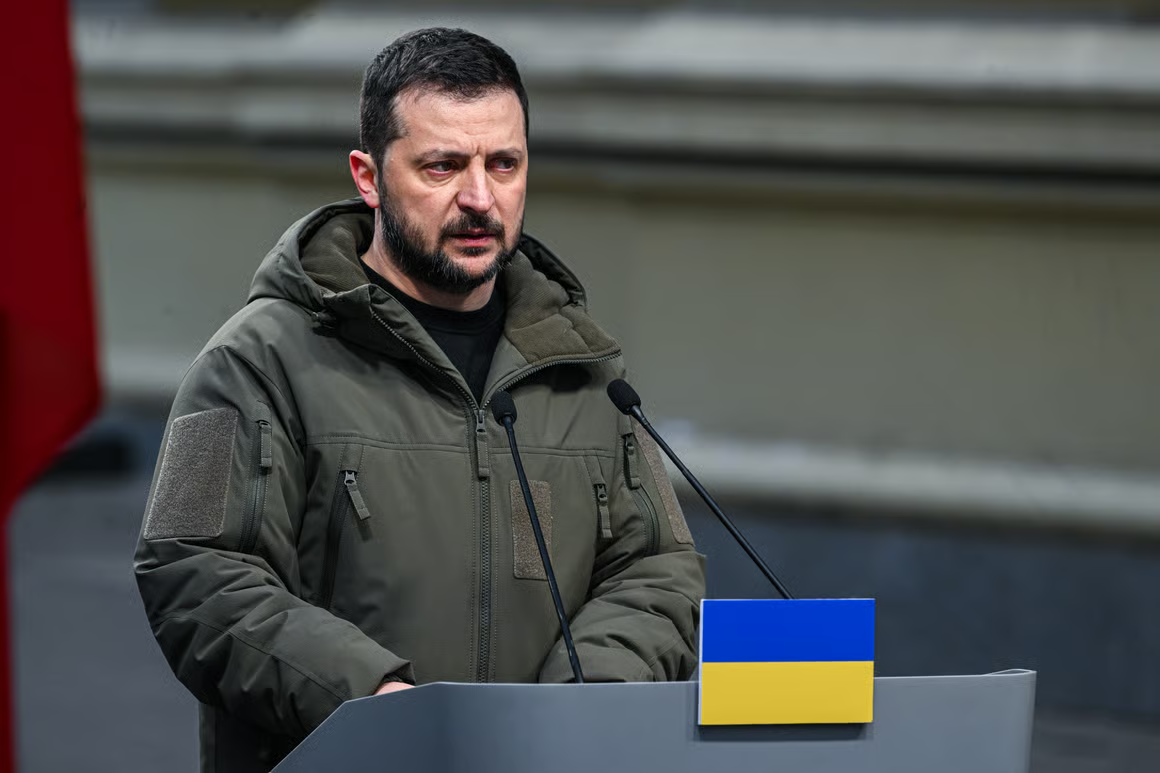
At the negotiating table, stepping back from a slogan can be as strategic as defending it.
Berlin, December 2025.
The talks held in Berlin have introduced a significant shift in Ukraine’s diplomatic posture. President Volodymyr Zelensky has indicated that his government may be willing not to treat NATO membership as an immediate, non negotiable demand within a broader negotiation framework, provided that Ukraine receives solid and verifiable security guarantees. The message, carefully calibrated, marks a change in tone in a conflict where symbols have often carried as much weight as concrete commitments.
Since the start of the war, Ukraine’s accession to the Atlantic Alliance has been presented both as a long term strategic objective and as a red line for Moscow. In this context, the openness shown in Berlin does not amount to a definitive abandonment of that goal, but rather a reordering of priorities. The focus shifts from formal membership toward practical protection mechanisms capable of delivering immediate security and credible deterrence against future aggression.

European diplomatic sources interpret this move as an attempt to unlock negotiations that have repeatedly stalled due to the lack of consensus within the Western bloc itself. While support for Kyiv remains strong, there is no unified position on the timing or conditions for NATO enlargement while active hostilities continue. Zelensky’s position acknowledges that reality and seeks to build common ground where bilateral and multilateral guarantees can temporarily replace the contentious issue of accession.
The concept of security guarantees discussed in Berlin is not abstract. It encompasses commitments to military assistance, strategic cooperation and political backing that, while stopping short of automatic collective defense, would function as a powerful deterrent. For Ukraine, the central concern is that such guarantees move beyond general declarations and translate into operational mechanisms with real response capacity.
This shift comes at a particularly sensitive moment. Russian strikes against critical infrastructure persist, and pressure on Ukraine’s energy system continues to impose heavy social and economic costs. In this environment, the urgency of strengthening security weighs as heavily as the need to avoid prolonged diplomatic deadlock. Berlin thus becomes a testing ground for formulas that balance strategic firmness with political feasibility.
Security analysts note that Zelensky’s maneuver also carries a communicational dimension. By signaling flexibility, Ukraine reinforces its image as an actor willing to explore pragmatic solutions without abandoning core principles. This narrative contrasts with portrayals of rigidity often advanced by Moscow and aims to consolidate international support at a time when signs of conflict fatigue are emerging in some Western capitals.
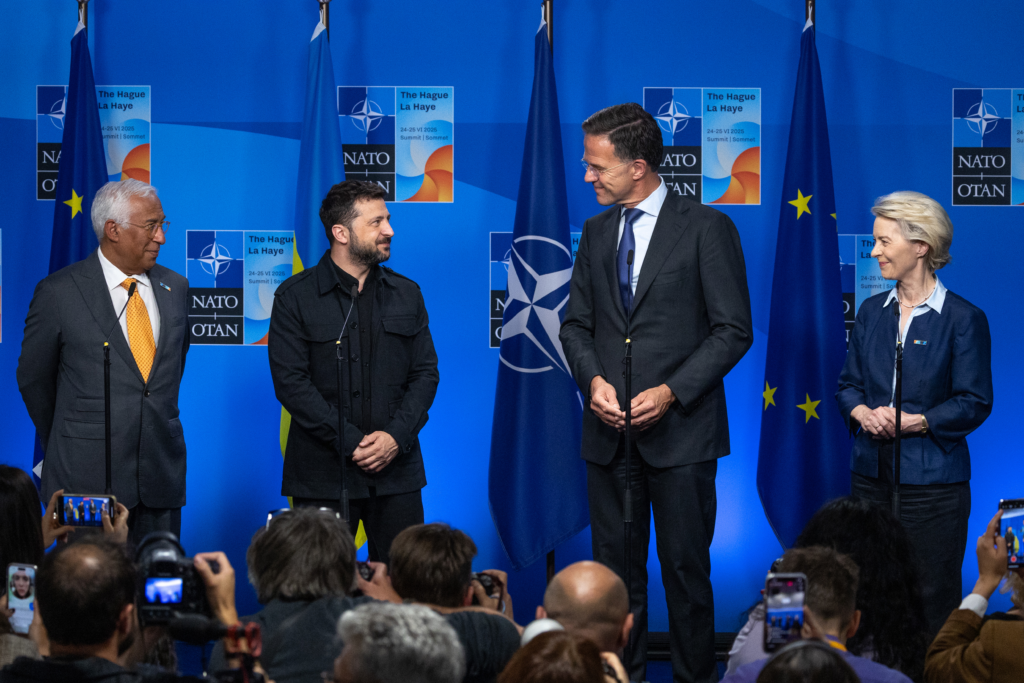
Within Ukraine, the approach is not without tension. Full NATO membership remains widely viewed as a guarantee of sovereignty and integration into the Euro Atlantic space. Yet the protracted nature of the war has imposed a logic of immediate survival, pushing interim solutions to the forefront even if they fall short of long held aspirations.
The Berlin talks do not close the debate, but they reshape it. What is taking form is less a renunciation than a layered strategy, in which security is built through gradual and cumulative commitments. The final outcome will depend on the ability of allies to offer credible guarantees and on how the military and political balance evolves in the months ahead.
On this recalibrated board, nuance matters. And sometimes, yielding on form becomes a way to protect the substance.
Against propaganda, memory.
Against propaganda, memory.