

 Phoenix 24
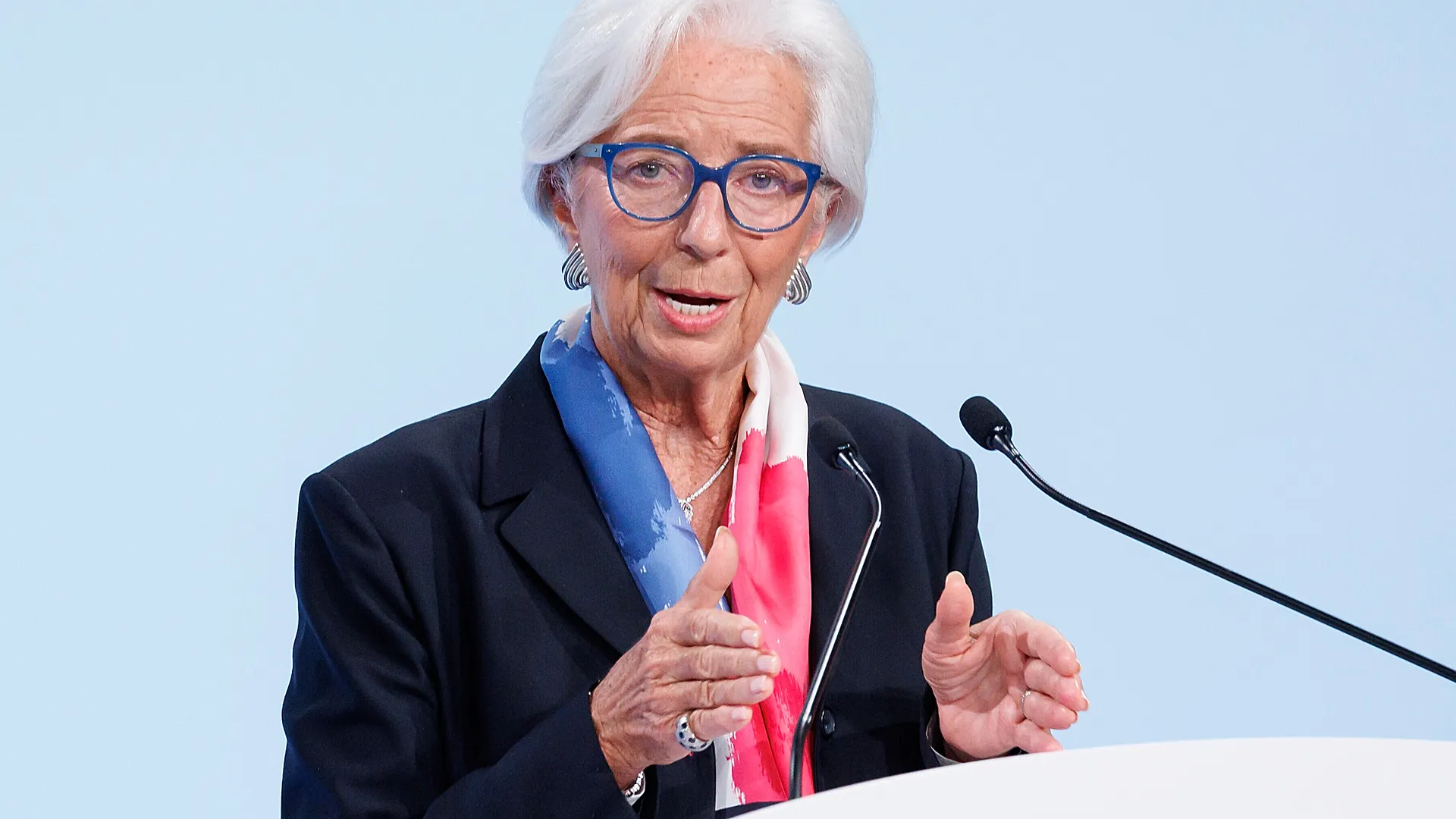
The alarm sounded in Brussels did not echo like a routine policy message but as a warning about the continent’s structural fragilities.
Brussels, December 2025.
Christine Lagarde, president of the European Central Bank, issued one of her starkest assessments to date of Europe’s economic trajectory, arguing that the Union’s internal fragmentation now represents a strategic liability with long term consequences. Her remarks, delivered before a closed gathering of policymakers and advisers, portrayed a region constrained by regulatory disunity, uneven capital markets and barriers that hinder the movement of goods, services and investment. These constraints, she emphasized, are not abstract inefficiencies but embedded weaknesses capable of eroding Europe’s competitiveness in a multipolar global economy dominated by technological acceleration and geopolitical rivalry.
Analysts indirectly referenced by the Financial Times noted that Lagarde’s intervention signaled a shift from traditional calls for coordination toward an urgent plea for institutional consolidation. She highlighted that Europe’s current growth model remains vulnerable to external shocks because it relies on fragmented decision making across member states. In her view, the continent risks falling behind global peers whose integrated financial structures allow faster capital deployment and more adaptive industrial policies. This concern has been shared by economic researchers cited by the OECD, who warn that Europe’s productivity gap continues to widen, particularly in sectors tied to digital innovation and advanced manufacturing.
From the perspective of global finance, Reuters has echoed similar concerns raised by European investment groups arguing that divergent regulations across the Union impose costly delays on cross border expansion. These obstacles also discourage long term investors who view regulatory uncertainty as incompatible with the scale of capital required for energy transition, digital infrastructure and defense modernization. Lagarde urged leaders to complete long pending reforms of the banking and capital markets unions to facilitate liquidity, strengthen resilience and ensure more competitive financing conditions for European enterprises.
Security and geopolitical observers from the Lowy Institute added that Europe’s economic stagnation carries implications beyond growth figures. A fragmented market leaves the continent more dependent on external suppliers for critical technologies and strategic resources, increasing exposure to political leverage from rival powers. Lagarde warned that without deeper economic integration, Europe’s ability to negotiate, deter and safeguard its strategic interests will inevitably weaken. In her assessment, economic cohesion and geopolitical autonomy are inseparable in the emerging global order.
Despite her sober tone, Lagarde acknowledged signs of resilience. Employment across the euro area remains stable, and consumption indicators have held steady despite inflationary pressures earlier in the decade. These developments, she suggested, provide a window of opportunity for reforms before temporary stability hardens into structural stagnation. European analysts cited by the Jacques Delors Institute agree that decisive reforms would allow the Union to capitalize on its technological potential and demographic diversity, but only if member states can overcome domestic political constraints that have repeatedly stalled integration.
The president’s remarks arrived at a moment when several governments face electoral cycles that limit appetite for risk. Yet Lagarde pressed that failure to act now could transform Europe’s current vulnerabilities into a generational setback. She outlined how delays in harmonizing energy policy, capital allocation and digital regulation contribute to an uneven economic landscape where innovation clusters flourish in isolation instead of reinforcing each other across borders. This imbalance, she warned, weakens the continent at a time when rapid technological shifts require scale, coordination and clear strategic direction.
As the meeting concluded, the message resonated among participants who recognized that Europe stands at a decisive juncture. The challenge ahead is not merely technical but political: whether member states can commit to a shared economic vision strong enough to withstand demographic pressures, global competition and technological upheaval. Lagarde’s appeal positioned the debate not as an optional reform agenda but as a necessary step for ensuring Europe’s relevance and resilience in a rapidly changing world.
Phoenix24: analysis that transcends power. / Phoenix24: análisis que trasciende al poder.