

 Phoenix 24
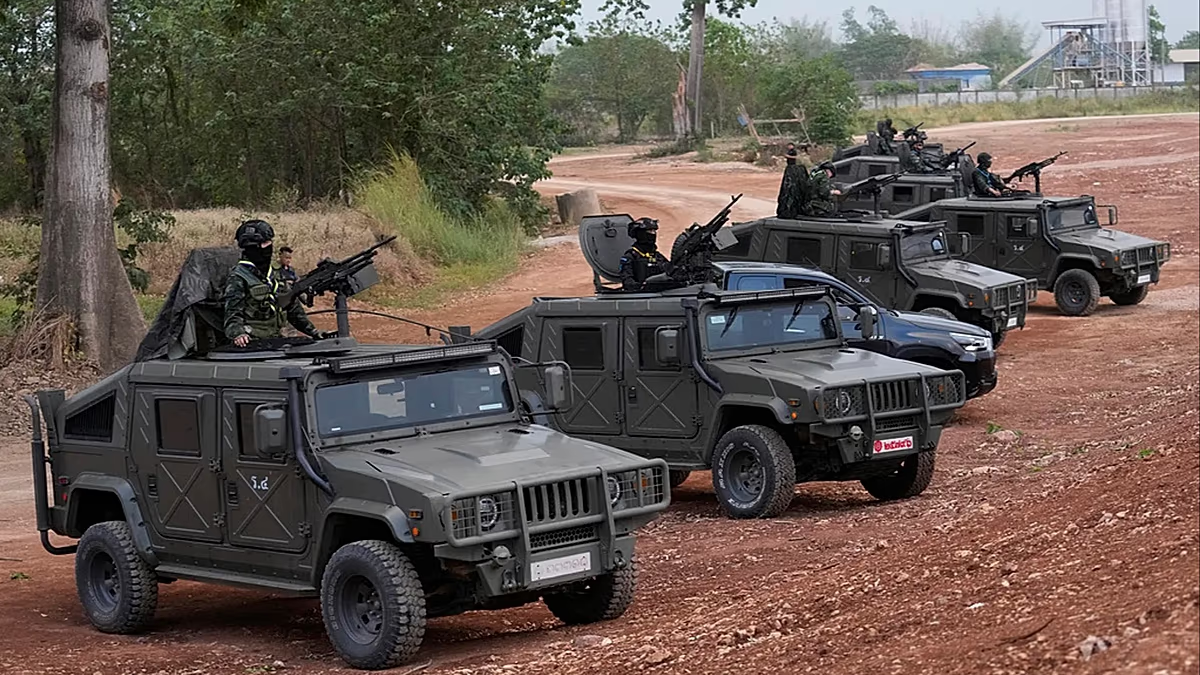
A ceasefire meant to cool one of Southeast Asia’s most sensitive frontiers has dissolved under the weight of renewed artillery fire.
Bangkok, December 2025.
The fragile calm negotiated earlier this year between Thailand and Cambodia unraveled as violent clashes erupted along contested sections of their shared border, leaving at least thirteen people dead and forcing thousands to flee. Local authorities confirmed that the fighting, which began with an exchange of heavy weapons, rapidly intensified when military units on both sides deployed artillery and armored vehicles into an area historically marked by territorial disputes and nationalist tensions. The sudden escalation revived fears across diplomatic channels about a conflict whose roots extend decades into unresolved boundary claims.
According to regional analysts indirectly referenced by Reuters, the confrontation began after Cambodian forces accused Thailand of advancing into a restricted zone, an assertion denied by Thai military officials who argued they were responding to provocations. Civilian casualties were reported quickly, with Cambodian provincial authorities noting extensive damage in communities close to the frontier. On the Thai side, military spokespeople acknowledged that several soldiers had been killed in the early exchanges, underscoring the scale of combat and the breakdown of communication between the two governments.
European observers cited by the Jacques Delors Institute have long warned that border frictions between both nations tend to intensify when political or economic pressures spike domestically. The current confrontation appears to follow that pattern, with internal dynamics in both Bangkok and Phnom Penh influencing the posture of their respective militaries. Analysts also pointed to the longstanding dispute surrounding culturally significant sites near the frontier, where overlapping historical claims have often acted as catalysts for nationalist rhetoric.
Security specialists from CSIS noted that the collapse of the ceasefire places additional strain on a region already contending with maritime tensions and shifting defense alignments among Southeast Asian states. The renewed fighting complicates ongoing confidence building measures promoted through regional forums, raising concerns about potential miscalculations that could draw in external actors or destabilize trade corridors essential to the area’s economic resilience. Furthermore, the sudden displacement of civilians has added a humanitarian burden to border provinces ill equipped to manage large scale evacuations under sustained artillery fire.
From a human rights perspective, organizations referenced by Al Jazeera highlighted the vulnerability of displaced families, many of whom fled with minimal belongings and found temporary shelter in schools and makeshift camps. Aid workers reported challenges reaching affected zones because of active combat and unexploded ordnance. The risk of further displacement remains high, particularly if weather conditions worsen or if communication lines remain disrupted.
Despite international calls for restraint, official statements from both governments signaled determination rather than de escalation. Thai authorities emphasized the need to defend national sovereignty, while Cambodian leaders condemned what they described as disproportionate military responses across the border. Diplomatic contacts between the two countries remained sporadic throughout the day, prompting renewed appeals from regional partners to revive negotiation channels before casualties mount.
Experts from the Lowy Institute observed that conflicts of this nature tend to harden public sentiment, narrowing political space for compromise. As national broadcasters in both countries covered the events with heightened rhetoric, the possibility of an immediate breakthrough appeared remote. The cultural and historical layers that underpin the dispute complicate traditional mediation frameworks, particularly when national identity narratives are invoked in moments of tension.
As night settled over the border, artillery fire continued sporadically, and thousands of evacuees prepared for another uncertain day. The collapse of the truce not only revived long standing fears in rural communities but also signaled the fragility of regional stability. What began as a localized exchange now threatens to become a broader test of diplomatic resolve and crisis management in Southeast Asia.
Phoenix24: the visible and the hidden, in context. / Phoenix24: lo visible y lo oculto, en contexto.