

 Phoenix 24

A single announcement was enough to shake confidence in the established hierarchy of artificial intelligence.
San Francisco, November 2025
Anthropic has unveiled Opus 4.5, a model the company describes as its most stable, capable and strategically important system to date. The stated ambition is clear: redefine expectations in reasoning, coding and long sequence planning. The message resonated worldwide because of a single implication threaded through every statement from the company: Opus 4.5 is designed to surpass the performance benchmarks that until now have shaped the narrative around leading GPT models.
Technical analysts in North America, where enterprise adoption sets the pace of global AI deployment, observe that Opus 4.5 excels in multi step coding tasks once considered exclusive territory of dominant GPT architectures. Early testers report improved accuracy in deep reasoning problems and lower rates of inconsistency during extended problem solving sessions. In Europe, research institutes studying algorithmic reliability highlight that the model maintains coherence across long contexts, a domain where even top tier systems can drift. Observers in East Asia, where agentic AI research is rapidly expanding, argue that this release signals a new phase in the arms race for models capable of autonomous task execution.
Anthropic has framed Opus 4.5 as an evolution in architecture rather than a mere expansion in size. The company positions the model as more predictable under stress, more transparent in intermediate reasoning stages and more efficient in computational usage. The emphasis on stability reflects a shift in the industry away from raw scaling and toward applied intelligence capable of handling environments that demand precision and resilience. Yet specialists caution that measured claims must undergo rigorous validation outside curated test environments.
Strategically, the announcement lands at a sensitive moment. Enterprises across multiple continents have grown wary of depending on a single ecosystem. The promise of Opus 4.5 introduces competitive pressure in markets where GPT based solutions dominate by default. Latin American analysts focusing on digital policy suggest that the emergence of a credible alternative could accelerate diversification in public sector deployments. Meanwhile, African research groups examining digital governance stress that superiority in benchmarks must be accompanied by demonstrable safeguards against systemic risks.
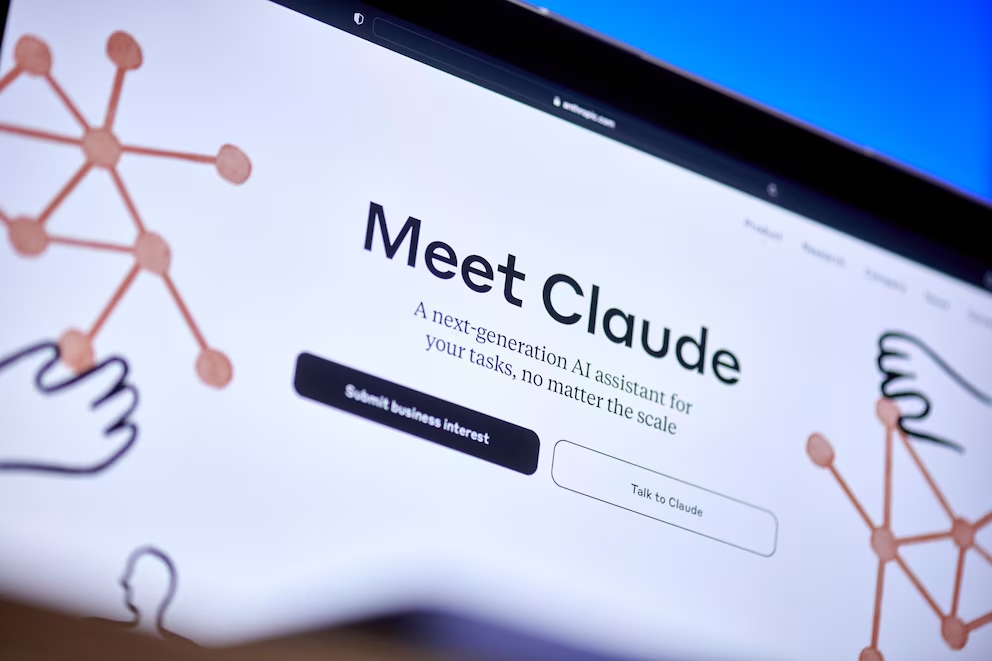
Opus 4.5 has also been framed as a model suited for autonomous agents. According to developers testing the system in private pilots, the model can plan tasks, evaluate its own steps and adjust procedures with reduced human supervision. This capability has attracted attention in logistics, data analysis and cybersecurity, sectors where multi stage workflows determine operational efficiency. Experts in Europe note that autonomy alone is insufficient; the model must prove that it can navigate ambiguity without inventing information or compromising decision quality.
The broader geopolitical context cannot be ignored. The contest among leading AI firms has become a proxy battle for influence over digital ecosystems. Nations evaluating long term technological partnerships view the ability to access multiple high performing models as essential to avoiding dependence on a single regulatory or commercial center. Institutions in Asia studying technological sovereignty signal that Opus 4.5’s release may shift procurement strategies in countries seeking to reduce concentration risk.
Still, a fundamental question persists: can Opus 4.5 outperform GPT models outside controlled testing. Benchmark claims provide momentum, but enterprises judge success through durability, adaptability and cost efficiency. The long term viability of the model will depend on its behavior at scale: how it handles noisy data, how it manages task drift and how it maintains operational integrity under sustained load.
Anthropic appears ready for that scrutiny. By foregrounding reliability, the company is positioning itself not merely as a competitor but as an architect of a different AI philosophy: one defined by structured reasoning, conservative autonomy and emphasis on predictable outcomes. If Opus 4.5 performs as promised, the model could shift the center of gravity in an industry that rewards consistency as much as innovation.
For now, the only certainty is that the AI landscape has entered a new chapter. The release of Opus 4.5 signals that breakthroughs will increasingly be measured not by scale alone but by the trust users place in the systems they adopt.
Phoenix24: clarity in the grey zone. / Phoenix24: claridad en la zona gris.