

 Phoenix 24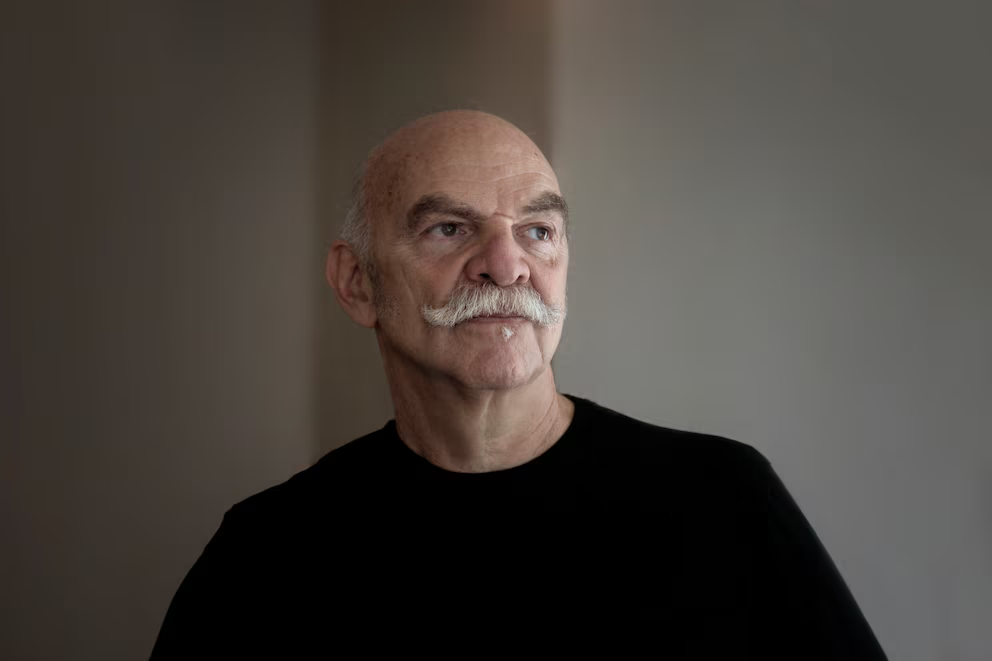
Sometimes the most dangerous idea is the simplest one: nothing has meaning until we decide it does.
Buenos Aires, November 2025
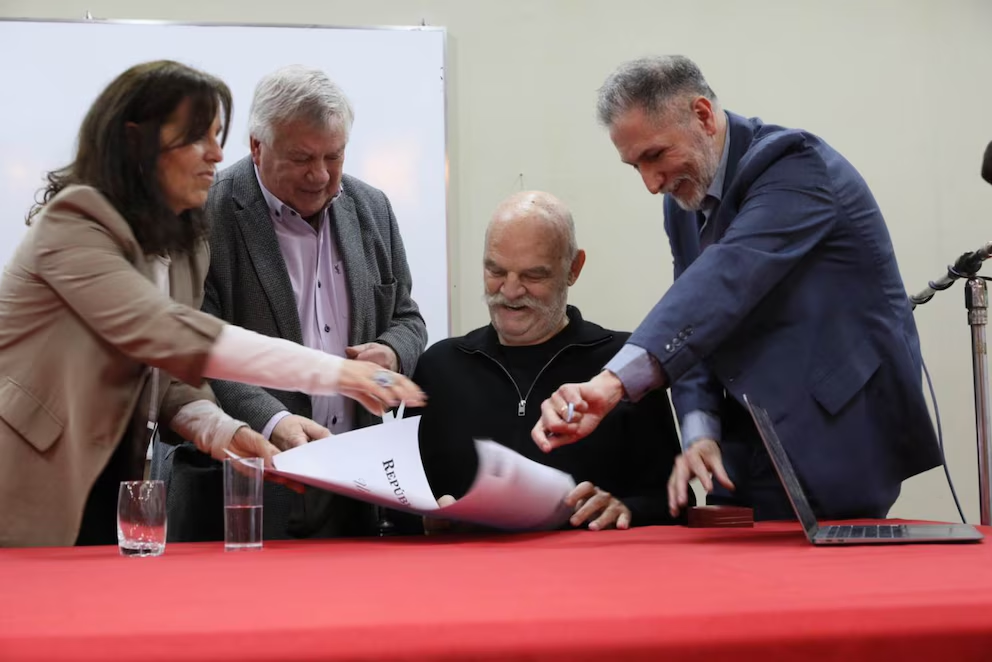
During a public conversation surrounding his newest book, the Argentine writer and journalist Martín Caparrós articulated a thesis that makes people shift in their seats. Humans do not believe because a cosmic order exists. Humans invent religions because they cannot endure the possibility that there is none. In his words religion is a narrative architecture built to tolerate the idea of chaos. Without myth there would be vertigo. Without structure there would be fear.
Caparrós argues that the need for metaphysical order is less spiritual than strategic. When life feels unpredictable religion appears as a technology of comfort. A way to label uncertainty. A method to erase randomness. For him the doctrine is not the point. The point is calm. The belief that someone knows what we do not. Someone sees what we cannot.
He rejects the notion that chaos is a problem to be combated. He suggests that chaos is simply the state of things. The universe does not owe us coherence. Reality does not apologize for being random. Humans ask for meaning but the world answers with accident. Fate and destiny are narrative tools. The idea that events happen for a reason is not a truth but a sedative.
Where others see transcendence he sees an attempt to discipline fear. Religions offer order and promise purpose. They draw lines where there are none. They say that suffering has a reason that loss has a lesson that injustice has a plan. Caparrós dismantles that logic. Suffering may have no meaning. Loss may be just loss. Injustice may be only the consequence of power.
His position does not reject spirituality. It rejects certainty. To assume that a cosmic will regulates events deprives human action of responsibility. If everything is predetermined then nothing can be changed. If everything is chance then everything is possible. Caparrós pushes the discomfort to its logical edge. Freedom is frightening because freedom implies that there is no script.
In European literary circles his stance is read as secular existentialism. In North America critics link it to the tradition of writers who distrust institutions of control. In Asia readers interpret his ideas as a challenge to collective narratives that seek harmony at the cost of individuality. Three regions different angles one common thread. The fear of randomness shapes civilizations.
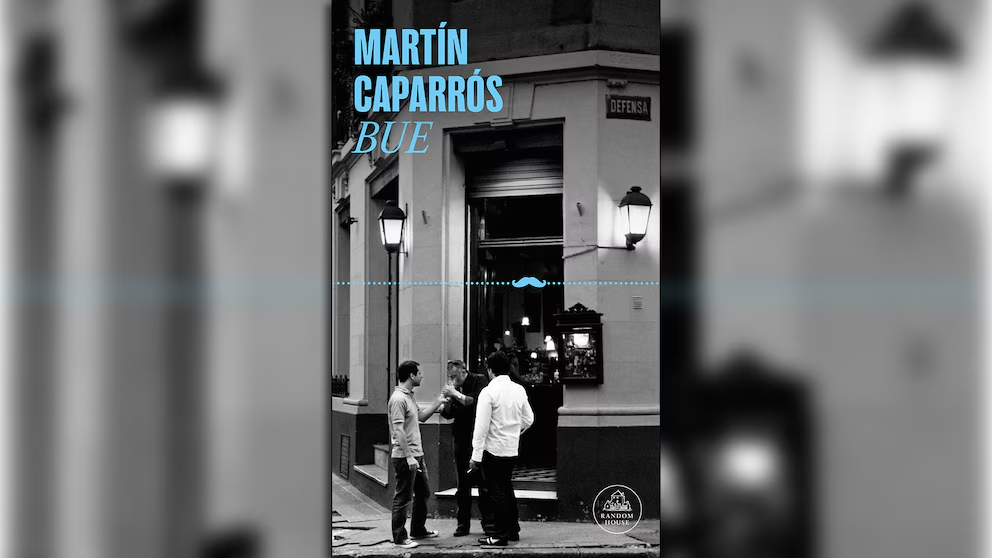
When Caparrós writes he does not try to offer answers. He exposes the scaffolding. He reveals the device. He invites the reader to observe the mechanism by which we invent meaning to endure the abyss. His books return constantly to the same idea. Stories are not decorations. Stories are survival.
The reaction to his argument reveals its power. Some reject it as nihilism. Others embrace it as liberation. If everything is chance then humans are the ones who decide. Purpose is constructed not imposed. Meaning is chosen not inherited. Order is not discovered. Order is designed.
Caparrós leaves his audiences with a suspicion. Maybe chaos is not the enemy. Maybe chaos is freedom disguised as terror. Maybe accepting randomness is the first act of sovereignty.
Narrative is power too.
La narrativa también es poder.