

 Phoenix 24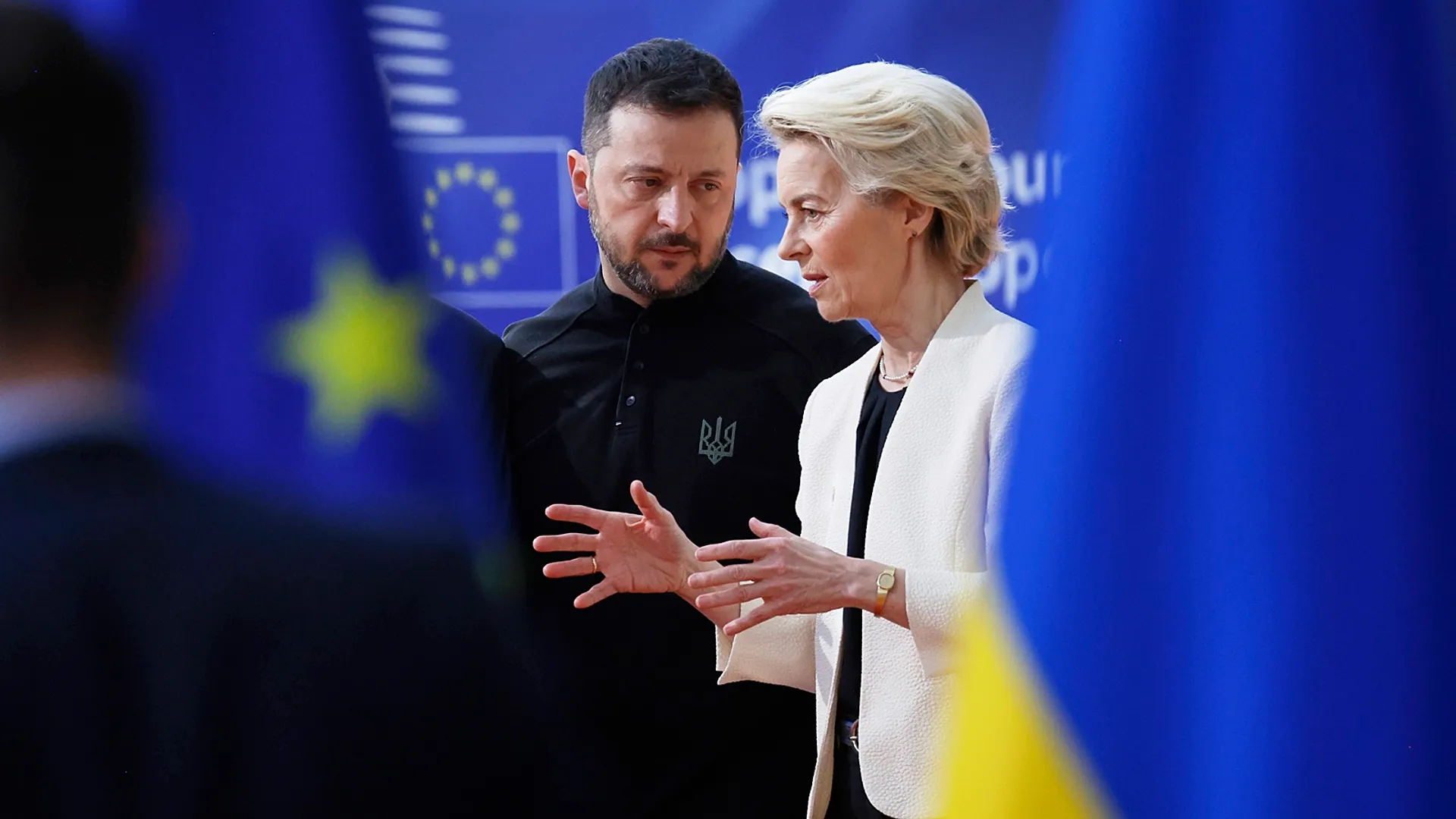
Every strategy begins with a doubt, and Europe’s newest uncertainty is financial.
Brussels, November 2025.
As the war in Ukraine grinds into another winter, the European Union finds itself wrestling not with diplomacy or defense, but with arithmetic. The plan to create a large-scale reparations loan for Kyiv—using frozen Russian assets as collateral—has stalled amid legal obstacles and political hesitation. In the corridors of Brussels, new ideas circulate with the quiet urgency of necessity: alternative financial architectures that could sustain Ukraine without fracturing the Union’s legal or moral fabric.
At the heart of the debate lies a single question: who pays for endurance? European officials have long promised that Russia will “foot the bill,” yet transforming that principle into enforceable policy has proven far more complex than slogans allow. Lawyers for the European Commission warn that seizing Russian state funds outright could violate international immunity norms. Instead, the bloc has floated the concept of borrowing against future interest income from frozen assets—a financial sleight of hand designed to balance legality with resolve.
But as negotiations drag on, patience frays. Nordic governments push for faster mechanisms, citing security imperatives. Southern states, cautious after years of austerity, urge prudence. In Berlin, fiscal conservatives fear creating precedents that might one day be turned inward, while in Warsaw and Vilnius officials argue that hesitation costs lives. The debate has thus become a mirror of Europe itself—diverse, democratic, and divided by design.
Economists at the Peterson Institute in Washington describe the EU’s dilemma as “a race between bureaucracy and destruction.” Across the Atlantic, U.S. Treasury officials privately express concern that European indecision could erode the credibility of Western sanctions. Meanwhile, analysts in Tokyo’s policy circles note that the EU’s approach will likely serve as a template for future conflicts, shaping how global powers handle frozen assets in prolonged wars. The stakes, therefore, reach far beyond Kyiv.
For Ukraine, the consequences are immediate. Reconstruction needs have surpassed six hundred billion euros, according to multilateral estimates. Infrastructure damage accumulates faster than aid packages are disbursed. Each delay in Brussels reverberates in Ukrainian towns where bridges remain collapsed and hospitals operate under blackout conditions. Diplomats describe the country’s morale as resilient yet strained—a paradox familiar to nations fighting with borrowed time.
The European Commission’s president has urged member states to finalize a compromise before year-end. One emerging plan involves issuing Eurobonds backed by collective guarantees, bypassing the legal constraints tied to confiscated assets. Another proposes a joint fund administered through the European Investment Bank, blending grants, loans, and private capital. Critics warn that such complexity risks creating more committees than results, but supporters counter that innovation is Europe’s only viable weapon in a long war of attrition.
Political fatigue also shadows the discussion. In several capitals, elections loom, and public opinion shows signs of war weariness. Analysts at the London School of Economics caution that economic solidarity can fracture when inflation and energy prices resurface as domestic priorities. The challenge, they argue, is psychological as much as fiscal: how to persuade voters that funding Ukraine remains part of Europe’s own defense.
Beyond policy circles, the ethical dimension intensifies. Legal scholars in Geneva and Seoul remind that reparations are not mere punishment but instruments of restoration, a principle rooted in postwar justice since 1945. Using frozen assets to rebuild Ukraine would signal continuity with that legacy; failing to do so, critics claim, would expose Western double standards. Within the United Nations system, quiet discussions already explore the creation of a permanent Reparations Trust, modeled after humanitarian funds used for conflict recovery in the Balkans and Iraq.
In Brussels, the atmosphere oscillates between fatigue and conviction. Officials step out of closed-door meetings clutching documents annotated in multiple languages, symbols of a bureaucracy that both constrains and preserves. Some speak of “financial engineering as deterrence,” others of moral mathematics. All know that time, like money, is running short.
If consensus emerges, the decision will redefine not only how Europe manages this war, but how it prepares for the next. The mechanism chosen—be it bond, trust, or fund—will mark the birth of a new doctrine: that aggression carries a price, and that payment can be structured.
For now, the equation remains open, suspended between law and necessity, ethics and exhaustion. In that tension, the future of Europe’s credibility quietly waits.
Beyond the news, the pattern. / Más allá de la noticia, el patrón.