

 Phoenix 24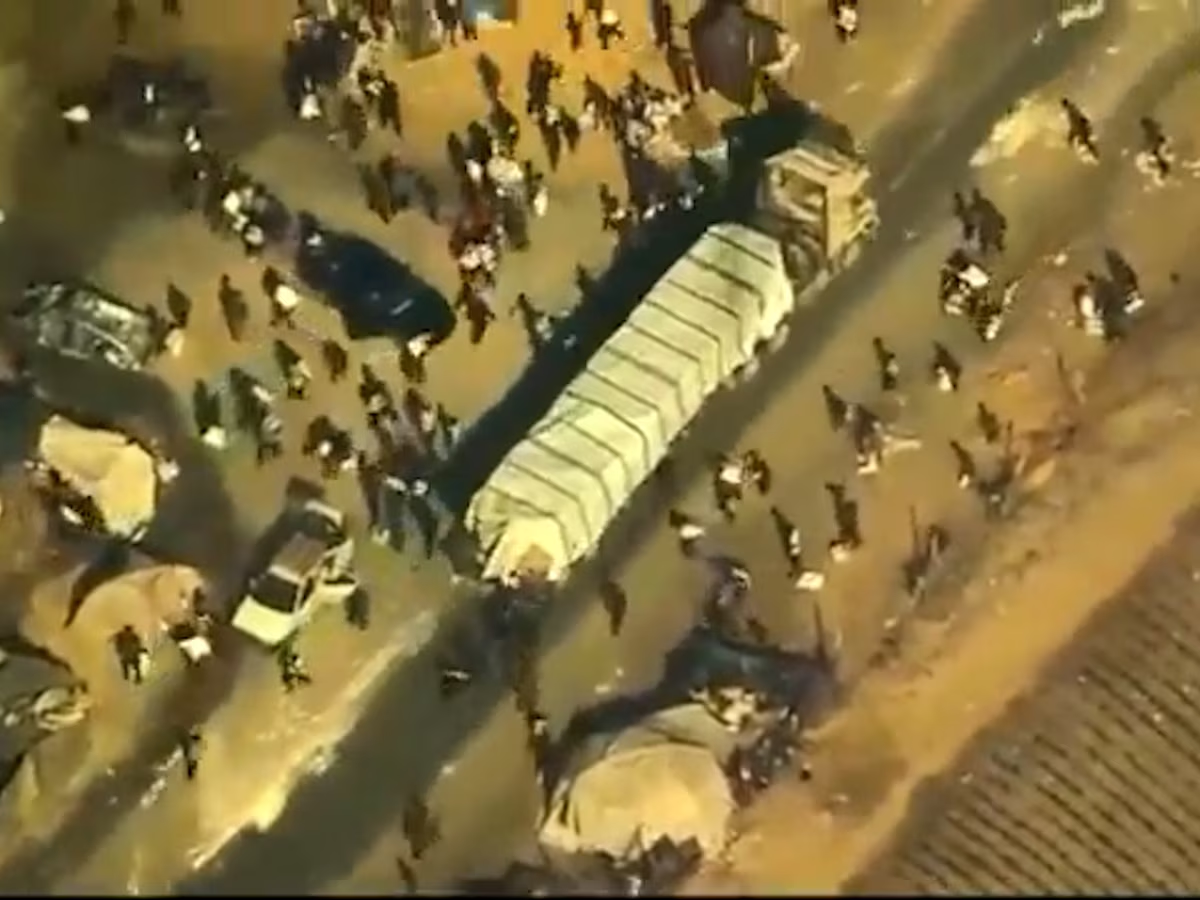
When technology becomes the only witness, truth turns into strategy.
Washington D.C., November 2025.
A U.S. reconnaissance drone operating over the Gaza corridor has reportedly captured images showing an armed group intercepting a humanitarian convoy near a designated relief zone. The footage, released through defense sources under controlled declassification, has reignited debate about the weaponization of aid routes and the fragility of humanitarian logistics in conflict zones.
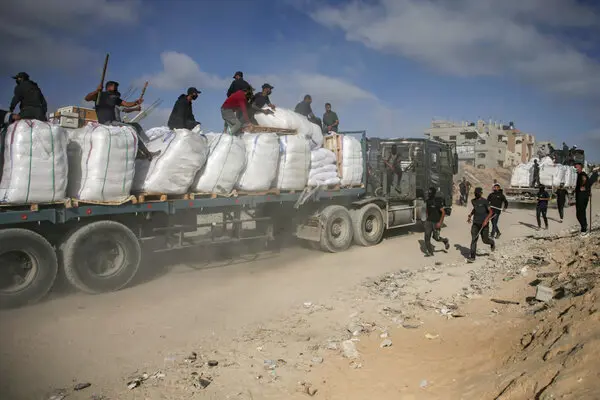
According to preliminary intelligence summaries, the aircraft was conducting a routine monitoring flight under an international coordination mandate when it recorded a group of militants commandeering a truck loaded with food and medical supplies. The incident occurred within a restricted area meant for civilian relief delivery, prompting renewed scrutiny from international observers about the protection of aid corridors.
Officials in Washington emphasized that the video evidence was part of a broader documentation process intended to support United Nations humanitarian oversight. A spokesperson for the Department of Defense confirmed that the drone’s data package has been transmitted to allied agencies for verification. In Brussels, NATO’s humanitarian coordination unit called the episode “a demonstration of operational risk in zones where control and chaos coexist.”
In the region, the event has deepened a growing sense of distrust between local authorities and international aid networks. Sources within the United Nations Relief and Works Agency (UNRWA) described the theft as symptomatic of the systemic vulnerability of aid distribution mechanisms. They noted that convoys have repeatedly faced interference by armed groups competing for resources or visibility.
Analysts at the Geneva Centre for Security Policy interpret this as part of a larger pattern of hybrid warfare, where non-state actors exploit humanitarian operations for both logistical and narrative advantage. The use of drones, they argue, has shifted the balance of information: machines now produce the testimonies that human witnesses cannot safely provide.
From a geopolitical perspective, the footage could strengthen calls within the European Union for stricter conditionality in aid supervision. Several member states have proposed that future humanitarian deliveries include live-tracking systems monitored from neutral airspace. In the United States, defense committees are weighing whether surveillance transparency can coexist with humanitarian neutrality—a question that increasingly defines twenty-first-century conflict governance.
Across Asia, observers at the International Institute for Strategic Studies in Singapore note that the incident underscores a trend already visible in other regions: the fusion of military technology with humanitarian accountability. Similar drone-based monitoring frameworks have been tested in disaster zones in the Philippines and Nepal, but their deployment in active war environments raises ethical and operational dilemmas.
On the ground, aid coordinators continue their work under immense pressure. The incident has forced temporary suspension of several relief convoys until safety protocols are reassessed. Medical organizations have warned that any disruption in aid delivery risks worsening malnutrition and disease outbreaks among civilians already facing scarcity.
Legal experts in The Hague remind that under international humanitarian law, attacks or thefts targeting relief consignments can constitute war crimes if proven systematic. For that reason, the drone’s recording is not merely visual evidence—it is potential testimony in future legal proceedings.
Meanwhile, diplomatic envoys in Cairo and Doha attempt to mediate between warring factions to restore the humanitarian corridor’s integrity. Their challenge lies not only in securing access but in redefining trust: the ability to deliver food without feeding conflict.
As the footage circulates among intelligence communities and humanitarian agencies, the debate shifts from what happened to what it means. In the era of drone vision, information is never neutral—it becomes an actor in the conflict itself.
The visible and the hidden, in context. / Lo visible y lo oculto, en contexto.