

 Phoenix 24
Local power is now under federal scrutiny.
Cuautla, May 2026
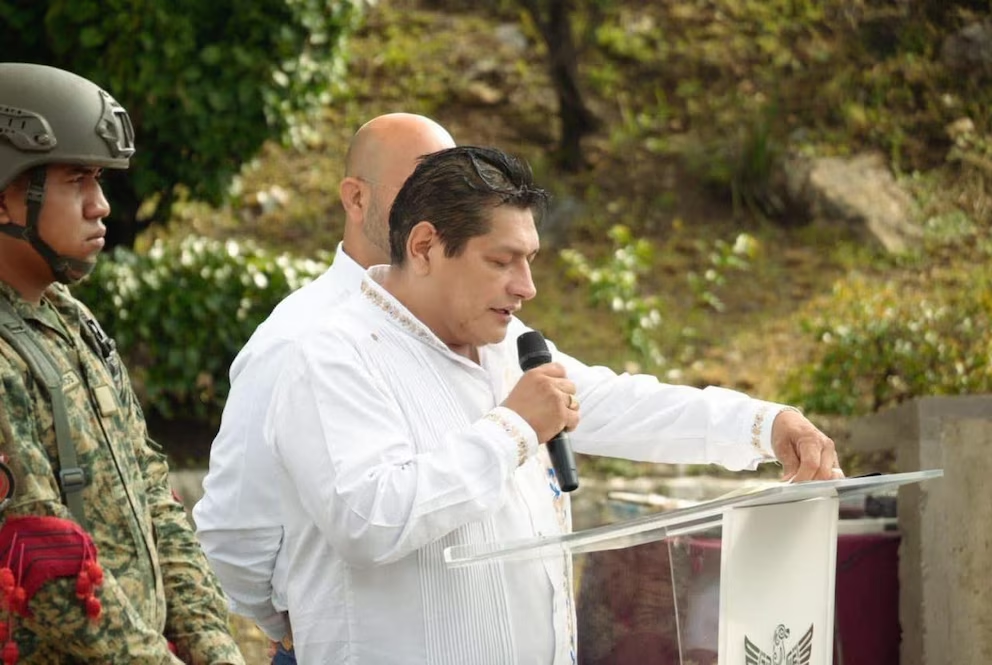
Mexican federal authorities detained Jesús Corona Damián, mayor of Cuautla, Morelos, after an arrest warrant issued by the Attorney General’s Office placed him at the center of an investigation into alleged links with organized crime. The capture was confirmed by Security Secretary Omar García Harfuch and adds another high-profile municipal figure to a widening federal offensive against political-criminal networks.
The arrest is part of Operation Enjambre, a federal strategy targeting public officials, former officials, business figures and local operators suspected of participating in extortion, abuse of power, weapons trafficking and organized crime structures. With this case, the federal government reports more than 85 officials and former officials detained, including several sitting mayors.
The case matters because it exposes the vulnerability of municipal governments to criminal penetration. In territories where organized crime controls markets, transport, policing and local economies, the mayor’s office can become either a barrier against criminal power or an administrative extension of it. That is the institutional fracture now being investigated in Morelos.
Cuautla’s case also carries political weight because Corona had already been identified as a key target after previous arrests involving officials from Morelos municipalities. Federal authorities have linked the broader network to extortion schemes and alleged protection structures connected to criminal groups operating in the region.

The deeper issue is not only one detained mayor. It is the possibility that municipal authority in parts of Mexico has become structurally negotiable, vulnerable to coercion, money and territorial pressure. When criminal organizations seek control over local government, they are not merely buying protection; they are attempting to govern through the shell of public institutions.
Harfuch’s security strategy is therefore moving beyond police operations and into the political architecture of organized crime. The message is direct: criminal power is not sustained only by armed cells, but by administrative complicities, permits, silence, local budgets and institutional cover.
For Morelos, the detention deepens a crisis of trust. For Mexico, it reinforces a national question that can no longer be avoided: how many municipalities operate under democratic appearance while negotiating daily with criminal power?
Cuautla is now more than a local scandal. It is a warning about the point where organized crime stops surrounding the state and begins to sit inside it.
Más allá de la noticia, el patrón. / Beyond the news, the pattern.