

 Phoenix 24
When memory takes the stage, death becomes the audience.
Madrid, November 2025.
In the heart of Spain’s capital, where flamenco and avant-garde often define the rhythm of the city, a different spectacle has emerged: one woven from marigolds, sequins and silence. The Casa de México en España has unveiled its annual Day of the Dead altar—this time under the title Cabaret El Recuerdo—a luminous fusion of theatre, ritual and nostalgia that reimagines how Mexico’s most intimate tradition converses with the world.
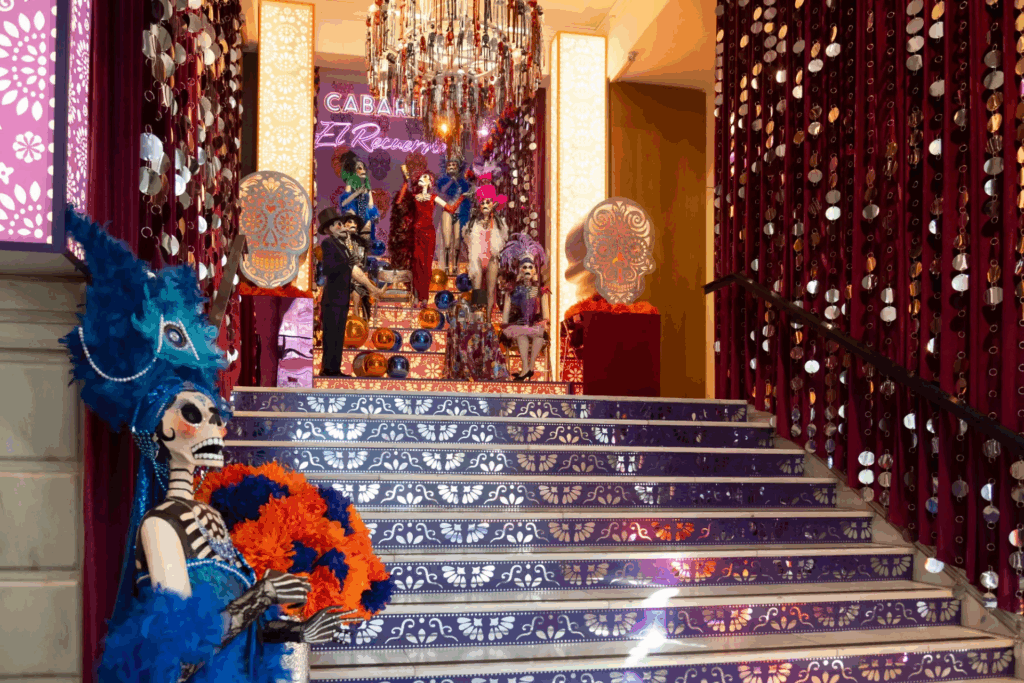
The installation transforms grief into choreography. Twelve full-sized “vedette” catrinas crafted from paper and light preside over an ocean of candles and glass spheres that shimmer like the reflections of old nightclubs. Visitors ascend through corridors of marigolds until they reach the central ofrenda, an altar layered with offerings, portraits and fragments of performance life: a microphone, a silk glove, a faded program. The result is part stage, part sanctuary, where the dead return not in mourning but as headliners in a cosmic revue.
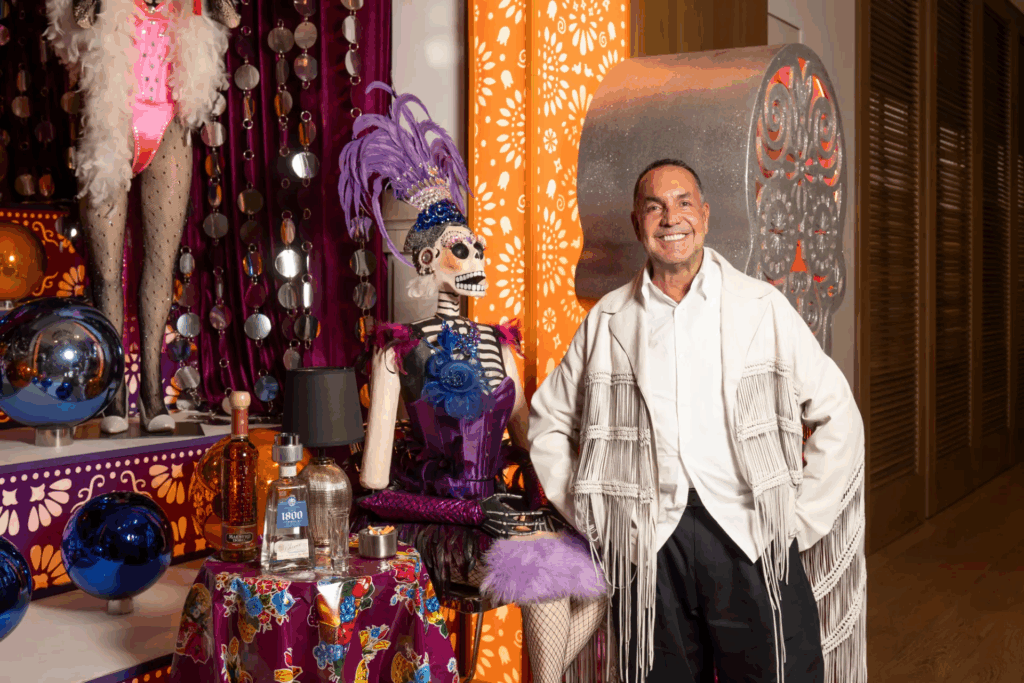
Behind the spectacle stands the Mexican architect and designer Guillermo González, who describes the altar as “a theatre for souls.” His concept blends the cabaret of 1930s Mexico City—its golden age of laughter and scandal—with the pre-Hispanic roots of the Día de Muertos tradition. The effect is a dialogue across time: Frida Kahlo meets the Aztec underworld; glamour meets eternity. The installation’s title, Cabaret El Recuerdo, translates roughly as Cabaret of Memory, and indeed it invites both audience and ancestors to share the same applause.
For Mexico, exporting this ritual is a form of soft power. The Day of the Dead, once misunderstood abroad as macabre folklore, has become a cultural ambassador as powerful as its cuisine or cinema. Spain’s embrace of the tradition illustrates how the Mexican diaspora reshapes the memory of death into something festive, human and luminous. The Casa de México has turned its annual altar into a laboratory of transcultural expression, uniting artisans, performers and curators from both countries.
Cultural anthropologists in Tokyo and Kyoto note similar rituals of remembrance where artistry and mourning coexist. In Japan’s Obon Festival, lanterns guide the spirits of ancestors, echoing the marigold paths of Mexican altars. This parallel underscores a universal impulse: the need to aestheticize grief so that life can continue. In that sense, the cabaret-altar hybrid presented in Madrid forms part of a wider Asian-Latin dialogue on how societies stage remembrance without fear.
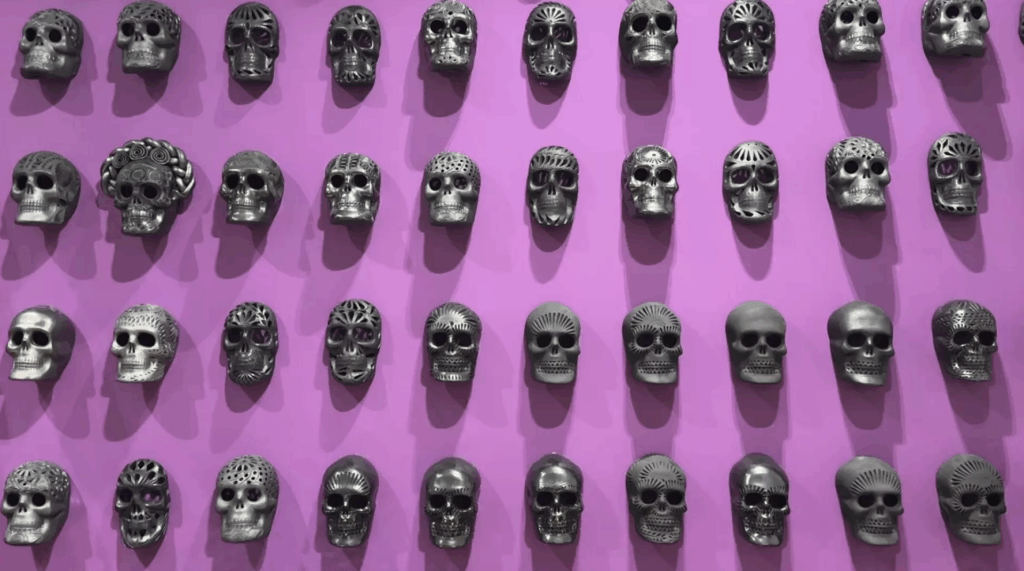
From an artistic standpoint, Cabaret El Recuerdo exemplifies Mexico’s syncretic genius—the ability to absorb global influences while remaining deeply rooted in indigenous cosmology. The tzompantli, or skull rack, appears here not as terror but as ornament; the marigold becomes spotlight; the stage transforms into a bridge. Each symbolic layer reveals an idea central to Mexican identity: that death, rather than negation, is the ultimate encore.
Spanish audiences, many encountering Día de Muertos beyond cinematic depictions, respond with fascination. For some, the experience feels theatrical; for others, almost sacred. The exhibition’s curators emphasize that it is not merely decorative but pedagogical: it educates about the continuity of family, memory and art. Workshops accompany the altar, guiding children through crafts while scholars discuss the syncretic history of death rituals. The atmosphere is one of dialogue—between generations, between continents, between worlds.
Across the Atlantic, cultural institutes in New York, Buenos Aires and Manila have followed Madrid’s lead, adapting the concept for their own communities. In each version, local artists reinterpret the symbols according to their urban landscape, creating a network of living memory that now spans three continents. Analysts from UNESCO’s culture division point to these initiatives as examples of “ritual globalization,” where authenticity is preserved through participation rather than ownership.
Still, some critics question whether transforming death into spectacle risks trivialization. The organizers answer this concern not with defense but with detail: every object in the altar is handcrafted, every candle lit with intention. The cabaret metaphor, they argue, does not mock grief—it reminds us that life itself is a brief performance and that remembrance is the final standing ovation.
As night falls over Madrid, the glow from the altar spills onto the street, drawing visitors who arrive not out of curiosity but belonging. They stand in silence, then laugh, then cry—a cycle of emotion familiar to any theatre. For a moment, the boundary between Mexico and Spain, between the living and the departed, dissolves. The marigolds shimmer like footlights, and the air hums with invisible applause.
Cabaret El Recuerdo is more than exhibition; it is a negotiation between memory and spectacle, absence and beauty. It shows that remembrance, when performed with sincerity, can be both a hymn and a show, both offering and rebellion.
Phoenix24: intelligence for free audiences. / Phoenix24: inteligencia para audiencias libres.