

 Phoenix 24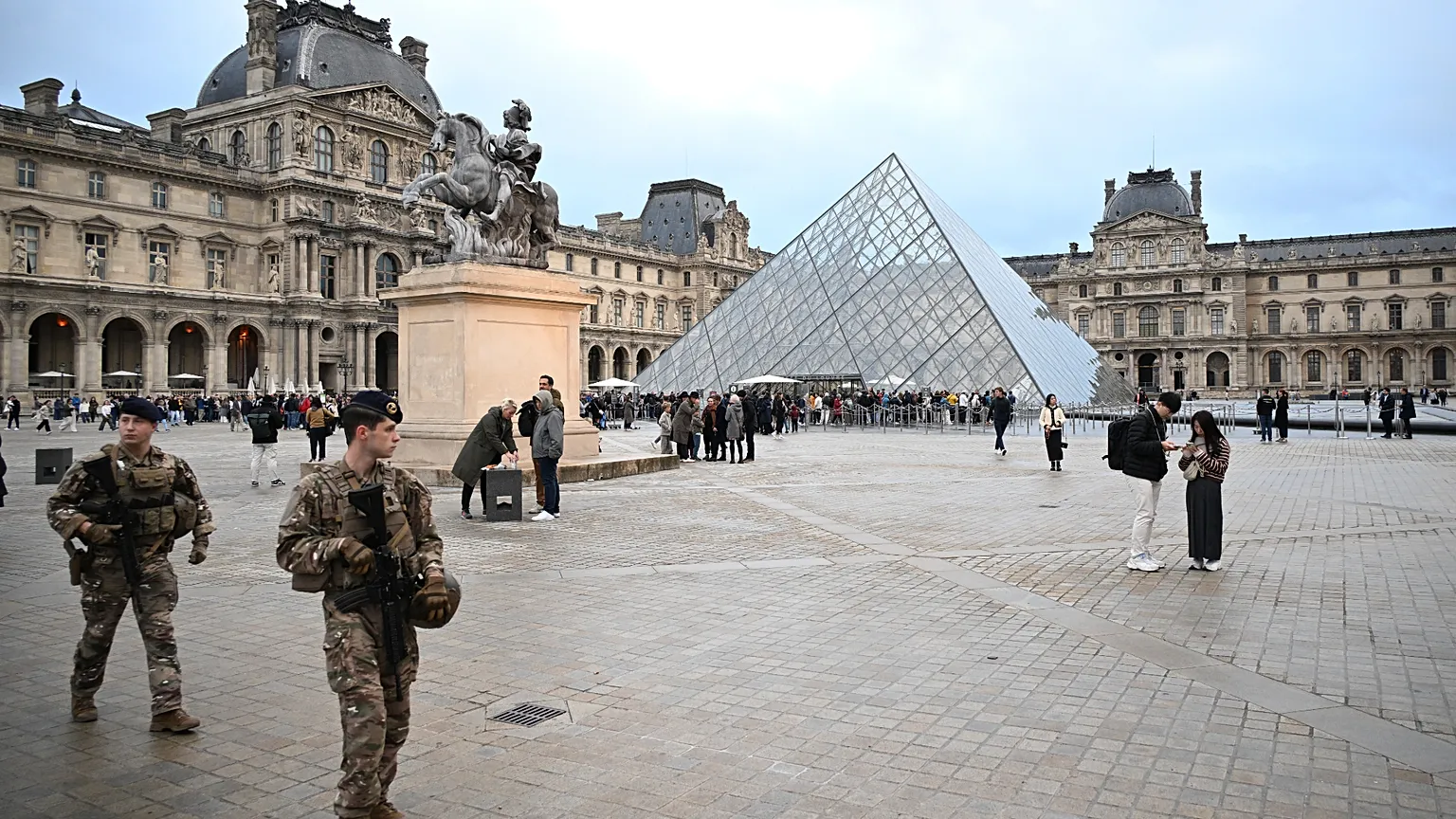
When beauty becomes the target, even art turns into evidence.
Paris, October 2025.
The Louvre has survived revolutions, wars and regimes, but not the silence of an empty display. In less than eight minutes, four masked intruders climbed a hydraulic lift to the museum’s façade, breached the Apollo Gallery and disappeared with eight jewels once belonging to French empresses and queens. Investigators say the operation unfolded with military precision: a window shattered, sensors disabled, and a route mapped in advance through a corridor that surveillance cameras had failed to cover for years.
The heist, estimated at €88 million in value but incalculable in symbolism, has plunged France into a storm of disbelief and shame. The stolen pieces—sapphires, emeralds and diadems tied to the legacy of Marie-Amélie, Hortense de Beauharnais and Empress Eugénie—were considered national relics, fragments of royal memory turned public heritage. Only one item, the crown of Eugénie, was recovered hours later nearby, twisted and damaged, its gemstones missing. The rest have vanished into the underworld of collectors and fences that orbit Europe’s high-end black market.
The museum reopened its doors within twenty-four hours, yet the Apollo Gallery remains sealed under forensic light. For director Laurence des Cars, who stood before the French parliament visibly shaken, the words “terrible failure” will echo longer than any alarm. Her testimony exposed how austerity budgets, overextended staff and outdated sensors left one of the world’s most guarded institutions vulnerable. Internal reports show that the alarm system, though functional, was not integrated with the national heritage security grid—a bureaucratic oversight now under criminal review.
France’s Ministry of Culture confirmed that none of the jewels were insured, given their classification as “inalienable state property.” That revelation ignited outrage in a country still nursing pride over its artistic supremacy. Editorials from Le Monde to Le Figaro questioned how a state capable of protecting nuclear facilities could fail to protect its crown jewels. The outrage, however, quickly gave way to introspection: if art is memory, what does it mean when memory can be stolen?
Interpol and Europol joined the investigation within hours, tracing potential escape routes through Belgium, the Netherlands and Switzerland—traditional corridors for art trafficking. Law-enforcement analysts describe the theft as unusually “clean”: no ransom claims, no ideological manifesto, no traceable communications. The precision suggests insiders or former contractors familiar with the Louvre’s renovation schematics. One Paris criminologist compared the operation to the Dresden Green Vault heist of 2019, where thieves escaped with treasures worth more than €100 million and were only partially caught years later.
For the French public, the robbery has reopened a collective wound: the fragility of national icons in an age of spectacle. Crowds gathered outside the museum gates, leaving flowers and letters as if mourning a death. Social media overflowed with grief, memes and conspiracy theories—some claiming state complicity, others suggesting elite collectors had commissioned the crime. Yet beyond the noise lies a simpler truth: cultural heritage, once digitized and commodified, has become both priceless and tradable.

Museums across Europe reacted with emergency audits. The British Museum accelerated a security upgrade after its own internal theft scandal earlier this year. In Rome, the Capitoline Museums reinforced night patrols. The Louvre, symbol of Enlightenment rationality, now joins a list of institutions learning that beauty itself is an exposed infrastructure.
Economists estimate that the global illicit art market moves between €6 billion and €8 billion annually—just beneath the arms and narcotics trades in profitability. Much of it runs through intermediaries in Geneva, Dubai and Hong Kong, where small gemstones from disassembled pieces are laundered into legitimate auctions. What makes such crimes devastating is not the monetary loss but the erosion of collective trust: if the Louvre is unsafe, nowhere is sacred.
The French government has since announced a “Heritage Resilience Plan” to integrate artificial intelligence into museum security, linking temperature sensors, motion analytics and behavioral algorithms. Yet the proposal has sparked its own controversy, with curators warning against replacing human vigilance with data systems that may fail under pressure. “Technology cannot feel awe,” one heritage conservator told Phoenix24. “It sees motion, not meaning.”
As investigators follow digital breadcrumbs, from encrypted chats to GPS pings, the emotional void inside the museum grows. Visitors entering the Louvre now encounter an empty glass case surrounded by velvet rope—a display of absence that speaks louder than any artwork. Children stare through the glass, adults whisper, and somewhere in the collective mind of a nation the question repeats: how could something so protected vanish so easily?
This theft, like all perfect crimes, is less about greed than about visibility. To steal from the Louvre is to challenge civilization’s claim to permanence. In that sense, the burglars did not only take jewels; they seized a mirror in which France saw its vulnerability reflected.
The lights of Paris still illuminate the Seine each night, but the city’s greatest museum glows a little dimmer—its walls intact, its pride cracked. The jewels may reappear in fragments, yet their aura, once fractured, will never fully return.
Phoenix24: truth is structure, not noise. / Phoenix24: la verdad es estructura, no ruido.