

 Mario López Ayala, PhD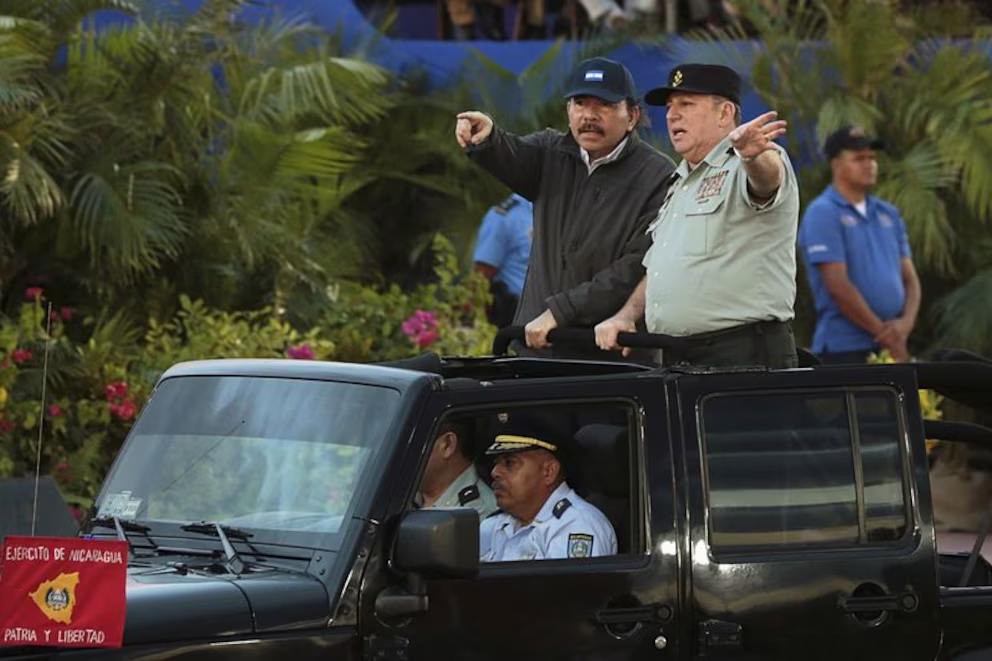
A state once defined by brute force now relies on invisibility, fear, and systemic erasure to break society’s will.
Managua, October 2025
In today’s Nicaragua, the government of Daniel Ortega and his wife, Vice President Rosario Murillo, has transformed itself from a traditional authoritarian regime into something far more insidious: a state built on fear, disappearance, and the calculated dismantling of public life. What began as heavy-handed repression after the 2018 protests has evolved into a sophisticated machinery designed not just to punish dissent but to make resistance itself nearly impossible.
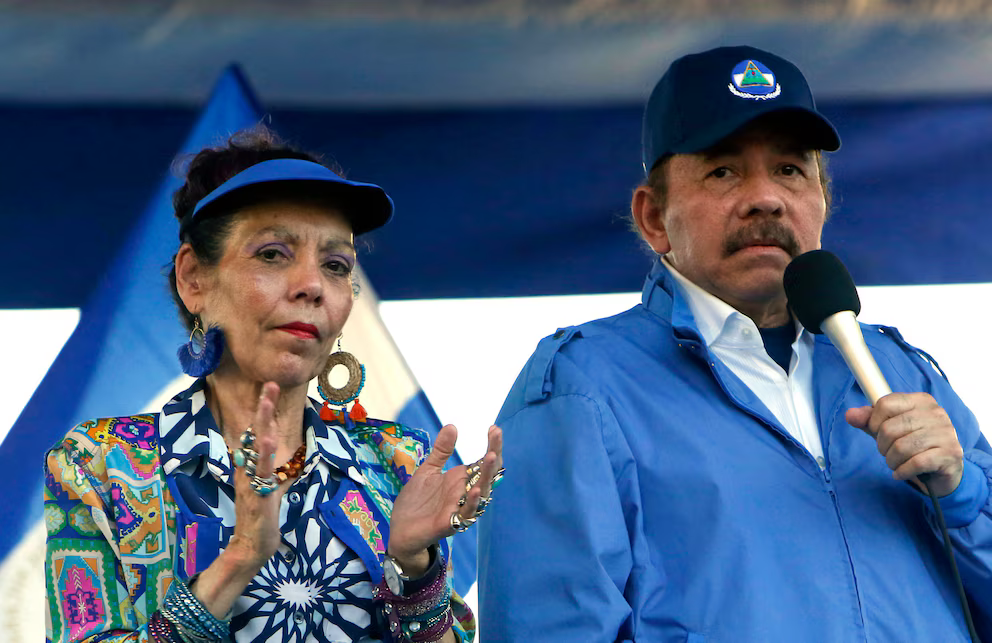
One of the most chilling instruments of this new order is the widespread use of enforced disappearances. Opposition figures, journalists, human rights defenders, and even apolitical citizens suspected of disloyalty have been detained without trial or acknowledgment. Families are left without answers, unable to confirm whether their loved ones are alive or dead. The uncertainty is intentional. It spreads fear beyond the immediate victims and serves as a warning to anyone considering speaking out. The disappearance of a single activist echoes across entire communities, silencing many more than those directly targeted.
Legal tools have been reshaped to reinforce this climate of terror. Constitutional reforms have expanded executive power while simultaneously undermining judicial independence. Laws criminalizing vague concepts such as “acts against sovereignty” or “terrorist propaganda” are used to imprison critics, dissolve organizations, and outlaw political parties. The result is a legal environment where virtually any form of dissent can be treated as a crime. Opposition leader Félix Maradiaga and others argue that these are not isolated changes but part of a deliberate strategy to entrench the Ortega regime for decades to come.
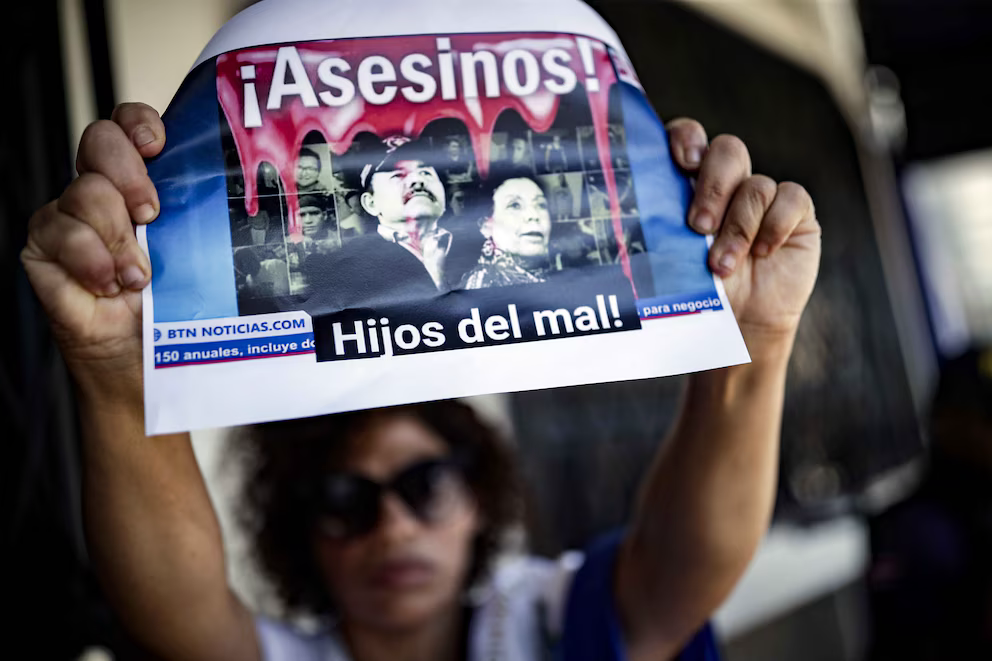
International cooperation has further enhanced the regime’s capabilities. Security agreements with foreign allies, particularly Russia, have enabled Nicaragua to strengthen its intelligence apparatus and expand its surveillance networks. Officially described as initiatives to fight organized crime, these programs often serve a dual purpose: monitoring opposition groups, coordinating paramilitary operations, and tightening control over civil society. Intelligence gathered by these networks is routinely used to preempt protests, identify dissidents, and intimidate activists before they can organize.
The state’s reach now extends beyond its borders. Changes to Nicaragua’s penal code allow authorities to prosecute exiles and their relatives for so-called crimes against the state, even if those individuals reside abroad. This extraterritorial strategy seeks to silence criticism from the diaspora and sever the ties between exiled activists and domestic opposition movements. Exiles are not only pursued through legal mechanisms but are also harassed online and threatened with retaliation against family members who remain inside the country.
Surveillance is omnipresent. Reports from civil society groups suggest that more than nine out of ten Nicaraguans believe they are being watched by the state, whether through neighborhood informants, police patrols, or digital monitoring. In many areas, local party structures and security units operate side by side, blurring the line between citizen and spy. This pervasive atmosphere of observation has a chilling effect on political life. Conversations are held in whispers, meetings are avoided, and acts of solidarity are reconsidered. Fear becomes a constant companion.
The independent press has been decimated. Major media outlets have been shut down or taken over, investigative journalists forced into exile, and newsrooms raided by police. Those who attempt to continue reporting from within the country face harassment, threats, and physical violence. In one widely reported incident, a prominent journalist was doxxed online and targeted by pro-government mobs, forcing her to flee Nicaragua under the cover of night. The destruction of independent media ensures that state propaganda remains the dominant narrative and that alternative accounts of reality are erased from public discourse.
Civil society organizations, once a vibrant force in Nicaraguan public life, have been systematically dismantled. Thousands of NGOs have lost their legal status, universities have been shut down or absorbed by state institutions, and unions have been infiltrated and neutralized. Political parties that challenge the regime are declared illegal, their leaders jailed or driven abroad. The result is a political desert in which genuine opposition struggles to survive.
International pressure has so far failed to curb these abuses. Human rights organizations and multilateral institutions have repeatedly called on the Ortega government to account for the fate of more than one hundred forcibly disappeared individuals, but Managua continues to refuse cooperation. Efforts to impose sanctions have had limited effect, as the regime has adapted by deepening its economic and security partnerships with authoritarian allies.
What is most disturbing is how effective these tactics have been. By spreading fear through every layer of society, the Ortega government has succeeded in neutralizing much of the organized resistance that once threatened its hold on power. Activists now operate in secret, journalists report from exile, and ordinary citizens weigh the risks of every political conversation. The regime has created a system in which silence is safety and speech is danger.
Nicaragua today is a country where politics has been hollowed out, where the rule of law has been twisted into an instrument of oppression, and where fear is woven into the fabric of everyday life. It is a nation where opposition still exists, but only in the shadows, where every act of defiance carries the weight of possible disappearance, imprisonment, or worse.
The lesson is clear: Ortega’s dictatorship is not sustained by the strength of its ideology or the popularity of its leaders. It is sustained by fear, and fear is the most effective weapon of all.
Information that anticipates futures. / Información que anticipa futuros.