

 Phoenix 24
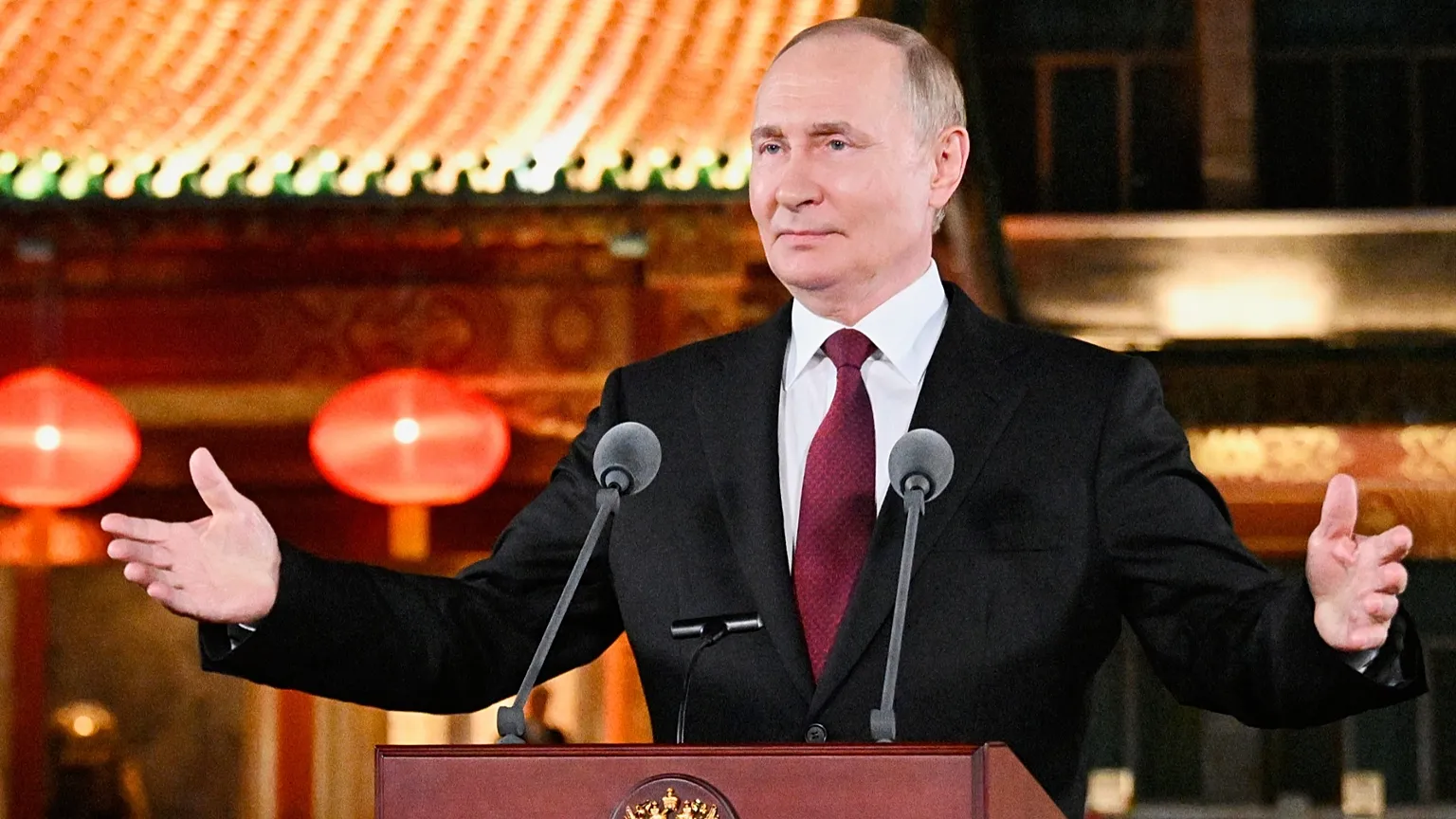
A rare diplomatic opening from Moscow closed as quickly as it opened: Putin invited Zelenski to meet, but only if the Ukrainian leader agreed to travel into Russian territory.
Beijing, September 2025
During his visit to China, Russian President Vladimir Putin signaled a willingness to meet face-to-face with his Ukrainian counterpart, though the offer came loaded with conditions. He insisted that any encounter must take place in Moscow, placing the burden squarely on Volodymyr Zelenski. At the same time, Putin cast doubt on Zelenski’s legitimacy by repeating the claim that his presidential term had expired and that no elections had been held, disregarding the reality of martial law in Ukraine, which legally prevents elections during wartime.
For Kyiv, the response was immediate and dismissive. Ukraine’s Foreign Minister Andrii Sibiga described the proposal as unacceptable, stressing that only neutral ground guaranteed by third countries could host such talks. Within Ukraine, the move was read less as a peace overture and more as an attempt to corner the government diplomatically.
Putin also ruled out an imminent visit by U.S. President Donald Trump to the Kremlin and sidestepped questions about Washington’s new envoy, making clear that such evaluations rest solely with the White House. What he did emphasize was his firm opposition to any Ukrainian accession to NATO, repeating the argument that Russia’s security cannot be compromised by Kyiv’s choices.
The wider geopolitical backdrop complicates the picture. The war has entered its fourth year, with battle lines largely static but diplomacy frozen. Pressure from Washington remains intense; Trump has been urging accelerated peace negotiations, yet the Kremlin frames the path forward in ways that reinforce its own leverage. European reactions mirror skepticism: while some voices in Berlin and Paris have called for dialogue, others argue that accepting Moscow as venue would hand Putin a symbolic victory.
Seen from a strategic angle, the invitation was never neutral. By tying talks to Moscow, Russia secures control over optics, protocol and agenda. Accepting such terms would tilt the negotiation before it even begins. For Ukraine, agreeing would mean conceding legitimacy to Moscow’s framing. For the West, it risks undermining the principle that aggressor and victim cannot meet on a playing field set entirely by the aggressor.
Prospective scenarios are varied. If neutral venues gain momentum under international pressure, dialogue could reemerge on different terms. If the condition of Moscow as the sole venue holds, the invitation will only reinforce the diplomatic stalemate. A turning point could arrive if global institutions, from the United Nations to the European Union, manage to impose conditions that neither side can ignore, shifting the balance away from unilateral control.
In reality, what unfolded in Beijing was less a breakthrough than a maneuver. Putin’s words positioned him as the one offering dialogue, while ensuring that the door opened leads only to his own capital. For Zelenski and his allies, the signal was clear: the Kremlin intends to dictate the stage, even if the play never begins.
La narrativa también es poder.
Narrative is power too.