

 Phoenix 24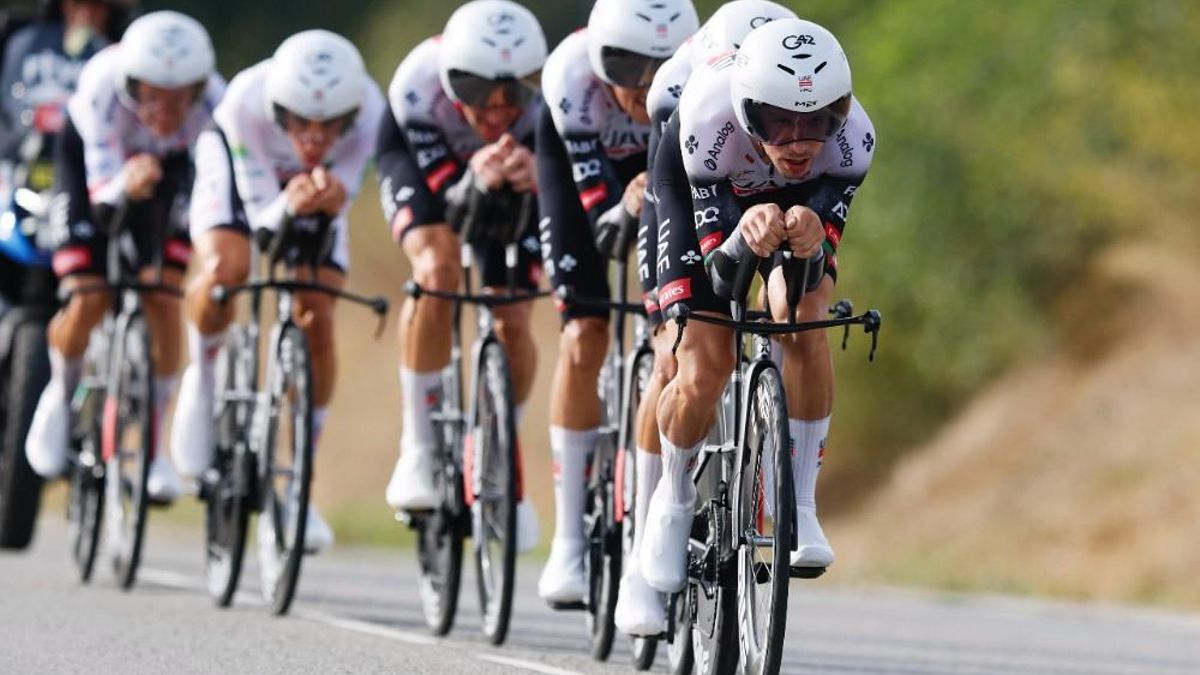
In less than half an hour of racing, the balance of an entire Grand Tour shifted, proving that collective strength can reshape the destiny of individual champions.
Figueres, August 2025. The fifth stage of the Vuelta a España, a 24.1-kilometer team time trial, transformed the general classification and returned Jonas Vingegaard to the race lead. UAE Team Emirates claimed the stage win with a time of 25 minutes and 26 seconds, yet the performance of Visma-Lease a Bike was enough to move Vingegaard back into the red jersey. The Danish rider’s squad finished just eight seconds behind, a margin that proved decisive in surpassing David Gaudu of Groupama-FDJ, who slipped to sixth overall after his team placed outside the top ten.
The impact was immediate. With Visma’s precision and UAE’s dominance, the top of the standings condensed. Juan Ayuso, João Almeida, and Marc Soler now occupy second place collectively, tied eight seconds behind Vingegaard. Giulio Ciccone sits close at nine seconds adrift, keeping the race tight heading into the first mountainous terrain. Gaudu, who began the day in red, trails by sixteen seconds after his team faltered in coordination.
The stage was not without disruption. Midway through the race, a protest displaying Palestinian flags forced Israel-Premier Tech to slow down, costing the team valuable seconds and placing them in nineteenth position, fifty-four seconds behind the leaders. While organizers quickly cleared the route, the interruption highlighted how global political tensions can spill into the world of sport. European commentators stressed that the incident underscores cycling’s vulnerability to demonstrations, while analysts in Asia described it as another reminder of how international events often serve as platforms for broader grievances.
In the United States, experts framed the day’s outcome as a testament to the strategic nature of team time trials. Analysts emphasized that individual strength often captures headlines, but collective synchronization is what defines success in this discipline. Vingegaard’s return to red, they argued, shows how depth and organization can alter the trajectory of an entire Grand Tour.
Within Europe, Spanish media celebrated the spectacle in Figueres, noting that the local crowds witnessed a pivotal reshaping of the competition. They also highlighted how UAE Team Emirates confirmed its status as the most balanced squad in the peloton, boasting three riders now tied in the top standings. Italian outlets focused on Ciccone’s consistency, suggesting that his position within striking distance sets the stage for tactical surprises in the coming mountain stages.
In Asia, cycling reporters stressed the psychological significance of Vingegaard reclaiming leadership so early in the race. For fans in Japan and South Korea, his resilience reflects the importance of seizing momentum before the Pyrenees, where endurance and strategy determine who truly contends for overall victory.
The riders themselves voiced mixed emotions. Vingegaard described his satisfaction at returning to the lead, while warning that the race remains wide open. Ayuso emphasized that UAE’s unity is its greatest weapon, and Soler added that managing internal rivalries within the Emirati squad will be just as critical as facing external threats. Gaudu, visibly disappointed, insisted that the setback does not end his ambitions, noting that the mountains offer ample opportunities for recovery.
The stage result also prompted wider reflection on the role of innovation in modern cycling. Coaches pointed out that marginal gains in aerodynamics, pacing, and communication have turned the team time trial into a decisive weapon for well-funded squads. Observers from the Peterson Institute noted that the increasing sophistication of equipment underscores the growing gap between elite operations and smaller teams, intensifying debates about equity in professional cycling.
Looking ahead, the Pyrenean climbs will provide the first true test of individual endurance. The red jersey on Vingegaard’s shoulders may offer psychological advantage, yet it also paints a target for rivals who sense vulnerability. UAE, with three riders in contention, faces the challenge of balancing cooperation with personal ambition. Ciccone and Gaudu, still close in the standings, remain within striking distance should the leaders falter.
The Vuelta, often described as the most unpredictable of the Grand Tours, has once again confirmed its character. A single stage has reshuffled the hierarchy, blending sporting drama with social tension. For now, the red jersey belongs once again to Vingegaard, but the road to Madrid promises weeks of shifting fortunes.
Truth is structure, not noise.
La verdad es estructura, no ruido.