

 Phoenix 24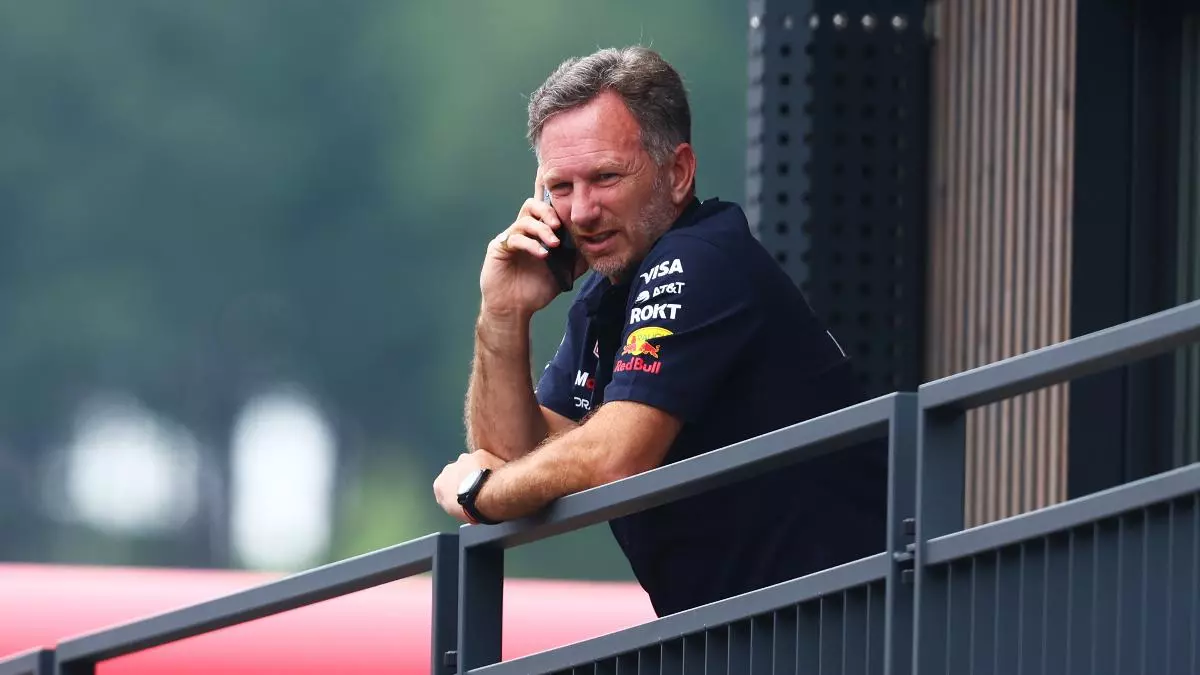
Speculation of a high-profile comeback was silenced as Cadillac asserted that its path to Formula 1 will be built on new leadership, not old legacies.
Silverstone, August 2025. Cadillac has officially ruled out any involvement with Christian Horner, the former Red Bull team principal, as it prepares for its long-awaited entry into Formula 1 in 2026. Dan Towriss, CEO of TWG Motorsports, stated unequivocally that no conversations had taken place with Horner and that the team’s commitment rests firmly with Graeme Lowdon, who will continue as Team Principal. The denial comes at a moment when rumors had begun to swirl, fueled by Horner’s sudden exit from Red Bull after two decades in charge.
The announcement was made as Cadillac confirmed its first driver pairing, naming Sergio Pérez and Valtteri Bottas as the team’s inaugural lineup. The combination of proven champions behind the wheel and Lowdon’s confirmed leadership offers a clear signal of strategic continuity. For Cadillac, the aim is to eliminate distractions, concentrate on building its foundation, and project confidence to partners and investors ahead of its debut season.
In the United States, analysts have noted the importance of Cadillac’s position. Formula 1 is experiencing historic growth in North America, and the brand’s entry carries weight far beyond the circuit. Public clarity over leadership, free from speculation, reassures both sponsors and fans that Cadillac intends to compete as an authentic contender rather than relying on borrowed prestige.
In Europe, observers focused on the symbolism of rejecting Horner, a figure synonymous with Red Bull’s success. By explicitly ruling him out, Cadillac has positioned itself as independent from the old guard of Formula 1. Commentators suggest that this decision helps reinforce a narrative of originality, an important asset for a newcomer in a sport where perception shapes influence as much as results.
Across Asia, motorsport writers have interpreted Cadillac’s refusal as a declaration of discipline. With expanding fan bases in markets such as Japan and China, Cadillac’s message resonates as a commitment to organizational integrity. Rather than attaching itself to the controversies surrounding Horner, the team presents an image of stability and cohesion, which Asian media highlight as critical for brand credibility.
The broader context makes Cadillac’s denial even more significant. Horner’s departure from Red Bull ended an era of dominance marked by multiple Drivers’ and Constructors’ Championships. His name carries weight, and his availability sparked speculation across the paddock. Yet for Cadillac, a new entrant still constructing its identity, association with such a polarizing figure could have undermined its ability to present a unified narrative.
Lowdon, by contrast, represents continuity without controversy. His experience managing smaller operations in Formula 1 now scales into the high-stakes environment of a manufacturer-backed team supported by General Motors. The partnership with TWG Global provides depth in motorsport management and financing, complementing Lowdon’s task of guiding the team into competition. The emphasis is on systems, infrastructure, and collective expertise rather than the influence of a single high-profile leader.
Financial analysts underline that Cadillac’s approach mirrors broader industry trends. In modern Formula 1, success is less about individuals and more about organizational integration. The sport’s complexity requires coordination across aerodynamics, power unit development, logistics, and commercial partnerships. By rejecting rumors tied to one man, Cadillac strengthens its image as a project built on structural clarity.
Still, the road ahead will not be easy. Entering Formula 1 demands immediate adaptation to regulations, relentless development, and the cultivation of a culture capable of competing with teams that have decades of experience. The decision to stay the course under Lowdon suggests that Cadillac values patience and long-term building blocks over headline-driven moves.
Motorsport enthusiasts remain watchful. The combination of Pérez and Bottas provides proven skill but also highlights the team’s emphasis on experience over untested youth. For fans, the intrigue will be whether Cadillac can turn stability into performance once the lights go out in 2026.
For now, Cadillac has delivered a clear message: its story will not be shaped by the legacies of others but by its own choices. The rejection of Horner is less a dismissal of his achievements and more a statement of intent. The team seeks to build its own identity, free of distraction, as it prepares to enter the most competitive motorsport stage in the world.
Resilience in narrative, global in scope.
Resiliencia narrativa, alcance global.