

 Phoenix 24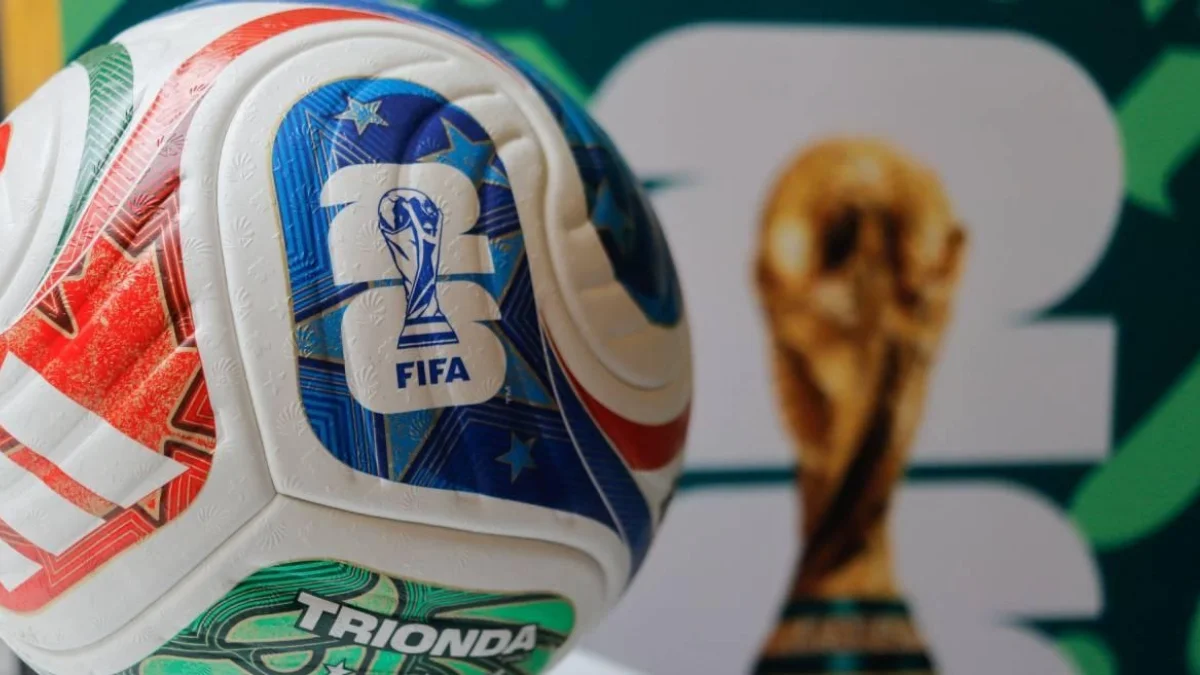
The ball is turning every strike into measurable evidence.
NEW YORK, United States | June 2026
The intelligent chip inside Trionda, the official ball of the 2026 World Cup, has identified the two fastest goals recorded during the tournament’s opening matches. Sweden midfielder Yasin Ayari reached maximum ball speeds of 120 and 118 kilometers per hour with his two goals against Tunisia. Both strikes came during Sweden’s 5-1 victory and established the Brighton player as the leading figure in the tournament’s early power rankings. The data offers a level of precision that previous World Cups could not provide consistently.
Trionda contains a connected-ball system capable of recording acceleration, rotation, trajectory and individual touches in real time. Its inertial measurement unit operates at 500 hertz, meaning it can collect and transmit information 500 times every second. The system sends the information directly to the technological infrastructure supporting the video assistant referee. That same stream can also produce detailed performance measurements for broadcasters, analysts and supporters.
Ayari’s goals demonstrated how the technology can reveal differences that are difficult to judge through television images alone. Both shots appeared powerful, but the internal sensor established their maximum speeds without relying on estimates based only on camera angles or external tracking. The first reached 120 kilometers per hour, while the second followed closely at 118. Those figures made them the two fastest scoring strikes measured in the competition at that stage.
The Swedish midfielder’s achievement was especially notable because both goals came in the same match. Sweden overwhelmed Tunisia with a combination of direct attacking play, aggressive movement and efficient finishing. Ayari’s long-range power gave the result an additional technological dimension because every movement of the ball could be reconstructed through the embedded sensor. His performance became both a sporting success and an early demonstration of the tournament’s connected equipment.
The technology was designed primarily to assist referees rather than create entertainment statistics. It can determine the exact moment a player strikes or touches the ball, information that is essential for semi-automated offside decisions. The system can also help identify possible handballs, deflections and double contacts during penalty kicks. By locating each touch precisely, it reduces the uncertainty that can arise when officials depend only on visual evidence.
Its value was also visible during Sweden’s match against Tunisia when an initially disallowed goal by Mattias Svanberg was reviewed. Officials needed to determine whether Alexander Isak had touched the ball before it reached his teammate from a free kick. The connected-ball data detected the contact and helped establish that Svanberg was in a legal position. The goal was ultimately awarded after the review.
That incident showed that the chip can influence the result of a match even when the decisive touch is almost invisible to the human eye. Traditional video may suggest contact without proving it conclusively, particularly when players are crowded together or the ball moves rapidly. The sensor records changes in acceleration and rotation caused by even a slight deflection. This information gives officials another layer of evidence before reaching a final decision.
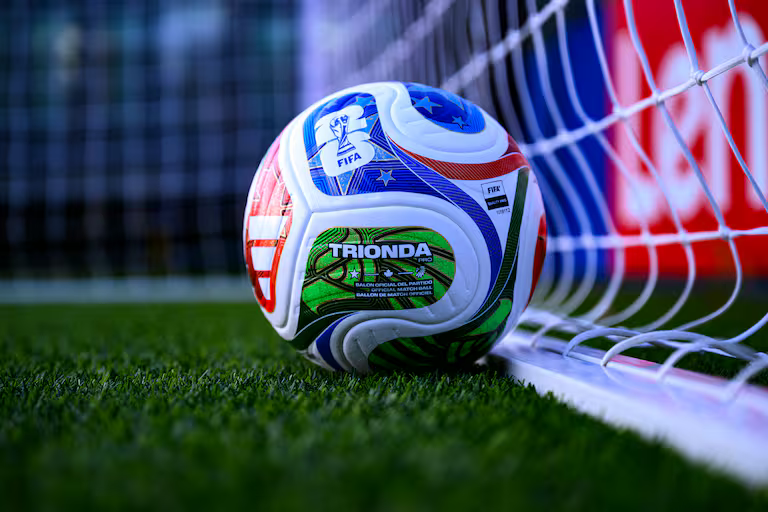
Trionda differs structurally from previous World Cup balls because it is assembled from only four thermally bonded panels. The design is the lowest panel count used in a men’s World Cup ball and gives the surface a distinctive aerodynamic profile. Its textured patterns and deeper seams are intended to maintain stability, grip and predictable movement under different weather conditions. The internal chip is installed within one of the panels, with counterweights helping preserve the ball’s balance.
Researchers studying its aerodynamics found that Trionda reaches its drag transition at around 43 kilometers per hour. That threshold is lower than those measured for several previous World Cup balls, including Al Rihla, Brazuca and Telstar 18. The change may influence how the ball slows, bends and responds to spin after powerful contact. It also helps explain why seemingly small differences in technique can produce noticeable variations in flight.
The four-panel structure has generated interest among physicists because panel geometry directly affects airflow around the ball. A smoother or rougher surface can determine when turbulence forms and how resistance changes during flight. Trionda was designed to avoid the instability associated with Jabulani, the controversial ball used at the 2010 World Cup. Players and goalkeepers criticized that model for unpredictable movement, particularly on long-range shots.
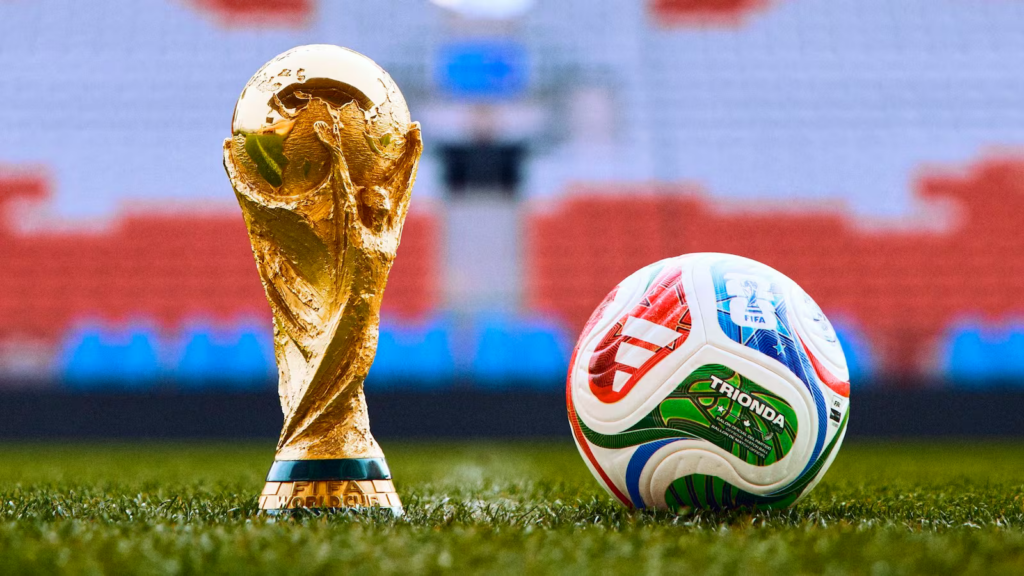
The 2026 ball instead aims to combine greater consistency with detailed digital tracking. Its technology was developed through collaboration involving Adidas, FIFA and specialist engineering partners. The chip is rechargeable and prepared before official matches, while the commercial versions available to the public generally do not contain the same connected system. The tournament ball therefore functions as both sporting equipment and a real-time measurement device.
The information collected could eventually reshape how shooting power is discussed. Previous records often depended on radar systems, broadcast graphics or calculations produced under different technical conditions. A sensor located inside every official match ball creates a more standardized basis for comparison. It can distinguish maximum speed, average speed, rotation and the precise sequence of movement after impact.
Coaches may also benefit from the broader data environment created by connected balls. Shot technique can be examined alongside body position, distance, spin and trajectory. Analysts could compare whether a faster strike actually creates a greater scoring probability or whether placement remains more important. Power alone does not determine success, but accurate measurement allows its real contribution to be studied.
The same information enhances the viewing experience without changing the fundamental nature of the game. Supporters can see how quickly a shot traveled, how much it rotated and whether a deflection altered its direction. These details turn memorable goals into events that can be examined scientifically as well as emotionally. Ayari’s two strikes now possess numerical identities in addition to their place in Sweden’s victory.
Trionda is demonstrating that the modern football no longer merely crosses the field. It records, verifies and explains what happens around it. The chip has already corrected an officiating decision and identified the tournament’s most powerful scoring shots. As the World Cup progresses, every exceptional strike will leave behind not only an image, but a precise digital record.
Behind every data point, the intention. / Detrás de cada dato, la intención.