

 Phoenix 24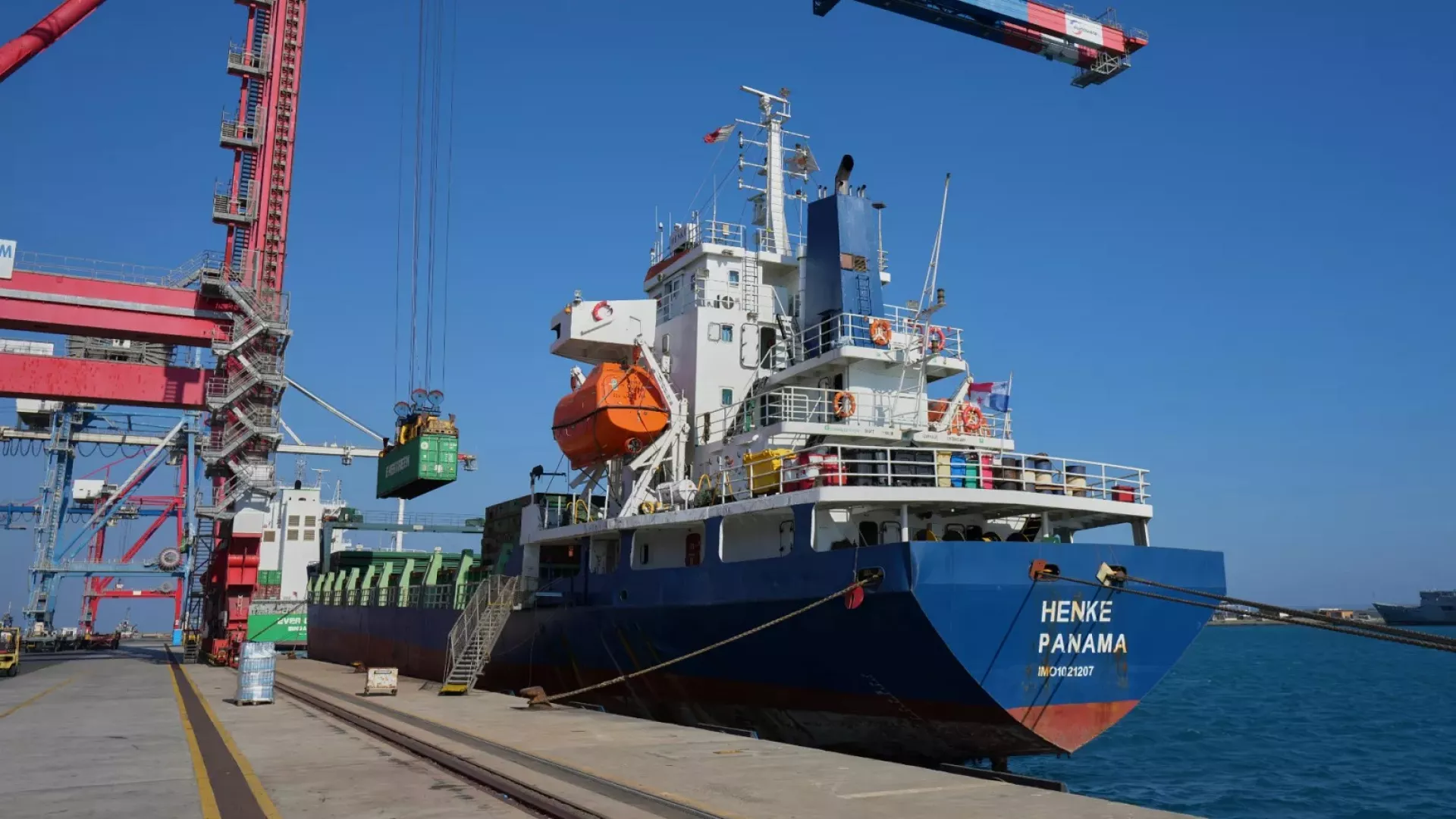
Behind every shipment of food, there lies both hope and geopolitics.
Lisbon, August 2025
In a region gripped by hunger, a humanitarian convoy carrying 1,200 tons of food aid has set sail from Cyprus and is now bound for Gaza, routed through Israel’s port of Ashdod. Far from being a simple logistical mission, the operation reflects the growing international urgency to prevent famine in a territory devastated by conflict, blockades, and chronic shortages. Coordinated under the supervision of the United Nations, the delivery will be managed on the ground by World Central Kitchen, an organization that, despite suffering losses in previous attacks in Gaza, continues to embody resilience in the face of humanitarian catastrophe.
The scale of the shipment is unprecedented in recent months. The food was carefully pre-screened to accelerate its passage through inspection points, in order to ensure swift distribution once inside Gaza. Sources familiar with the operation indicated that the focus is on reaching the most vulnerable segments of the population, particularly children and the elderly, who are now bearing the brunt of severe malnutrition. This comes at a time when famine conditions have already claimed thousands of lives, with mortality reports climbing amid a collapse of local health infrastructure.
Cyprus has emerged as the pivotal node in this humanitarian chain. Leveraging its geographic proximity and diplomatic neutrality, the island nation has positioned itself as the principal gateway for relief bound for Gaza. The Cypriot government has made its ports and logistics corridors available not only for this shipment but also for future missions, turning humanitarian action into a geopolitical role. Officials in Nicosia describe the operation as both a moral imperative and a demonstration of regional responsibility, signaling Cyprus’s growing influence as a humanitarian bridge in the eastern Mediterranean.
The initiative is not Cyprus’s alone. Contributions also came from Malta, the United Arab Emirates, Italy, Kuwait, and the Sovereign Order of Malta. Together, these actors have created a rare moment of multilateral convergence, cutting across political divisions to focus on immediate human survival. Diplomats involved in the coordination highlight that the sheer diversity of contributors shows a broad recognition that Gaza’s crisis transcends politics and now sits squarely in the realm of global human security.
Yet behind the humanitarian effort, geopolitical dynamics remain unavoidable. The choice of Ashdod as the receiving port reflects Israel’s continued control over the entry of goods into Gaza, even under international supervision. While Israeli authorities permitted the docking, they insisted on security screening, underscoring the delicate balance between humanitarian relief and military oversight. Observers note that this arrangement reflects the broader reality: every act of aid to Gaza is also an act of negotiation with regional powers that remain cautious, suspicious, or outright hostile to external involvement.
The operational partner, World Central Kitchen, brings both credibility and tragedy to the effort. Earlier this year, the NGO lost several staff members in a deadly strike while attempting to deliver food in Gaza. Its decision to remain engaged, despite these risks, has turned the organization into a symbol of humanitarian persistence. For the UN, entrusting distribution to WCK was a calculated decision: the group’s network, expertise, and reputation for speed make it uniquely suited to manage aid in the volatile conditions on the ground.
For families in Gaza, the convoy represents far more than pallets of food. It signals that the outside world has not turned its back, that there is still a channel—however fragile—through which relief can flow. Aid workers describe the psychological impact of such shipments as significant: the sight of trucks and supplies entering the territory helps restore a sense of visibility and hope, however temporary.
Still, no one underestimates the limits of a single operation. Experts warn that 1,200 tons, while substantial, cannot by itself resolve the systemic crisis. With more than two million people living in Gaza, this shipment translates to only a few days’ supply under normal consumption patterns. Humanitarian officials stress that without consistent, large-scale deliveries, famine conditions will persist, and each breakthrough shipment risks becoming a symbolic gesture rather than a sustainable solution.
Looking ahead, three scenarios are already being discussed by analysts and humanitarian planners. In the first, continuity, the Cyprus corridor becomes a regular channel for aid, supported by a coalition of donor nations and monitored by the UN, creating a sustainable flow of relief into Gaza. In the second, disruption, political tensions or renewed military escalation could block further shipments, leaving the enclave once again isolated and starving. And in a third scenario, bifurcation, parallel aid networks could emerge—some managed multilaterally, others driven by bilateral or regional arrangements—creating a fragmented but potentially more resilient supply system.
The arrival of this convoy is therefore both a logistical and symbolic achievement. It proves that even in one of the world’s most contested regions, cooperation is possible when human survival is at stake. But it also underscores the fragility of that cooperation, dependent on a precarious alignment of governments, institutions, and NGOs willing to risk political backlash and even human lives to ensure delivery.
In the end, aid shipments to Gaza are not just about calories and cargo. They are about whether international diplomacy can still deliver for civilians trapped between war and politics. And in that equation, every crate of food unloaded in Ashdod and transported into Gaza carries with it not only sustenance but also the weight of global responsibility.
The Phoenix24 editorial team prepared this publication based on verifiable facts, strategic global sources, and validation within the current geopolitical context.