

 Phoenix 24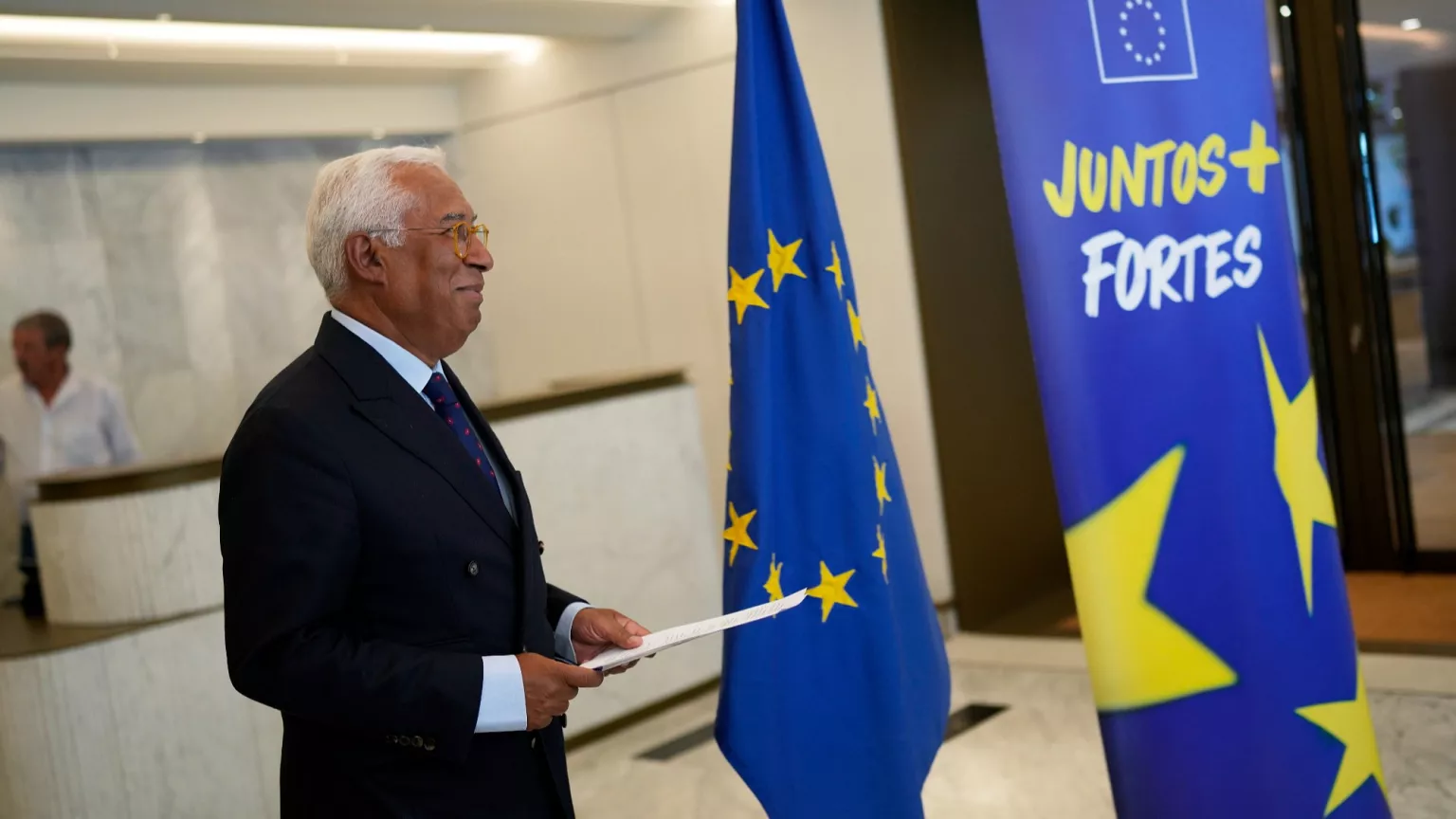
Beneath the clatter of intuitive agreements, Ukraine’s security demands more than promises.
Lisbon, August 2025
In recent weeks, European diplomacy has entered an unprecedented phase of acceleration. António Costa, President of the European Council, stated that rhetoric is no longer enough and that concrete security guarantees for Ukraine must be advanced, with a model inspired by NATO’s Article 5. The warning is not minor: as the war launched in 2022 drags on, Europeans increasingly realize that mere promises of support lack credibility if not accompanied by tangible, verifiable mechanisms.
The Washington meeting between Donald Trump and Volodymyr Zelensky reinforced the perception that the United States will inevitably be part of this framework. Although Trump’s tone remained ambiguous, he hinted that his country would be willing to participate in a “solid and practical” security architecture for Kyiv. The statement, which seemed more a tactical pledge than a long-term strategy, was enough to reignite discussions in European capitals, aware that without the U.S. umbrella, there can be no real balance against Moscow.
This renewed momentum does not emerge in isolation. Since the London Summit in March, when the so-called “coalition of volunteers” was formalized, Europeans have sought formulas to shield Ukraine on the ground, combining military training, weapons supplies, and limited deployment plans. Added to this is the ambitious “Readiness 2030” program, through which Brussels aims to allocate up to 800 billion euros to rebuild Europe’s defensive capacity after decades of cutbacks. At its core, Europe now faces a dilemma: maintain its historic dependence on the United States or advance toward military autonomy that still seems distant.
The figures illustrate the magnitude of the challenge. While Ukraine requests a protection framework comparable to full NATO membership, European leaders debate whether it is feasible to guarantee such security without permanently committing troops, aircraft, and bases. Zelensky has insisted that his country needs more than symbolic solidarity: it requires verifiable commitments and a horizon that does not leave it trapped in a gray zone between war and integration. In the words of the Ukrainian president, “security guarantees cannot depend only on speeches; they require allies willing to act in critical moments.”
But the equation extends beyond political will. In parallel, European banks and private funds discreetly participate in the financial engineering of Readiness 2030, revealing that security guarantees will also rely on investment diplomacy. This financing structure seeks to channel resources from the European Investment Bank and capital markets into dual-use projects—civil and military infrastructure—that reinforce continental resilience. This network of indirect actors underscores how modern wars are not only fought on the battlefield but also in financial statements and investment decisions.
European analysts, however, remind us that no guarantee will be credible without the willingness to deploy forces on the ground. A report by the Egmont Institute emphasized that the difference between a political promise and a real security shield lies in the readiness to respond militarily to an attack. The lesson of the Russian invasion is clear: deterrence fails when the adversary perceives fractures or hesitation within collective defense.
The public debate within the European Union reflects these tensions. While pragmatic sectors see U.S. presence as indispensable, sovereignty-minded currents push for consolidating an autonomous European military axis. In the United Kingdom, Prime Minister Keir Starmer has already pledged “boots on the ground and planes in the air” as part of the coalition, stressing that Ukraine’s defense is inseparable from Europe’s security.
Looking ahead, three possible scenarios emerge. In the first, continuity, the EU and its partners gradually build a system of guarantees that combines investments, military cooperation, and diplomatic support from the United States—allowing Ukraine to stabilize without breaking balances with Moscow. In the second, disruption, a political shift in Washington or an internal deadlock in Brussels could paralyze the security architecture, once again leaving Kyiv exposed to Russian aggression. And in the third, bifurcation, a new hybrid pact could emerge: either a European military consortium acting independently or a web of bilateral agreements between Ukraine and regional powers such as Poland or France, with specific defense commitments.
The underlying question remains: will Europe be able to move from words to action? Because if the right to security is frozen on paper, Ukraine will remain trapped in a geopolitical limbo where every unfulfilled promise could amount to a strategic defeat.
The Phoenix24 editorial team prepared this publication based on verifiable facts, strategic global sources, and validation within the current geopolitical context.