

 Phoenix 24
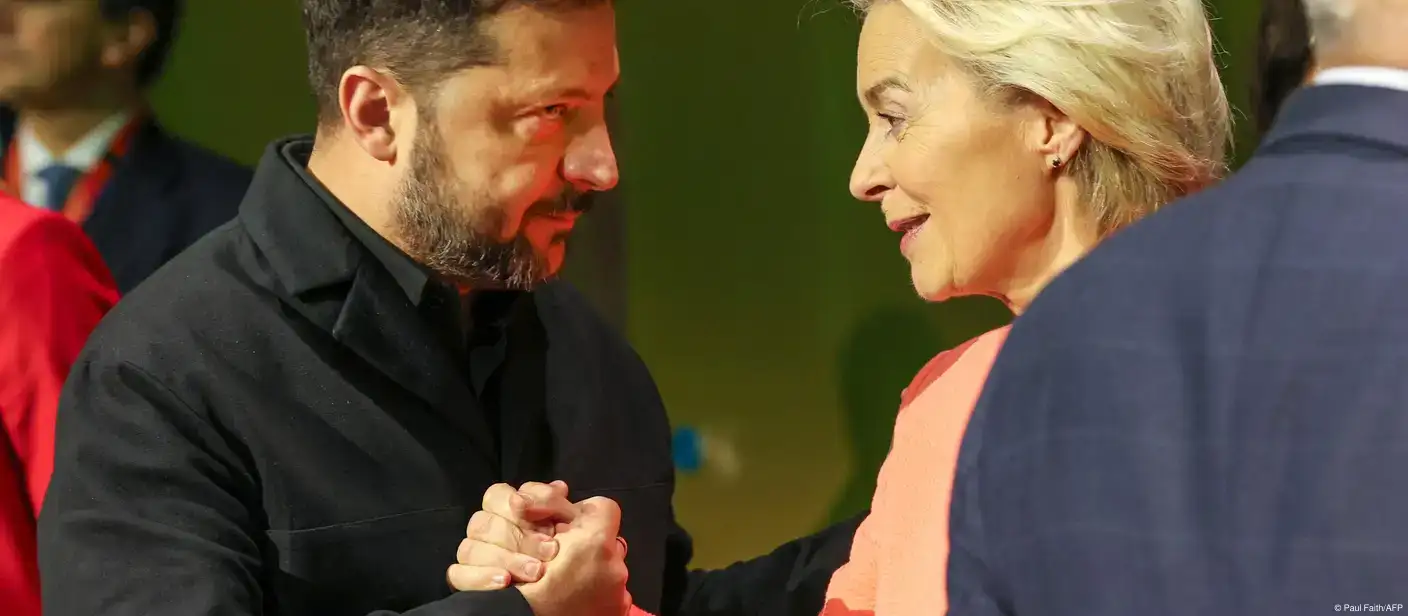
Europe confronts the financial consequences of a prolonged war.
BRUSSELS, Belgium — November 2026. The European Commission has proposed an additional €45 billion loan to Ukraine for 2027, seeking to sustain the country’s military capabilities and essential public services as Russia’s continuing invasion places increasing pressure on government finances. Announced by Commission President Ursula von der Leyen on November 18, the initiative would rely on joint European Union borrowing and require Ukraine to repay the principal only after receiving war reparations from Russia.
The proposed financing would be divided into two components: €25 billion for defense-related expenditures and €20 billion for general budgetary assistance. Military support would help Ukraine obtain equipment, ammunition and air-defense systems, while the civilian component would contribute to maintaining essential services and economic stability. The package is intended to address approximately two-thirds of an estimated €70 billion financing gap for 2027, with international partners expected to cover much of the remainder.
The new proposal is separate from the €90 billion Ukraine Support Loan previously agreed by European leaders for 2026 and 2027. Under that earlier arrangement, €45 billion remains available for disbursement next year, subject to agreed conditions. The additional financing announced Wednesday therefore represents an expansion of European assistance rather than a replacement for existing commitments.
The Commission intends to raise the money through capital-market borrowing backed by the EU budget. However, higher interest rates have increased concerns about financing costs, potentially requiring European taxpayers to cover substantial annual interest payments. Brussels also wants to preserve the possibility of using future revenues from immobilized Russian sovereign assets to help repay eligible loans, subject to applicable legal requirements.
Political agreement remains uncertain. Hungary, Slovakia, the Czech Republic and Bulgaria have expressed reservations about participating in additional assistance, while German Chancellor Friedrich Merz has pressed for collective responsibility among member states. The disagreement could complicate negotiations over the EU’s next long-term budget, particularly if governments link financial support for Ukraine to wider spending priorities.
The Commission maintains that predictable financing is necessary to strengthen Ukraine’s position in negotiations and prevent further economic deterioration. Its proposal also includes conditions involving institutional reform, the rule of law and anti-corruption measures, reflecting the relationship between immediate assistance and Ukraine’s longer-term ambitions for European integration.
Importantly, the €45 billion loan has not yet received final legislative approval. The proposals must be examined by the European Parliament and the Council under the applicable procedures, while European leaders are expected to begin discussing the package at their forthcoming summit.
Beyond the immediate financial negotiations, the initiative highlights the increasingly interconnected nature of European security and economic policy. Sustaining Ukraine’s defense and public institutions requires substantial resources, but the distribution of those costs continues to generate disagreement among EU governments. The outcome will help determine how Europe balances fiscal responsibility, collective security and its commitments to Ukraine during another year of war.
Beyond the Numbers, the Consequences.