

 Phoenix 24
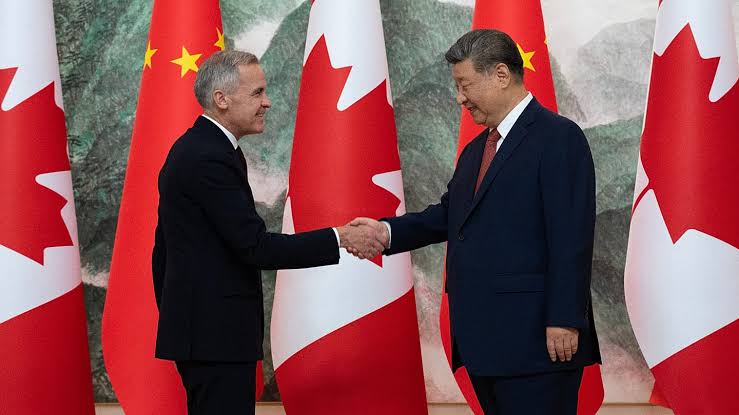
Ottawa strengthens economic ties with Beijing while protecting its North American interests.
SHENZHEN, China — November 2026. Canada and China have agreed to expand tariff reductions covering agricultural products, seafood and industrial metals, marking another step toward rebuilding bilateral economic relations as trade tensions with the United States encourage Ottawa to diversify its international partnerships. The agreement followed talks between Canadian Prime Minister Mark Carney and Chinese President Xi Jinping on November 17, ahead of the Asia-Pacific Economic Cooperation summit.
Under the arrangement, China will suspend additional 25% tariffs on most frozen Canadian pork cuts and selected seafood products from January 1, 2027, through December 31, 2028. The measures cover approximately C$400 million in Canadian exports, based on their value before the additional tariffs were introduced. Eligible products include certain frozen shrimp, shellfish, sea cucumbers and Greenland halibut.
In exchange, Canada will extend existing tariff exemptions on selected Chinese steel and aluminum products until the end of 2028. Ottawa will also introduce full or partial exemptions covering 32 additional product categories where domestic supplies are limited or unavailable. The arrangement is intended to ease pressure on Canadian businesses that depend on imported industrial materials while expanding commercial opportunities for agricultural exporters.
The latest agreement builds on earlier commitments extending tariff relief for Canadian canola meal, peas, lobster and crab. It also follows a January understanding under which Canada reduced tariffs on a limited annual quota of Chinese electric vehicles from 100% to 6.1%, initially allowing 49,000 vehicles into its market.
Carney has increasingly emphasized the importance of reducing Canada’s economic dependence on the United States without abandoning its most significant trading relationship. Speaking in Shenzhen, he reported that Canadian exports to China had increased by more than one-third during 2026, while reiterating that securing a satisfactory agreement with Washington remained a government priority.
The discussions take place amid continuing uncertainty surrounding American tariffs and the future of North America’s integrated automotive industry. Carney has suggested that Canada could explore partnerships with Chinese automobile manufacturers if negotiations with Washington fail to safeguard domestic production, although no new manufacturing agreement has been announced.
Beyond tariff reductions, Ottawa plans to organize a trade mission to China in 2027 and establish a joint initiative helping smaller Canadian businesses access Chinese e-commerce platforms. These measures suggest a broader strategy combining traditional exports, industrial cooperation and digital commerce.
The agreement illustrates how international trade relationships are adapting to shifting geopolitical conditions. For Canada, diversification offers potential opportunities but also requires balancing industrial competitiveness, strategic dependencies and longstanding economic commitments. For China, renewed cooperation provides additional access to Canadian resources and strengthens commercial engagement with a major Western economy.
Beyond the Numbers, the Consequences.