

 Phoenix 24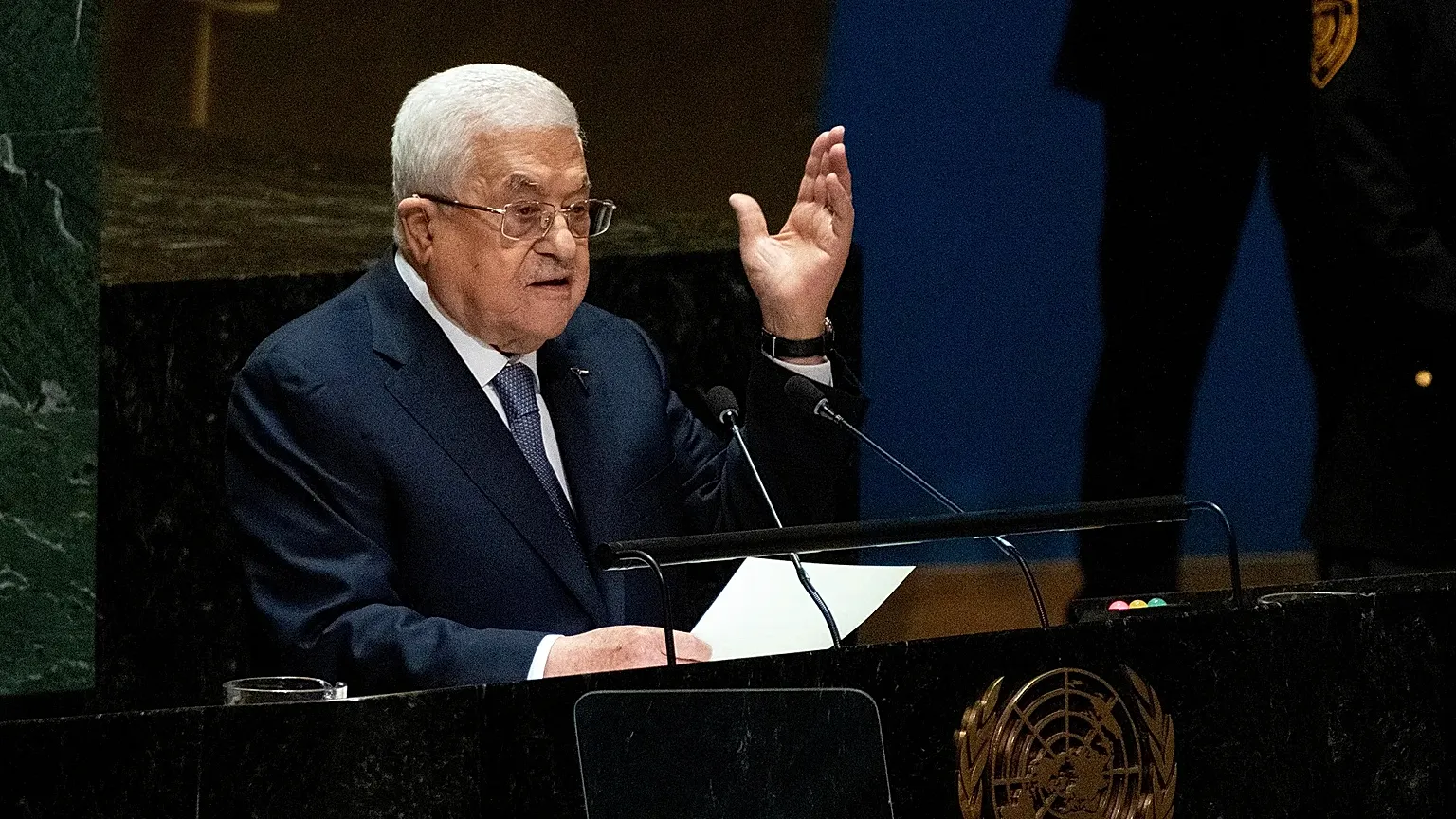
Palestinian representation faces another barrier in New York.
New York, United States.
The United States has denied Palestinian President Mahmoud Abbas a visa to attend the United Nations General Assembly for the second consecutive year, extending restrictions to dozens of Palestinian officials ahead of next week’s diplomatic gathering. The decision, announced on September 17, prevents Abbas from participating in person at a moment when Palestinian statehood and the Israeli-Palestinian conflict remain prominent international issues. Washington has attributed the restrictions to what it considers failures by Palestinian leaders to fulfill previous peace commitments. The Palestinian Authority has rejected the measure, arguing that it undermines diplomatic engagement and efforts to advance a negotiated two-state solution.
The US State Department announced that visa sanctions affecting members of the Palestine Liberation Organization and officials of the Palestinian Authority would remain in force. American authorities cited insufficient institutional reforms and activities they believe have weakened prospects for peace with Israel. Washington has also criticized Palestinian efforts to pursue the conflict through international judicial institutions, reflecting a broader disagreement over diplomatic recognition and legal accountability. These positions represent the American government’s stated justification rather than an independently established finding of wrongdoing by every official affected.
The restrictions extend beyond Abbas, affecting dozens of representatives who had expected to accompany him to New York. According to reporting by The Times of Israel, one visa notification referred to a provision of American immigration law concerning terrorism-related grounds of inadmissibility. The reported legal reference does not, by itself, establish that every affected Palestinian official engaged in terrorist activity. The scope and individual grounds of the visa decisions remain important distinctions in assessing their legal and diplomatic implications.
Palestinian participation in the General Assembly will nevertheless continue through diplomats already accredited to the United Nations. The State Department has maintained an exemption allowing members of the Palestinian mission to operate in New York, preserving an existing channel of representation. Abbas is expected to address the assembly remotely, as he did in 2025, although the General Assembly is expected to vote on a measure authorizing that arrangement. His last in-person address to the international body took place in 2024.
The decision comes amid continued international disagreement over recognition of Palestinian statehood. France, the United Kingdom, Canada and several other countries formally recognized Palestine in 2025, adding diplomatic weight to demands for a political settlement. Four of the five permanent members of the UN Security Council now recognize the Palestinian state, while the United States maintains a different position on the process for achieving statehood. Recognition, however, does not resolve questions surrounding territorial control, security arrangements or the institutional conditions necessary for a negotiated settlement.
The renewed restrictions also raise questions about access to multilateral diplomacy when the host country and a participating political authority are involved in a bilateral dispute. Washington retains responsibility for its immigration decisions, while the United Nations operates as a forum intended to accommodate broad international participation under its institutional arrangements. Spain and other European governments criticized the comparable American decision in 2025, arguing that Palestinian representatives should be able to address international institutions. The disagreement highlights the intersection of national immigration authority, diplomatic representation and the practical functioning of multilateral organizations.
The immediate consequence is another General Assembly in which Mahmoud Abbas is expected to participate without entering the United States. Palestinian officials retain diplomatic channels, but the restrictions complicate direct engagement during a gathering designed to bring international representatives together. The episode adds another dimension to disagreements over Palestinian statehood and the diplomatic mechanisms available to pursue peace.
Phoenix24: journalism without borders.
Esfuerzo de razonamientoMedia
To pick up a draggable item, press the space bar. While dragging, use the arrow keys to move the item. Press space again to drop the item in its new position, or press escape to cancel.