

 Phoenix 24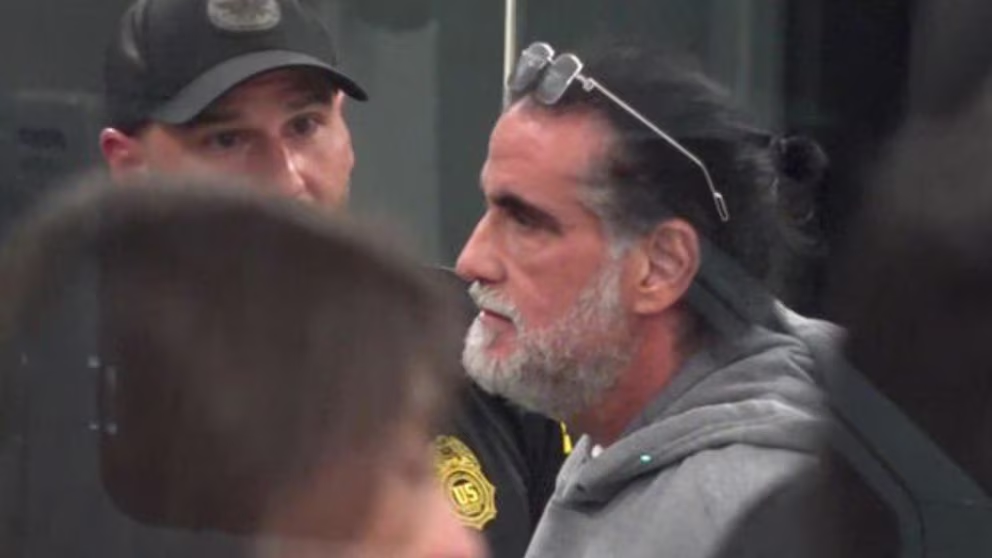
The financier’s testimony could expose how corruption operated within Venezuela’s highest political circles.
MIAMI, FLORIDA
Colombian businessman Alex Saab, a longtime financial intermediary for Nicolás Maduro’s government, pleaded guilty to money laundering in a United States federal court. Under the agreement reached with prosecutors, Saab accepted the forfeiture of approximately $195 million and committed to providing information relevant to continuing investigations into senior Venezuelan officials.
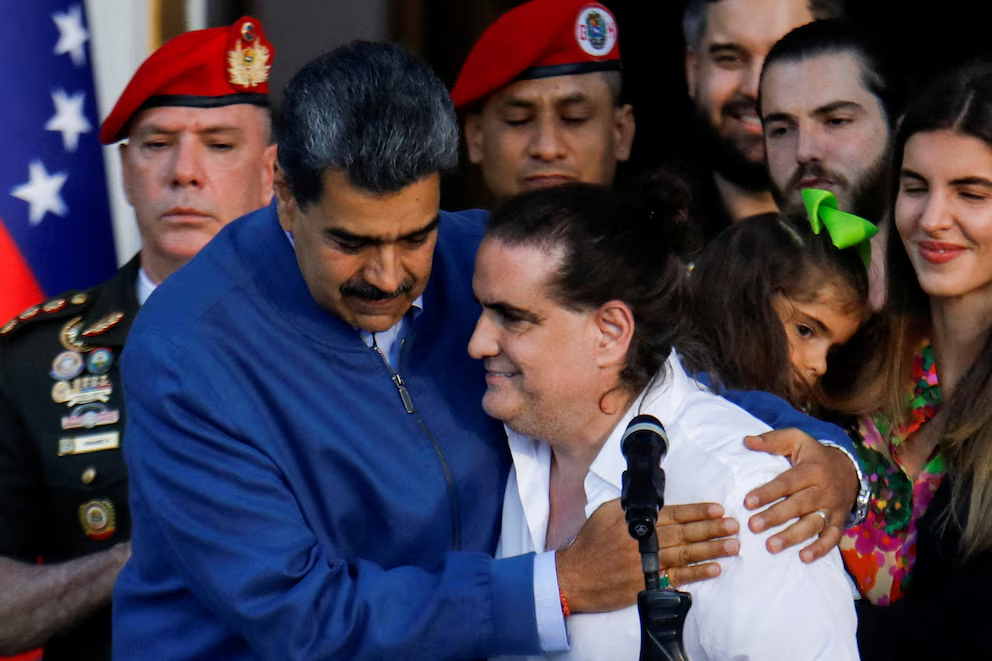
The case centers on contracts connected to Venezuela’s subsidized food program, known as CLAP. Prosecutors alleged that Saab and his associates inflated import contracts, falsified commercial documents and transferred illicit proceeds through shell companies and American financial institutions. Part of the money was allegedly used to bribe officials capable of approving contracts and protecting the operation.
Court records indicate that Saab admitted participating in a conspiracy involving public contracts worth hundreds of millions of dollars. One alleged beneficiary was former Venezuelan governor José Vielma Mora, who reportedly received approximately $17 million in bribes. The agreement does not establish the criminal responsibility of every person Saab may identify, and any accusations derived from his cooperation will require independent evidence.
Saab became one of the most strategically important businessmen surrounding Maduro by helping Venezuela conduct international transactions while the country faced extensive US sanctions. His networks reportedly touched food imports, construction projects, gold and petroleum. Caracas consequently portrayed his original prosecution as a politically motivated attack and claimed that he possessed diplomatic status.
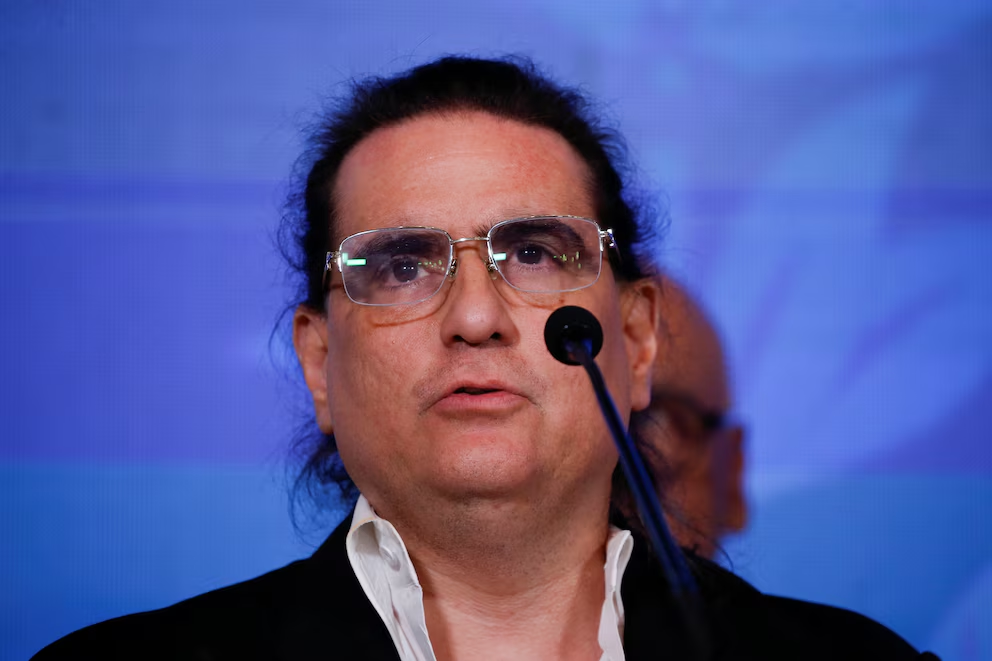
The businessman had been arrested in Cape Verde in 2020 and extradited to the United States the following year. President Joe Biden granted him clemency in 2023 as part of an exchange that secured the release of detained Americans. His latest prosecution followed subsequent political and judicial developments, returning a figure once defended by Caracas to the center of Washington’s investigations.
Cooperation may reduce Saab’s eventual sentence, but its wider importance lies in the information he possesses. Financial records, intermediaries and testimony could help prosecutors reconstruct relationships between government contracts, offshore companies and Venezuela’s political leadership. Yet cooperation agreements also demand caution: a witness seeking leniency has a powerful incentive to assist prosecutors, making corroboration essential.
Financial networks can conceal power until one participant decides to map them.