

 Phoenix 24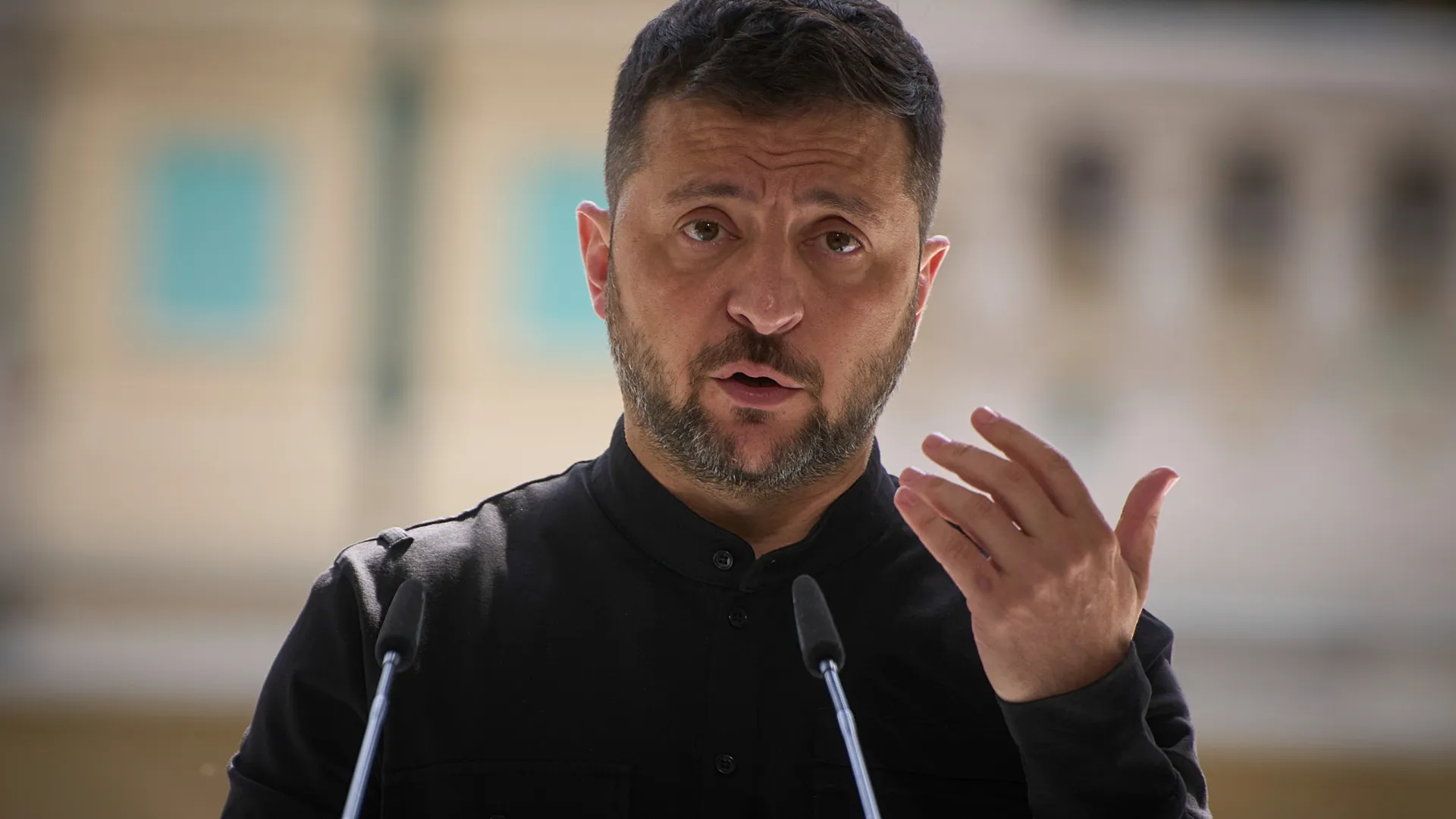
A dialogue delayed under fire, reframed by sovereign principle.
Kyiv, September 2025
Ukrainian President Volodymyr Zelensky has firmly rejected an invitation from Russian President Vladimir Putin to meet in Moscow, calling the proposal unacceptable while Ukraine remains under daily missile fire. In remarks to an American outlet, Zelensky stated that Putin “can come to Kyiv,” insisting that he could not travel to what he described as “the capital of this terrorist.” He added that the gesture looked more like a tactic to buy time than a genuine peace initiative, suggesting that Moscow was attempting to play games with Washington.
The exchange unfolds at a moment of heightened military escalation and mounting diplomatic maneuvering. While Russia sought to project an image of civility by extending an invitation, Ukraine framed the move as a calculated diversion. For Kyiv, accepting talks in Moscow would symbolize capitulation rather than negotiation. By redirecting the venue, Zelensky underscored that any dialogue must occur on terms of equality, not submission.
Diplomatic channels across Europe, the Middle East and Asia have floated alternative neutral venues. Austria, the Holy See and Türkiye remain on the table as potential hosts, while Gulf capitals monitor developments closely. These proposals reflect a broader international push for meaningful dialogue, though none has yet produced tangible progress.
In Western capitals, debates sharpen. European leaders continue to press for mechanisms that could move both sides toward peace, while in Washington political voices diverge between those urging deeper involvement in mediation and others warning against concessions that might undermine Ukraine’s sovereignty. Neutral institutions, meanwhile, analyze the situation through the framework of international law, where precedent and wartime realities clash.
The significance of Zelensky’s refusal lies less in the rejection itself than in the symbolic redefinition of ground rules. By insisting on Kyiv, he reframed the negotiation not as an audience with a stronger adversary but as a meeting between equals. This message resonates across regions. In the Middle East, states watch Western responses as signals of commitment. In Asia, the crisis feeds into larger debates about multipolar diplomacy and the tension between imposed peace and negotiated settlement. In Africa, governments active in multilateral forums point to the conflict as evidence of the fragility of the global security architecture.
The paradox of diplomacy under fire is clear. Invitations and refusals are not mere protocol; they become instruments in the war of narratives. If Putin’s call was meant to appear conciliatory, Zelensky’s response reinforced a posture of resistance. The battlefield remains physical, but it is equally contested in the symbolic space where legitimacy and sovereignty are defined.
Gaza’s suffering dominates headlines, yet Ukraine’s rejection of Moscow’s invitation highlights a parallel reality: in both conflicts, the framing of dialogue is inseparable from the conditions of war itself. Talks cannot be divorced from the violence that surrounds them.
The confrontation between diplomatic choreography and wartime urgency leaves little room for illusions. Ukraine signals that dialogue is possible, but not at the cost of erasing its agency. Moscow signals willingness to talk, but under conditions that reinforce its dominance. Between these positions lies the uncertainty of a conflict whose resolution still appears distant.
Facts that do not bend.
Hechos que no se doblan.