

 Phoenix 24
The operation shows how weapons from past and present conflicts can migrate into organized crime networks.
Europe and Central Asia
Interpol has coordinated a major international operation that resulted in the seizure of 2,823 illegal firearms, nearly 400 hand grenades and explosive devices, and more than 40,000 rounds of ammunition across 17 countries in Europe and Central Asia.
The operation, known as Trigger X, was carried out between June 22 and July 5 and focused on illicit firearms trafficking routes connecting Eastern Europe, the Balkans and Central Asia. Authorities also made more than 150 arrests linked not only to weapons possession and trafficking, but also to drug crime, migrant smuggling and theft.
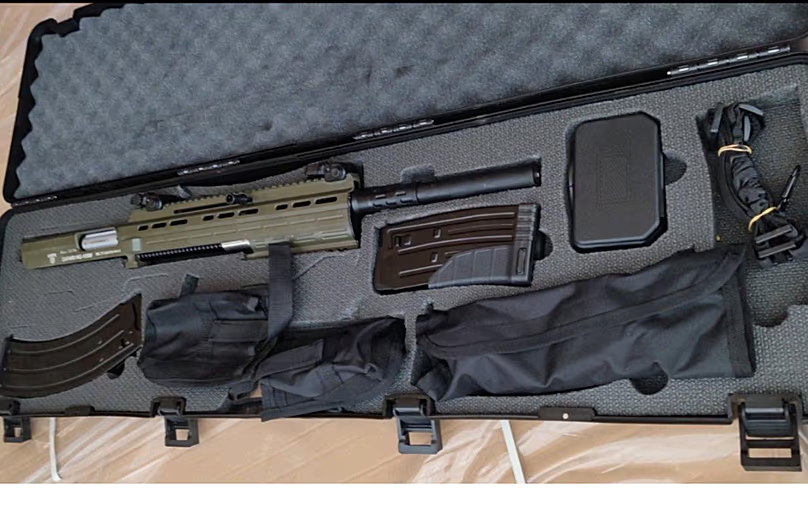
Several of the seized weapons were connected to past or ongoing conflict zones. Investigators warned that arms originally circulating in military environments can be diverted into organized crime, where they may later be used in violent offenses far from the conflicts in which they first appeared.
One of the largest discoveries took place at the Bulgaria-Türkiye border, where two heavy trucks were found carrying more than 1,000 military-style shotguns. In Serbia, authorities seized dozens of hand grenades and uncovered a clandestine workshop used to convert gas and blank-firing pistols into functional firearms.
The operation also exposed links between weapons trafficking and other criminal markets. Bulgarian authorities intercepted 20 inflatable boats believed to be connected to migrant-smuggling networks operating toward Western Europe and the English Channel. Drugs, counterfeit cigarettes, undeclared goods and other illicit products were also seized during the coordinated enforcement effort.
Interpol officials say the scale of the operation illustrates how firearms trafficking increasingly overlaps with broader transnational criminal systems. Weapons, drugs, forged goods, human smuggling and money flows can move through some of the same logistical corridors, making isolated national enforcement less effective.
The geographic scope of Trigger X also reflects a security challenge created by war. Weapons left behind, stolen or diverted from conflict zones do not necessarily disappear when fighting ends. They can remain in circulation for years, crossing borders and reappearing in criminal networks far from their original battlefield.
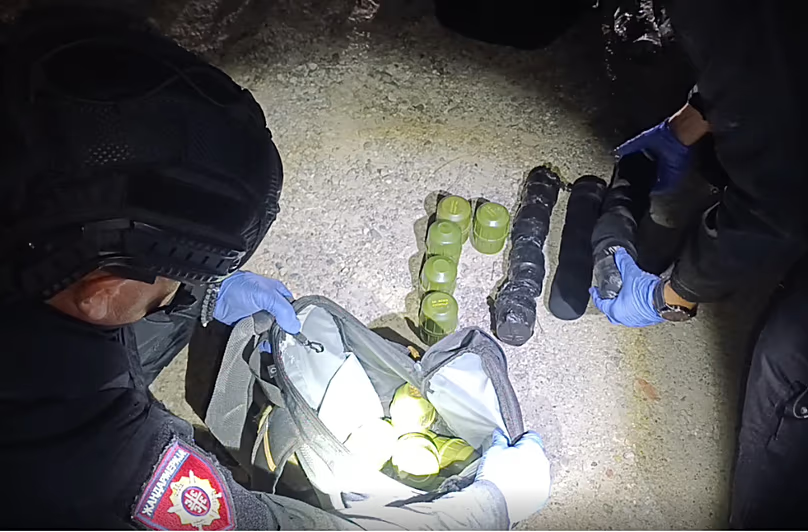
That dynamic has particular relevance for Europe and its neighboring regions, where the legacies of conflicts in the Balkans, Eastern Europe and the Caucasus continue to shape illicit arms markets. The concern is not only the number of weapons seized, but the possibility that similar routes remain active beyond those identified during the operation.
Trigger X therefore represents more than a large confiscation. It is evidence of how the afterlife of war can extend into peacetime crime, turning former battlefield weapons into long-term security risks.
When conflicts end, their weapons do not always disappear with them.