

 Phoenix 24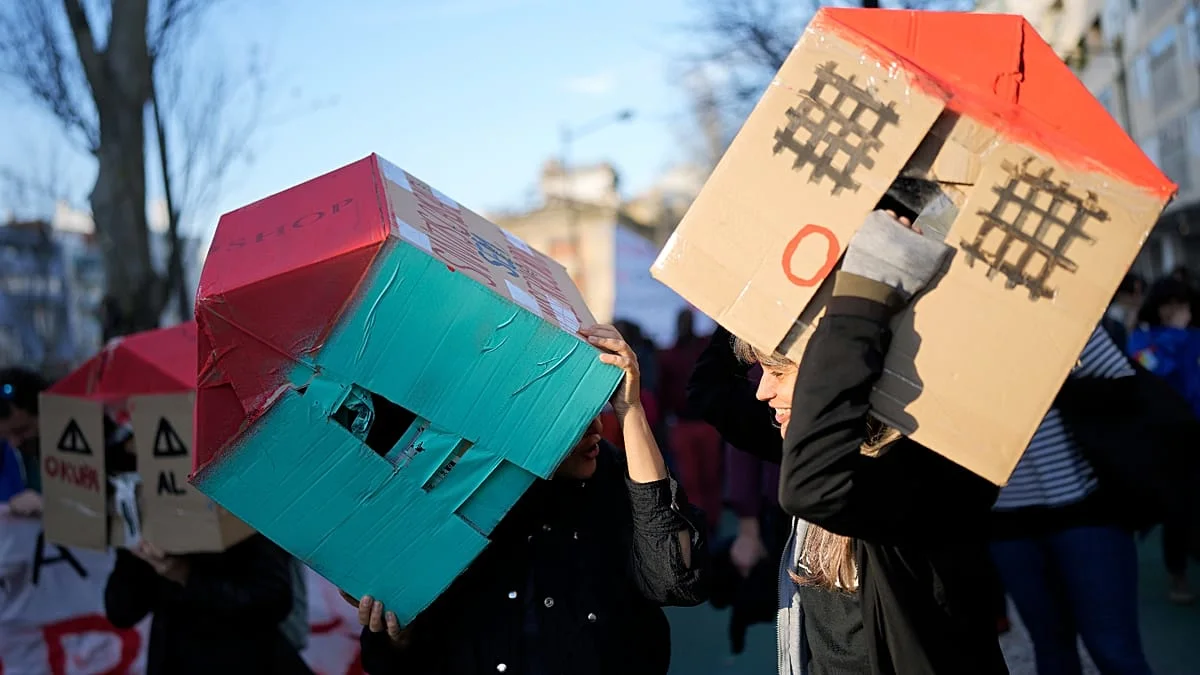
A coalition of civil-society groups says soaring rents, fuel costs and basic expenses are making everyday life increasingly unsustainable.
Lisbon, Portugal
Portugal is facing a new wave of demonstrations over housing and the rising cost of living, with the platform Não dá mais organizing protests in five cities this Saturday. The movement brings together around 40 civil-society organizations, including unions, housing-rights groups, gender-equality associations, climate organizations and social-inclusion networks.
Demonstrations are scheduled in Funchal, Aveiro, Porto, Braga and Lisbon, reflecting growing frustration over the cost of rent, fuel and essential goods. Organizers argue that many households are now spending such a large share of their income on housing that little remains for food, transportation and other basic needs.
Housing has become one of Portugal’s most politically sensitive social issues. Rents have risen sharply in several urban areas, while wages have struggled to keep pace with housing costs. The pressure is particularly visible in Lisbon and Porto, but affordability problems have spread well beyond the country’s largest cities.
The protests also come amid controversy over proposed changes to rental law. Parliament has approved in principle a measure that could allow landlords greater freedom to increase rents, replacing a previous cap of 2 percent relative to the prior rental value. The proposal would also make it possible to terminate rental contracts after two months of non-payment instead of three and could remove existing limits on security deposits.
Supporters of liberalizing the rental market argue that excessive regulation can discourage investment and reduce available housing supply. Critics contend that removing protections in a market already marked by high prices could intensify insecurity for tenants and increase the risk of displacement.
The movement is also demanding tighter controls on the prices of essential goods and fuel, linking housing pressure to a broader cost-of-living crisis. That framing is important because the demonstrations are not focused on a single law or government decision. They reflect wider dissatisfaction with the cumulative effect of rent, energy and supermarket prices on household budgets.
Portugal’s protests are unfolding alongside similar housing mobilizations elsewhere in Europe. Spain has recently witnessed large demonstrations against evictions and unaffordable housing, reinforcing the sense that housing has become a transnational political issue rather than a purely national problem.
The significance of the Portuguese demonstrations therefore extends beyond the number of people who take to the streets this weekend. They highlight a deeper European tension between housing as an investment asset and housing as a social necessity.
When rent consumes half a salary, the housing debate stops being about property alone and becomes a question about how much economic pressure a society is willing to normalize.