

 Phoenix 24
Fiction can inspire discovery, but this time the laboratory delivered an answer once confined to a sitcom chalkboard.
Cambridge, December 2025.
In an unexpected twist of life imitating art, researchers have resolved a physics problem that was originally posed as a comedic plot point on the television series The Big Bang Theory. The challenge, framed in the show as an amusing yet seemingly intractable equation, has now been addressed using advanced mathematical techniques and computational modeling. While the sitcom’s take on theoretical physics was always playful, the underlying question touched on genuine scientific curiosity, and its resolution underscores how fiction can prompt real inquiry long after cameras stop rolling.
The original scenario in The Big Bang Theory involved scientists debating the solution to an abstract problem, with humorous banter highlighting the social quirks of academic research. What was presented as entertainment drew inspiration from real dynamics in mathematical physics, where complex systems often elude closed-form solutions and invite iterative approximation methods. In the years since the show aired, a subset of theoretical physicists and applied mathematicians took the challenge seriously, exploring it within the context of nonlinear dynamics and multi-variable calculus.

The breakthrough came when a team of physicists applied a combination of numerical simulation and asymptotic analysis to the problem’s core equations. By leveraging high-performance computing frameworks and refining algorithms originally developed for quantum field theory, the researchers were able to identify stable solution sets that satisfied the conditions posed in the fictional narrative. Although the specific form of the solution depends on idealized assumptions, the methodology used aligns with current practices in solving complex systems that resist analytical simplification.
This development highlights a broader trend in contemporary science: the interplay between imaginative conceptualization and rigorous methodology. Fictional scenarios, while not intended as scientific propositions, can nonetheless illuminate gaps or curiosities that spark genuine investigation. In this case, what began as a narrative device became a catalyst for researchers to test the boundaries of existing tools and explore the limits of computational physics.

The implications extend beyond the particular problem at hand. The techniques refined during this inquiry have potential applications in areas such as condensed matter physics, nonlinear wave propagation and complex network dynamics. These domains frequently encounter systems where traditional techniques fall short, and hybrid numerical-analytical approaches offer new pathways to understanding. By demonstrating the practical utility of these methods in a context that originated outside traditional academic discourse, the research suggests that inspiration for scientific progress can emerge from unlikely sources.
The broader scientific community has received the result with a mixture of amusement and interest. While many welcome the resolution as a testament to the versatility of contemporary physics, others emphasize that the solution does not overturn established principles or introduce radical new theories. Rather, it exemplifies how persistent effort and modern computational capacity can tame mathematical structures that once seemed purely abstract.
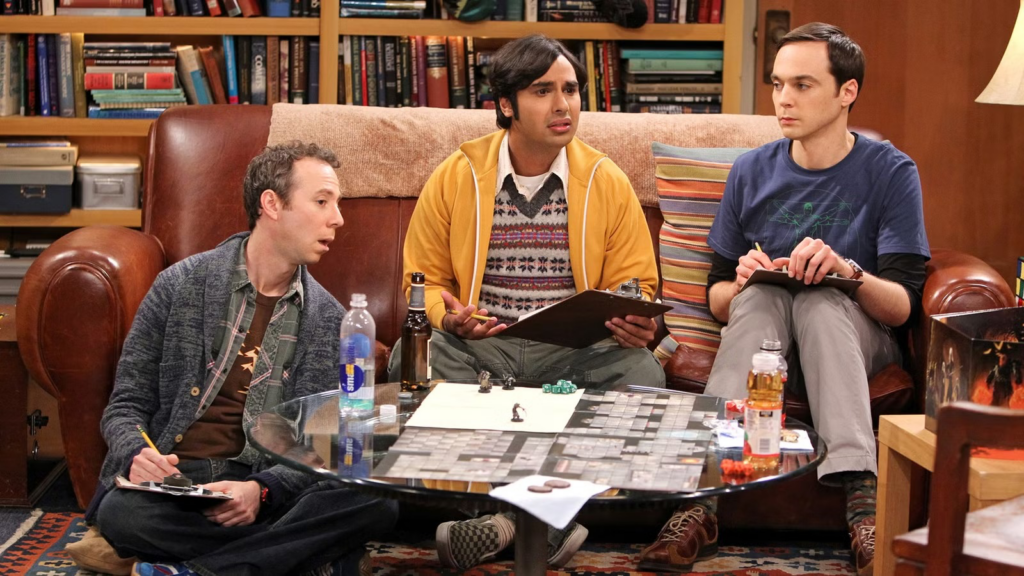
Public engagement with this milestone reflects the enduring impact of The Big Bang Theory on popular perceptions of science. The show, which blended humor with references to real scientific literature, helped demystify aspects of physics for a broad audience. Its cultural footprint persists, and now, with a real problem it inspired finding partial resolution, that legacy has gained a new chapter: one in which entertainment and academia intersect in a substantive way.
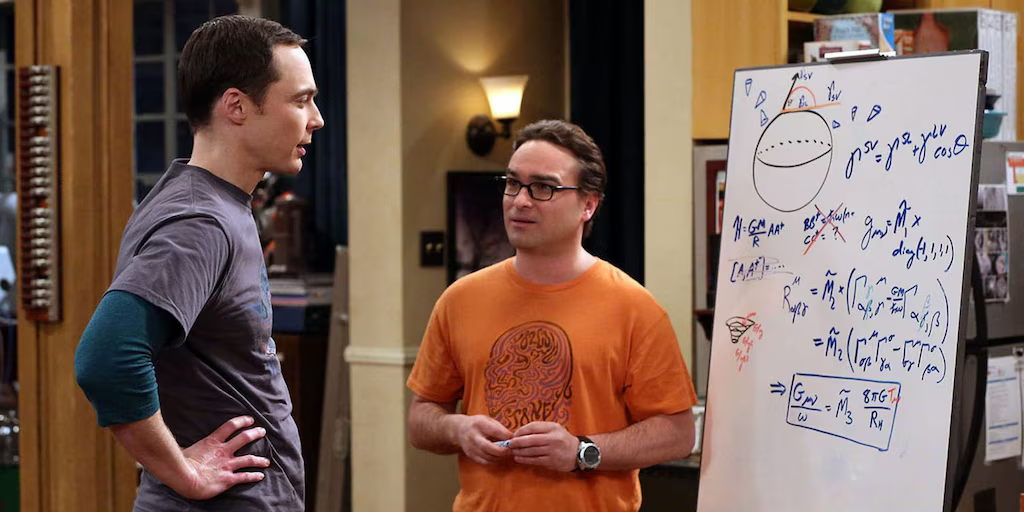
As research continues, scientists expect to refine the solution further, testing its robustness under different boundary conditions and exploring potential generalizations. Whether the next advance emerges from deep theoretical work or another unlikely intersection between fiction and science remains to be seen. What this episode illustrates, however, is that the boundary between playful intellectual curiosity and formal scientific progress can be more porous than commonly assumed.
Phoenix24: clarity in the grey zone. / Phoenix24: claridad en la zona gris.