

 Phoenix 24
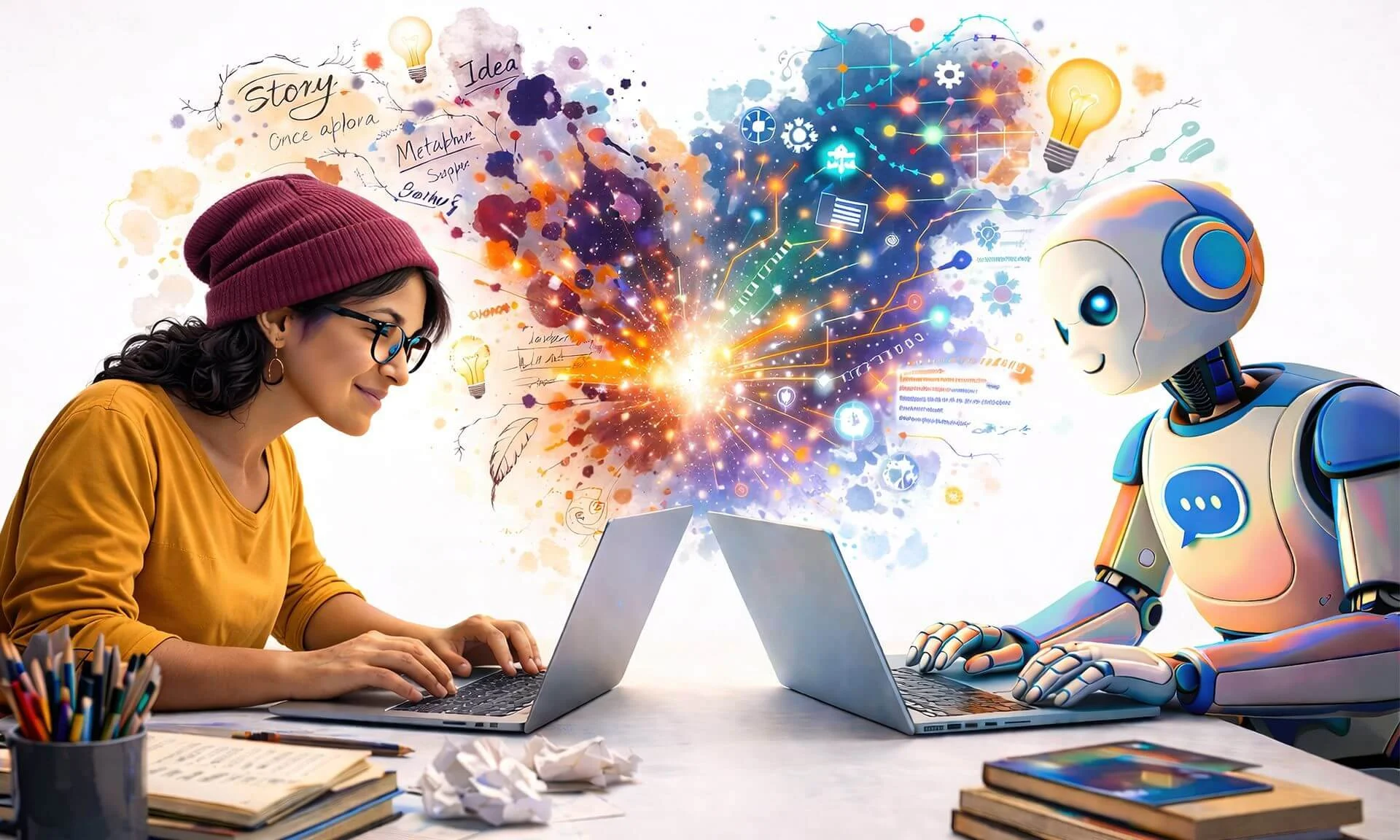
The line between what is ordinary and what is exceptional is no longer drawn only among people. It is now beginning to divide algorithms as well.
Montreal, Canada, January 31, 2026. A large-scale academic study has reshaped the global debate on the limits of artificial intelligence by concluding that advanced AI systems already outperform the average human in standardized creativity tests, while still falling short of those individuals operating at the highest levels of creative ability. The findings do not suggest the immediate replacement of human creativity, but they do signal a structural shift in how creativity itself is defined and measured.
The research compared the performance of state-of-the-art language models with that of a massive human sample using well-established tools designed to evaluate divergent thinking, originality, and the ability to form remote associations between concepts. In these controlled tasks, long used in cognitive psychology to assess creative capacity, artificial intelligence systems consistently scored above the human mean, particularly when operating under parameters that encourage variation and exploratory output.
The data indicate that AI excels in contexts where creativity functions as rapid recombination of existing information, the generation of multiple alternative ideas, or the construction of unconventional associations within predefined boundaries. In this domain, machines not only match but surpass the average individual, doing so with greater speed, volume, and consistency, while remaining unaffected by cognitive fatigue or attentional decline.
However, the same study identifies a clear boundary when comparisons shift toward humans situated in the highest creativity percentiles. In this group, human participants consistently outperformed all evaluated AI systems. The difference was not limited to novelty alone, but extended to conceptual depth, symbolic coherence, and the ability to produce ideas that genuinely break from existing patterns rather than rearranging them. At this level, creativity appears less combinatorial and more structural in nature.
Researchers emphasize that this gap is neither marginal nor temporary. While average creativity can be modeled, optimized, and reproduced through algorithmic systems trained on vast datasets, exceptional creativity seems to emerge from less formalized processes. Subjective experience, emotional ambiguity, intuition, and the capacity to reinterpret entire cultural frameworks play a decisive role. These elements remain difficult to encode within purely statistical architectures.

The study cautions against interpreting these results as a direct threat to human creative labor. Instead, they point to a transformation of the creative ecosystem itself. Artificial intelligence is increasingly occupying the space of everyday creativity, the kind that supports routine problem solving, content generation, educational tasks, and exploratory ideation. Meanwhile, the human advantage shifts toward high-impact creativity, the form that establishes new narratives, challenges dominant assumptions, and redefines meaning across social contexts.
Within this emerging landscape, collaboration between humans and intelligent systems appears not only likely but inevitable. AI operates as an amplifier of average cognition, accelerating early phases of ideation and expanding the range of possible solutions. Human intervention remains critical in selection, interpretation, and strategic direction, particularly where context, ethics, and long-term implications are involved. Creativity, in this sense, is no longer measured solely by novelty, but by the ability to assign intention, relevance, and purpose.
These developments also force a reconsideration of educational, professional, and cultural systems that for decades treated creativity as an exclusively human attribute. The evidence suggests that such exclusivity has begun to erode at the average level, even as the highest expressions of creative insight remain largely human-driven. The distinction is no longer between creative and non-creative agents, but between routine creativity and transformative creativity.
As artificial intelligence continues to advance, the question is not whether machines can be creative, but what kind of creativity society chooses to value. In that recalibration, human creativity does not disappear. It becomes more selective, more strategic, and more deeply tied to meaning rather than mere production.
Behind every data point, there is an intention. Behind every silence, a structure.