

 Phoenix 24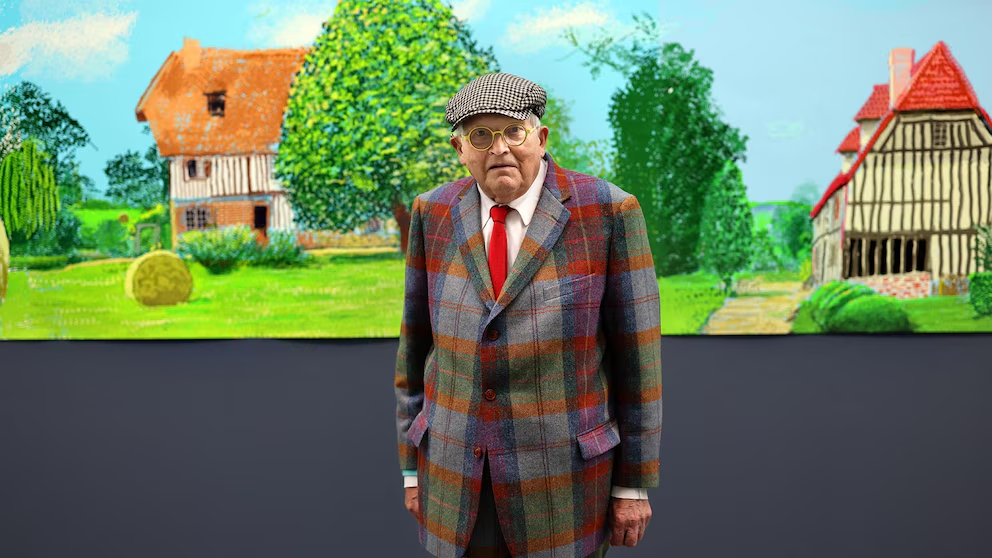
It was not a whim, it was a warning about irreversible loss.
Paris and London, January 2026.
British artist David Hockney has publicly opposed the plan to move the Bayeux Tapestry from France to Great Britain, calling the idea madness and arguing that transporting such a fragile and ancient work places it at unacceptable risk. The tapestry, nearly one thousand years old, is not a painting on canvas but an embroidered textile made of linen and wool threads that have weakened over centuries. Hockney insists that rolling, transporting, unrolling and reinstalling it would expose the fabric to mechanical stress, vibration, light changes and humidity shifts that could cause damage impossible to repair.
The Bayeux Tapestry tells the story of the Norman conquest of England in 1066 through a long embroidered narrative more than sixty meters in length. It is one of the most important historical textiles in the world and has remained in Normandy for decades under carefully controlled conservation conditions. The proposal to lend it to London for exhibition is part of a cultural agreement between France and the United Kingdom, intended as a symbol of cooperation and shared heritage. For Hockney, however, symbolism should never outweigh material reality. A work that fragile cannot be treated as a diplomatic object.
His concern is not theoretical. Conservation studies have already identified thousands of small defects, weakened fibers and repaired areas along the tapestry. Time, light and past handling have left their mark. Even with modern conservation techniques, textiles of this age remain extremely sensitive. Hockney argues that no transport system, no matter how advanced, can remove all risk. Climate controlled crates, vibration dampening and expert handlers reduce danger but do not eliminate it. Every movement is a gamble with history.
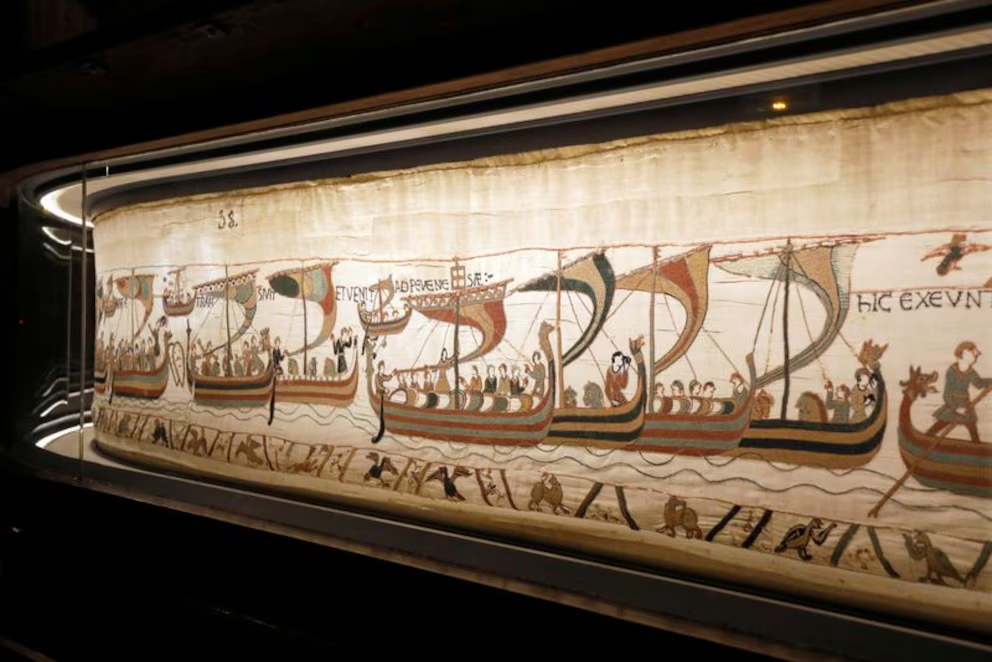
Museums supporting the move respond that fragile works travel regularly and that strict conservation protocols exist precisely for this reason. They argue that international loans are common practice and that collaboration between conservation teams from both countries will ensure the highest standards of care. Financial guarantees and insurance have been arranged in case of damage. For critics like Hockney, these assurances miss the point. Money cannot replace a damaged masterpiece. Compensation does not undo cultural loss.
The debate goes beyond one object. It touches on a deeper question about how societies treat their heritage. Is access more important than preservation. Should iconic works remain in the environments designed for their long term survival or should they travel to reach new audiences. In the case of textiles, the risk is especially high. Unlike stone or metal, fabric ages, weakens and remembers every movement.
Some historians and curators support Hockney’s position, arguing that technology now allows high quality replicas and digital exhibitions that can travel without endangering originals. Others insist that nothing replaces the emotional and historical power of seeing the authentic object. They argue that cultural exchange depends on sharing originals, not copies, and that public access is part of preservation because people protect what they know and value.
What makes the Bayeux case unique is the scale of what is at stake. This is not one painting among many. It is a singular object, a continuous narrative that connects medieval Europe to modern identity. If damaged, it cannot be truly restored. Its loss would not be local or national but global.
Hockney’s warning is therefore not only about art. It is about responsibility across generations. Every generation borrows heritage from the next. Decisions made for political symbolism or public spectacle can echo for centuries if they go wrong. The question is not whether moving the tapestry is possible. It is whether it is necessary.
At the center of this controversy is a simple tension. The desire to share versus the duty to protect. The ambition to display versus the obligation to conserve. However advanced technology becomes, fragility remains real. Some things survive only because they are left in peace.
Detrás de cada dato, hay una intención.
Detrás de cada silencio, una estructura.