

 Phoenix 24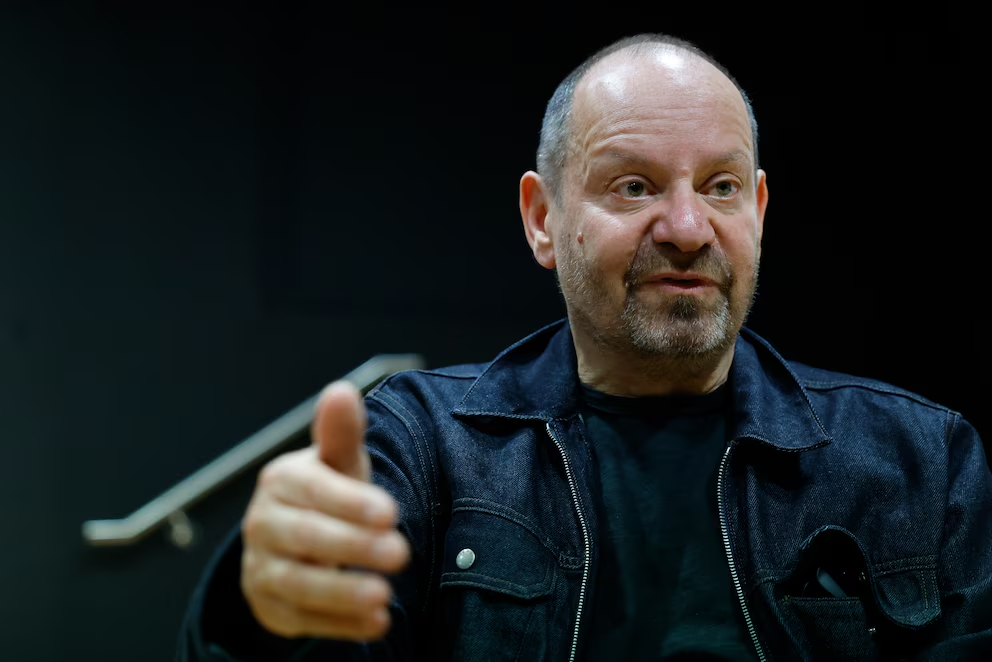
Buried secrets always return as public debt.
Madrid, May 2026. British lawyer and writer Philippe Sands has placed memory, justice and political responsibility at the center of a renewed debate over international law. During a visit to Madrid, the author argued that countries, like families, pay a price when they bury terrible secrets instead of confronting them.
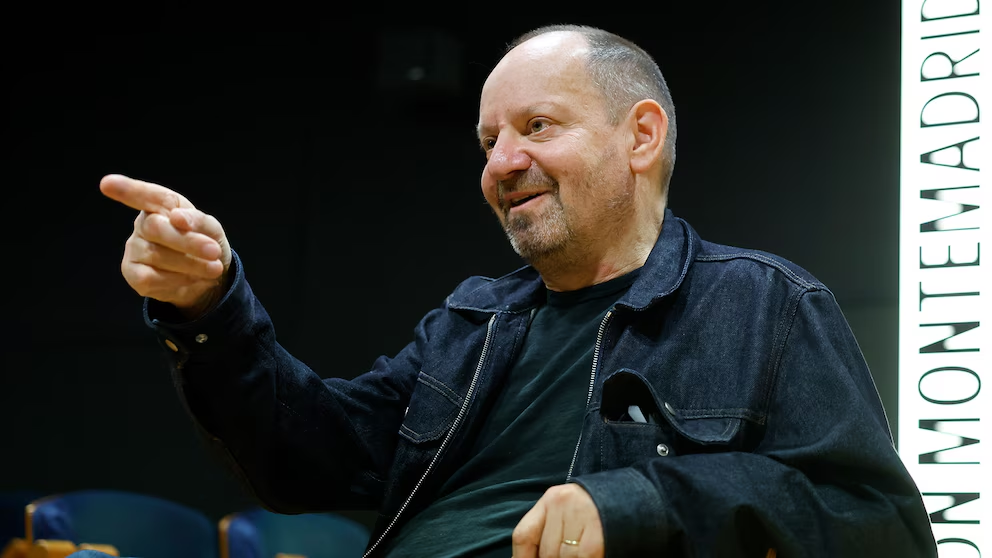
Sands speaks with the authority of someone who has participated in some of the most consequential legal battles of recent decades, including cases linked to Augusto Pinochet, war crimes in the former Yugoslavia and abuses at Guantánamo. His central argument is clear: international justice is slow, imperfect and frequently resisted, but its precedents change how power moves.
For Sands, the Pinochet case remains decisive because it altered the psychology of impunity. World leaders accused of grave abuses can no longer assume that borders, office or time will fully protect them. That is why figures such as Vladimir Putin, Benjamin Netanyahu and Donald Trump, in his view, may one day face legal exposure under international norms.
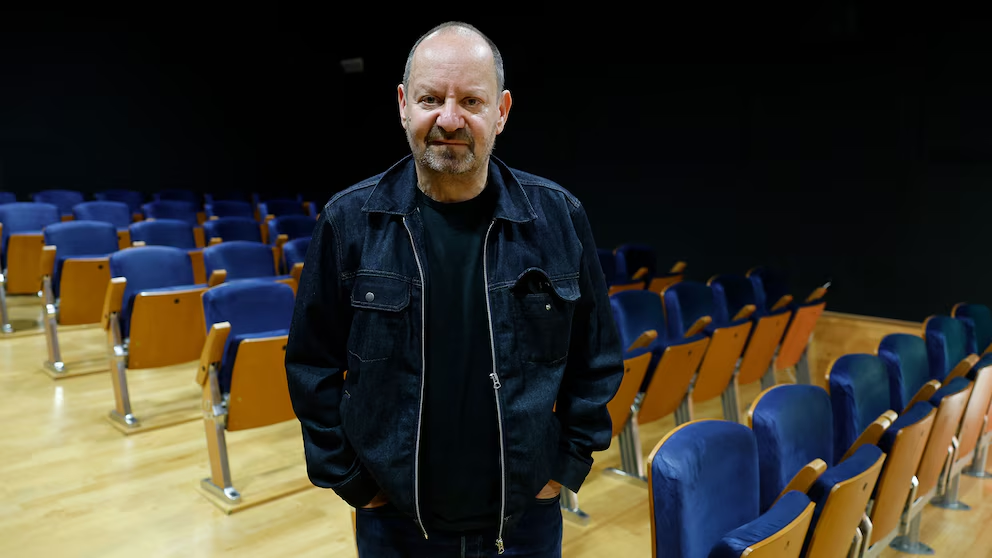
The deeper layer of his reflection is not only judicial, but historical. Spain’s unresolved relationship with Francoism, Chile’s confrontation with dictatorship and Britain’s colonial wounds all reveal the same pattern: societies that avoid memory do not escape conflict; they merely postpone it. Silence becomes inheritance.
Sands also warned that social media has weakened the foundations of truth and democratic debate. He described digital platforms as concentrated, manipulative and structurally anti-democratic, arguing that their power now threatens the public conditions required for justice itself.
His warning is not nostalgic. It is structural. Without memory, law becomes fragile; without truth, democracy becomes theatrical; and without accountability, nations continue paying interest on the secrets they refused to name.
Contra la propaganda, memoria. / Against propaganda, memory.