

 Phoenix 24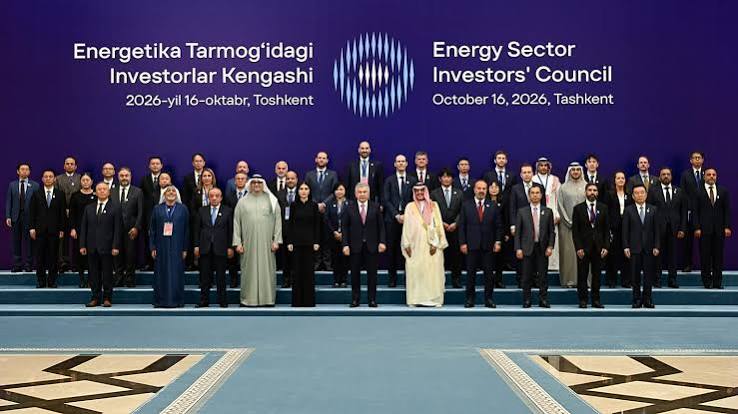
New investments could reshape Central Asia’s energy and industrial future.
TASHKENT
Uzbekistan has signed six energy agreements worth $4.7 billion and announced plans to develop two additional nuclear power plants, accelerating a national strategy aimed at securing electricity supplies, attracting international investment and supporting industrial expansion.
President Shavkat Mirziyoyev presented the agreements during meetings with foreign investors in Tashkent. The projects represent approximately 3,000 megawatts of new generating capacity and 400 megawatts of energy storage, according to government figures.
International companies associated with the investment initiatives include Saudi Arabia’s ACWA Power, the United Arab Emirates’ AMEA Power, France’s EDF and Japan’s Toyota Tsusho. Their participation reflects Uzbekistan’s efforts to diversify its energy partnerships while modernizing infrastructure across the country.
The government estimates that approximately $35 billion has been invested in Uzbekistan’s energy sector over the past decade. However, rapid industrial development, expanding data center operations and rising electricity demand have exposed weaknesses in transmission networks and the geographical distribution of generating facilities.
Authorities now intend to introduce more competitive bidding procedures and coordinate future power projects with national infrastructure requirements. By 2030, Uzbekistan aims to add 22 gigawatts of generating capacity, construct 5,000 kilometers of power lines and expand energy storage facilities.
Nuclear power occupies an increasingly prominent position in this strategy. Construction of the country’s first nuclear power plant, developed with Russia’s Rosatom in the Jizzakh region, began in June. The project is expected to provide 2,110 megawatts through a combination of large and smaller reactors.
Its estimated cost could reach $9.5 billion, with initial technical commissioning planned for 2029 and completion targeted for 2034 or 2035. The proposed second and third nuclear plants remain in preliminary planning, with financing arrangements, international partners and construction schedules yet to be announced.
The expansion also introduces geopolitical considerations. Cooperation with Russian nuclear technology providers gives Moscow a role in Uzbekistan’s long-term energy infrastructure, while investment from European, Gulf and Asian companies broadens the country’s international economic relationships.
Alongside nuclear development, Uzbekistan is expanding renewable energy and exploring additional hydrocarbon resources. Authorities have prepared 128 oil and gas exploration blocks for foreign investors and are examining opportunities for future electricity connections with European markets.
The strategy reflects a wider transformation underway in Central Asia, where energy infrastructure is becoming increasingly important to industrial competitiveness, digital development and regional economic integration.
Yet investment agreements and announced capacity targets do not automatically guarantee operational results. Project financing, construction schedules, regulatory oversight, grid modernization and environmental safeguards will determine whether Uzbekistan can translate ambitious commitments into reliable electricity generation.
For Tashkent, the challenge is extending energy security beyond domestic production toward a diversified system capable of supporting economic growth without creating excessive technological or financial dependence.
Beyond the Numbers, the Consequences.