

 Phoenix 24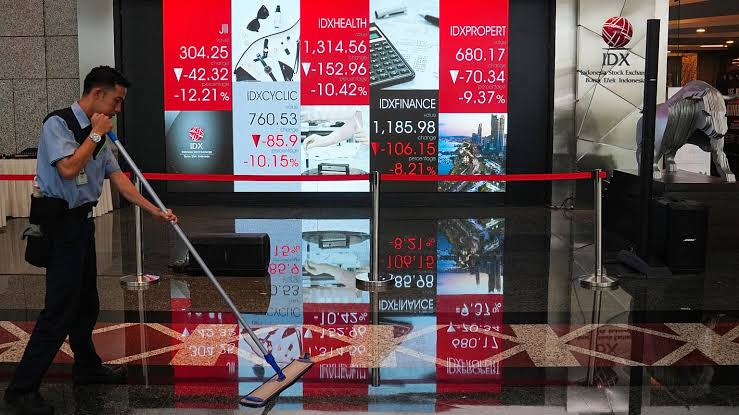
A potential MSCI downgrade threatens foreign investment and financial stability.
JAKARTA
Indonesia’s stock market plunged more than 11% on Friday after global index provider MSCI proposed removing the country from its emerging-market classification, triggering the steepest daily decline in Jakarta equities since the Asian financial crisis of 1998.
The announcement has raised concerns about the country’s financial governance, international investment prospects and its position within global capital markets. Indonesia, Southeast Asia’s largest economy, now faces the possibility of losing access to important investment benchmarks followed by institutional investors worldwide.
MSCI is considering reclassifying Indonesia as a standalone market, bypassing the intermediate frontier-market category. Such a decision would remove Indonesian equities from major emerging-market indexes and could require investment funds tracking those benchmarks to sell their holdings.
The proposal reflects persistent concerns about market transparency, unclear corporate ownership structures and suspected coordinated trading activity. MSCI argues that reforms announced by Indonesian regulators have not sufficiently addressed these weaknesses.
Authorities in Jakarta previously introduced measures intended to improve shareholder disclosure and strengthen market oversight. However, the index provider maintains that significant problems affecting market accessibility and investor confidence remain unresolved.
The financial consequences could be considerable. Analysts have estimated that a reclassification might expose Indonesia to as much as $19 billion in potential investment outflows, although these projections represent scenarios rather than confirmed withdrawals.
Foreign investors had already withdrawn approximately $4.9 billion from Indonesian equities this year, according to figures reported by Bloomberg. The Jakarta benchmark has lost close to 40% since January, while the rupiah has weakened significantly against the US dollar.
The latest market reaction illustrates how international index classifications influence capital allocation. Emerging-market funds often follow established benchmarks, meaning changes in eligibility can affect investment flows independently of individual companies’ operational performance.
The controversy also introduces broader questions about Indonesia’s economic governance under President Prabowo Subianto. Although the country’s economic potential remains substantial, sustained investor confidence depends on credible regulation, reliable market information and consistent enforcement.
For multinational corporations and institutional investors, the proposed downgrade could increase uncertainty surrounding financing costs, portfolio exposure and Indonesia’s attractiveness as a destination for international capital.
The implications extend beyond Indonesia. Global investors increasingly evaluate emerging economies not only through growth projections but also through institutional transparency, regulatory predictability and the accessibility of their financial markets.
MSCI has opened a consultation process and expects to announce its final classification decision by the end of June 2027. Indonesia therefore retains an opportunity to demonstrate measurable improvements before any reclassification becomes effective.
The distinction is critical: Indonesia has not yet lost its emerging-market status, but the possibility has already generated significant financial consequences.
The episode demonstrates that economic size and growth potential cannot independently guarantee continued access to global investment networks. Market credibility also depends on institutions capable of protecting transparency, accountability and investor confidence.
Beyond the Numbers, the Consequences.