

 Phoenix 24
The technology changes hands, but the gaming business remains Sony’s.
TOKYO, JAPAN.
Sony Group has transferred a substantial portfolio of extended reality patents to Meta, raising questions about the future of its immersive technology strategy without establishing that PlayStation’s virtual reality business has been sold. Reports based on patent assignment records identify 419 patents and applications across international jurisdictions, including 43 U.S. patent assets recorded as transferred between June and September 2026. The intellectual property covers technologies associated with head-mounted displays, image processing and virtual environments. The transaction highlights how ownership of technological inventions can shift between competitors while established products and operating businesses remain under their original companies.
A particularly important distinction lies in the identity of the seller. Patent assignment documents reviewed by specialized industry publications identify Sony Group Corporation as the transferring entity, rather than Sony Interactive Entertainment, the subsidiary responsible for PlayStation hardware and software. The wider agreement reportedly dates to December 2025, although its financial terms have not been publicly disclosed. These records support the transfer of specified intellectual property rights, not a comprehensive acquisition of Sony’s virtual reality division.
For Meta, the portfolio potentially strengthens its position in a market where hardware design, visual processing and immersive interfaces can differentiate competing devices. The company has developed its Quest product family around virtual and mixed reality experiences, supported by an extensive software ecosystem. Acquiring patents may provide additional technological options, licensing opportunities or protection against certain intellectual property disputes. Nevertheless, ownership of these rights does not prove that Meta intends to incorporate every invention into its future products.
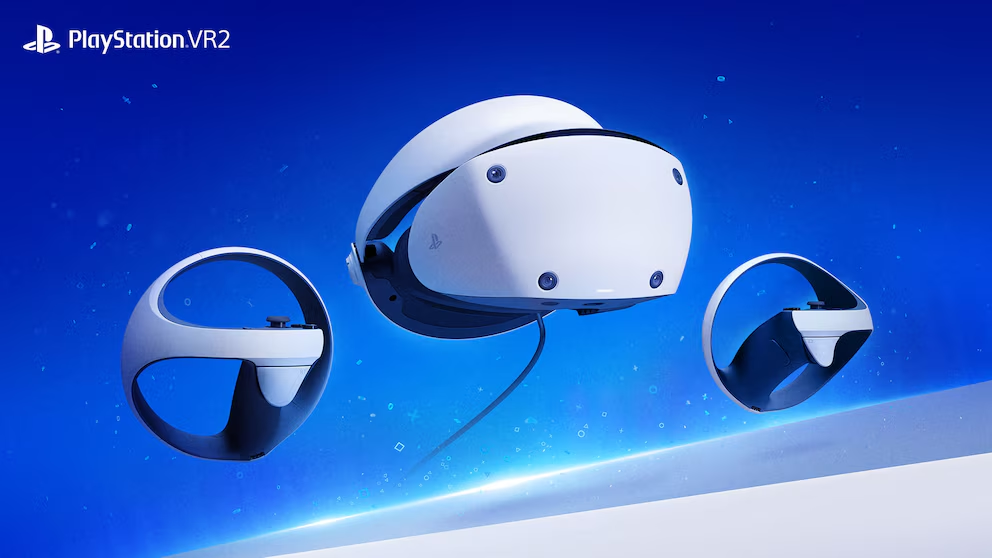
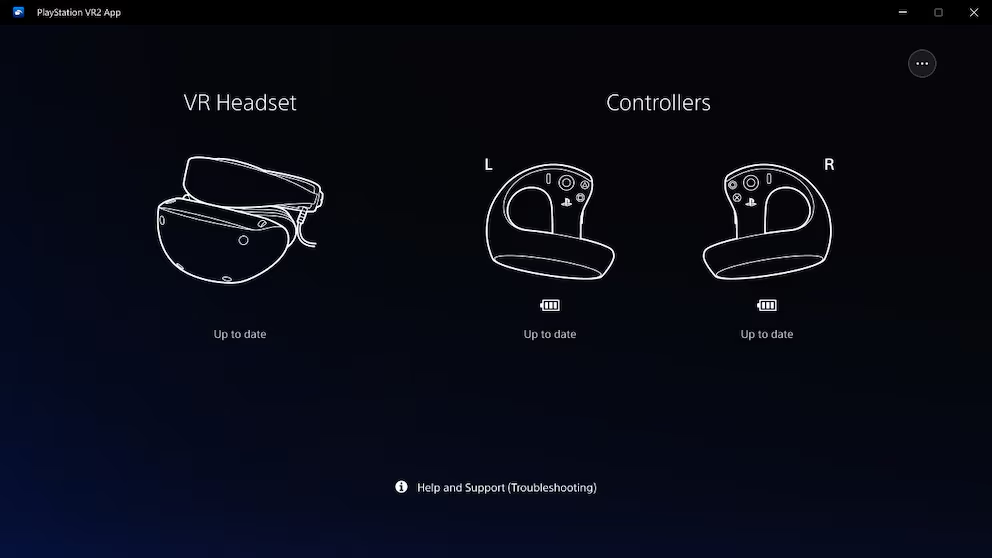
Sony’s position is more complicated than a simple withdrawal from the industry. PlayStation VR2, introduced in February 2023, remains a distinct Sony product, featuring OLED displays, eye tracking and advanced controllers designed for immersive gaming. The company subsequently expanded its functionality through a PC adapter, providing access to compatible computer-based virtual reality experiences. The recent patent transactions have created uncertainty about Sony’s future hardware priorities, but no confirmed announcement establishes that a successor has been canceled.
The commercial context helps explain why the transfer matters. Virtual reality manufacturers face substantial development costs, competition for exclusive content and the challenge of persuading mainstream consumers to invest in specialized equipment. Intellectual property portfolios can represent valuable strategic assets even when a company adjusts its product investment priorities. Selling selected patents may therefore reflect portfolio management rather than the abandonment of an entire technological field.
The broader implication concerns control over future immersive computing. As virtual reality, augmented reality and mixed reality continue to overlap, access to foundational technologies may influence partnerships, product development and competitive positioning. Meta’s acquisition strengthens its ownership of specified inventions, while Sony retains its PlayStation business and other capabilities not covered by the assignments. Until either company provides further details, the transaction should be understood as a significant transfer of intellectual property, not the disappearance of PlayStation VR.
Beyond the News, the Pattern.