

 Phoenix 24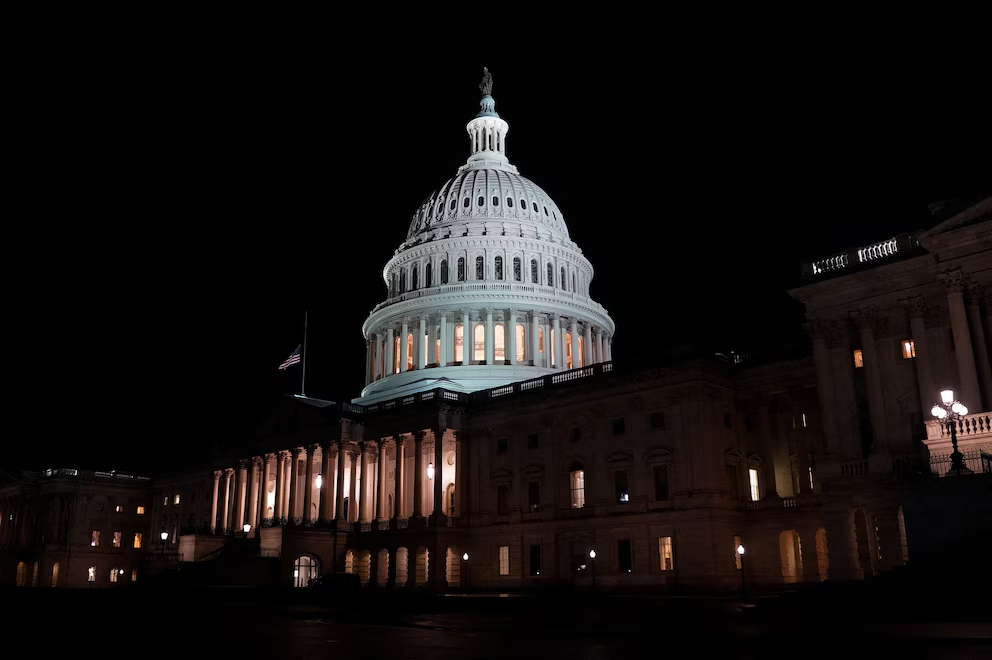
A political crisis that froze federal services for weeks now narrows to a single decision at the top.
Washington D.C., November 2025
After more than forty days of halted federal operations, the United States House of Representatives passed a funding bill intended to reopen the government and restore basic services across the country. The measure, which followed intense negotiations and public pressure from multiple sectors, now awaits the signature of Donald Trump, who has signaled willingness to enact it. The legislation provides temporary funding through late January and includes provisions to reinstate furloughed workers, resume suspended programs and authorize back pay for thousands of employees who endured the prolonged shutdown.
In North America analysts describe the vote as a moment of political exhaustion rather than consensus. Both major parties faced mounting criticism from state governments, business organizations and transportation authorities as economic disruptions accumulated. Airport delays, food assistance interruptions and stalled federal contract work deepened the sense of crisis, turning the shutdown into a national vulnerability that neither party could sustain. Observers familiar with congressional dynamics argue that the bill’s narrow margins reflect not unity but urgency, a recognition that prolonged stalemate would damage institutional credibility even among loyal constituencies.
Across Europe policy institutes followed the shutdown with growing concern, noting that the internal impasse of the world’s largest economy can ripple across global markets. Decision makers there emphasized that the episode underscores structural fragilities in democratic budgeting systems that rely on short term appropriations. The absence of long range fiscal commitments, they argue, complicates international planning in areas ranging from defense cooperation to multilateral research funding. Asian analysts echoed this view, highlighting how dependent global supply chains and security frameworks remain on predictable U.S. federal spending. They warned that repeated shutdown cycles risk undermining confidence in American reliability as a partner.
The bill itself is a stopgap rather than a full resolution. It focuses on restoring operations rather than settling deeper policy debates that fueled the gridlock. Lawmakers acknowledged that issues such as insurance credits, agency program reforms and long term spending priorities remain unresolved and will resurface during the next negotiating window in January. Budget specialists point out that this cycle of short extensions has become a defining feature of the current American legislative environment, one that trades structural clarity for temporary stability. For federal agencies this means planning remains constrained, with program directors forced to manage uncertainty while preparing for potential future disruptions.
On the ground the human impact has been immediate and visible. Federal workers in aviation safety, national parks, food inspection, border services, social programs and veterans affairs experienced delayed pay, heightened stress and operational backlogs. Community organizations across multiple states reported increased demand for assistance as public services stalled. While the bill promises retroactive compensation, morale within affected agencies remains strained. Many workers have expressed relief at the reopening but frustration at the political volatility that placed them at the center of a financial and administrative standoff.
Ultimately the vote provides temporary relief but no structural guarantee. A government that shuts down for more than a month reveals vulnerabilities in its own mechanisms of continuity. As the political class shifts to the next phase, the public is left with questions about sustainability, governance and the long term consequences of episodic paralysis. Whether the president’s signature will mark the end of a crisis or simply a pause before the next confrontation remains uncertain. What is clear is that the shutdown has exposed fault lines that reach far beyond budget numbers, touching the core of how a modern state maintains legitimacy through uninterrupted service.
Información que anticipa futuros. / Information that anticipates futures.