

 Phoenix 24
When the scene turns intimate, the real work happens behind the lens of control.
London, November 2025. Florence Pugh arrived at the release event of her latest production carrying a directness that she rarely hides—this time not only talking about her character but the system within which she works. In a recent podcast interview she discussed how intimacy coordinators on sets have evolved, praising some professionals while sharply criticising others for undermining the very safety and nuance they claim to protect. “It’s a job that’s still figuring itself out,” she said, adding that she is “quite confident and quite happy in my skin” and has never been afraid to make sure her voice was heard. Her remarks reopened a conversation about control, representation and actor agency in film-making that goes beyond one industry headline.
In the Americas, entertainment commentators noted a shift in how female actors talk publicly about power dynamics on set. Pugh’s willingness to name both positive and negative experiences with intimacy coordination reflects a broader trend: performers demanding transparency and creative input, not simply protection. She recounted early sex scenes filmed before the role of coordinator was standard, describing how inappropriate directions and uncomfortable moments emerged without a safety net. The distinction she draws is not between “no coordinator” and “yes coordinator” but between good coordination and bad coordination, and how either impacts storytelling and wellbeing.
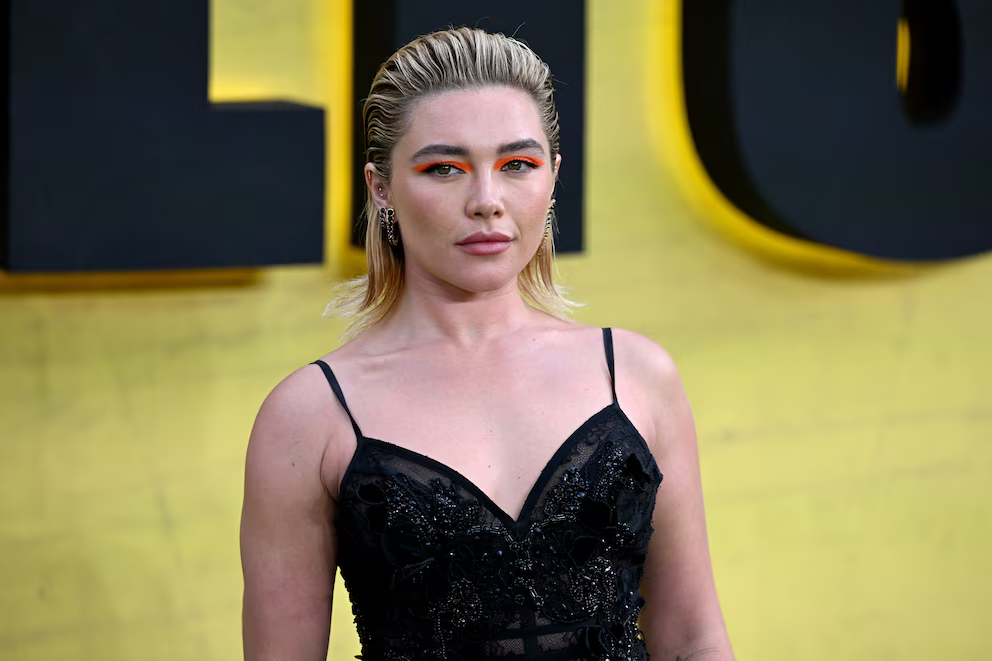
In Europe, the debate turns on regulation, creative tradition and professional standards. British and continental European critics argue that while the introduction of intimacy coordinators marked a meaningful shift after the #MeToo era, the implementation remains uneven. Pugh’s comments underscore that the role cannot simply be added as a safety layer; it must be embedded in creative workflows, with clarity about the dynamics of each intimate scene. She described how a well-matched coordinator asked questions such as: “What kind of relationship is this? How long have they been together? How do you touch each other?” and allowed the scene to shift from mechanical action into narrative moment. The “bad example” she described—where a coordinator “made it so weird and so awkward and really wasn’t helpful”—is a warning for an industry still adapting to new norms.
In Asia, film industry analysts observe how global streaming platforms and international co-productions have amplified pressure on intimacy coordination standards. As actors from diverse cultural backgrounds collaborate, the expectations for clarity, consent and purpose in sex scenes have grown. Pugh’s comments are viewed in Asia as part of a global conversation about how intimate content is treated in production, distribution and reception. When an actress of her profile says the role of coordinator is still in flux she signals a gap between formal policy and lived experience across borders.
The implications of Pugh’s stance go beyond one interview. She represents a generation of performers who see creative autonomy as the bedrock of their craft. Her decision to speak openly about the duality of her experiences—“good ones and bad ones”—challenges the notion of a simple fix and invites a deeper exploration of how filmmaking handles physical vulnerability. As she described the shift, she made clear that once she worked with a great intimacy coordinator she thought: “Oh, this is what I’ve been missing,” emphasising that the best coordinators contribute to storytelling by shaping the “dance of intimacy” rather than reducing it to a checklist.
Her critique also touches on structural issues. How are such coordinators trained? Who supervises them? How are their practices audited? Pugh’s remarks suggest that without clear industry standards and transparency the role risks becoming symbolic rather than functional. Her confidence in speaking out shows that performers are increasingly willing to hold not only productions but also new roles accountable.
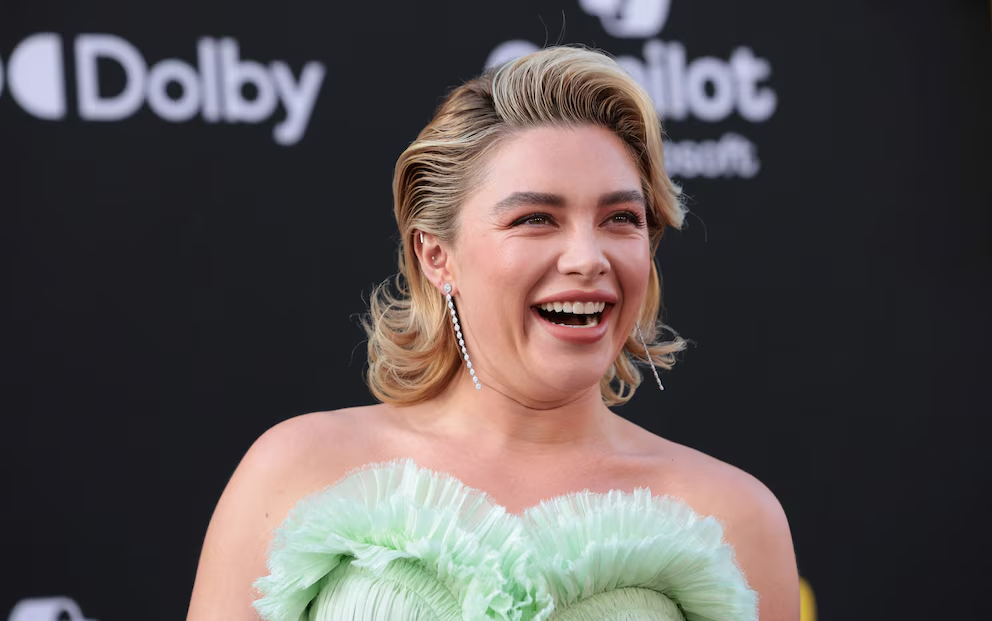
The timing of her comments is significant. With major upcoming projects—including blockbuster releases and international collaborations—Pugh is positioned at a crossroads in her career where creative stakes and public scrutiny both rise. Her narrative of leaving certain environments behind and choosing roles which offer respect, narrative weight and safety has been echoed by other actors but seldom with her balance of candour and craft focus.
Yet there is also optimism in her tone. She acknowledged her earlier willingness to protect her own voice and stated that her view of intimacy coordinators had changed: “I’m now having fantastic experiences with them,” she said. By publicly distinguishing between effective and ineffective practice she invites the industry to calibrate rather than reject the tool. Her perspective emphasises that coordination is not the end but the beginning of thoughtful creative collaboration, especially in scenes charged with both vulnerability and narrative significance.
Ultimately, Pugh’s reflection is a moment of industry accountability. It invites filmmakers to reassess how intimacy is choreographed, not just for safety, but for meaning; how actors are positioned not just as subjects of visibility, but as authors of their own presence. In doing so, she places herself at the intersection of artistry and advocacy, demanding that the art of intimacy on screen match the complexity of the lives it seeks to depict.
Analysis that transcends power.
Análisis que trasciende al poder.