

 Phoenix 24
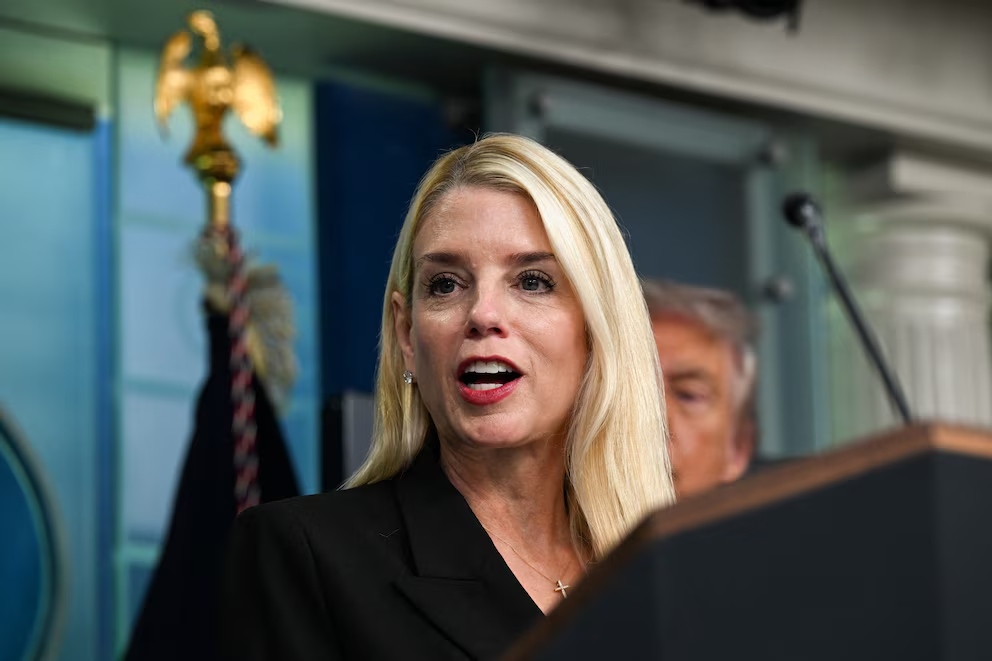
The Justice Department’s announcement formalizes long-standing accusations against the Venezuelan leader and signals continued legal pressure from Washington, framing the charges within U.S. criminal statute.
Washington, United States.
The Attorney General of the United States confirmed that Venezuelan President Nicolás Maduro has been formally charged in a U.S. federal indictment alleging his involvement in narcoterrorism, a term used by Washington to describe the intersection of drug trafficking and support for designated terrorist groups. The announcement by senior Department of Justice officials outlined accusations that Maduro and associates participated in a conspiracy to traffic large quantities of illegal narcotics to markets in the United States and provide material support to armed groups, accusations that Maduro has repeatedly denied.
According to the Justice Department, the indictment was returned by a grand jury in a U.S. federal district court following an extended investigation into transnational criminal activity linked to Venezuelan government officials and their associates. The document alleges that the defendants engaged in a conspiracy to distribute controlled substances and to assist organizations that the United States classifies as terrorist entities, charges that carry significant potential penalties under U.S. law. The announcement emphasized that the indictment reflects the department’s commitment to prosecuting individuals accused of facilitating such networks, regardless of their official titles or sovereign status.
The formal filing of charges against a sitting head of state is rare in U.S. practice and carries symbolic weight, though the practical implications depend on jurisdictional realities. U.S. officials acknowledged that because Maduro resides in Venezuela and the country does not have an extradition treaty with the United States, securing his physical custody would be legally and diplomatically challenging. Nonetheless, the indictment places Maduro on the U.S. criminal docket and could restrict his international travel to jurisdictions that might consider enforcement actions pursuant to their own legal frameworks or bilateral agreements.
The announcement has sparked varied reactions both domestically within the United States and internationally. Supporters of the indictment view it as a necessary step in addressing what they describe as decades of corruption, criminal enterprises and systemic abuses tied to the Venezuelan government. They argue that holding high-level actors legally accountable is a central element of broader efforts to combat narcotics trafficking and to promote the rule of law. Critics, however, caution that such legal actions risk complicating diplomatic engagement and that criminal indictments against foreign leaders can deepen political polarization without necessarily contributing to constructive outcomes.
In Venezuela, state officials swiftly rejected the charges, denouncing them as politically motivated and a violation of national sovereignty. Government spokespeople framed the indictment as part of a broader pattern of hostile U.S. policy toward Venezuela, asserting that internal political and economic issues should be resolved through domestic institutions rather than foreign judicial processes. Opposition figures in Venezuela offered mixed responses, with some welcoming the spotlight on alleged abuses and others expressing concern that external legal actions could further entrench divisions and hinder dialogue.
International observers noted that the legal action occurs within a broader context of strained relations between the United States and Venezuela, where disputes over governance, elections, humanitarian conditions and regional influence have shaped bilateral interactions for years. The indictment adds a judicial dimension to these tensions, underscoring how legal mechanisms are increasingly interwoven with diplomatic and geopolitical strategy.
Legal analysts pointed out that U.S. law permits the prosecution of individuals for drug trafficking and related offenses under statutes that extend beyond national borders, particularly when linked to distribution networks that affect U.S. communities. The inclusion of narcoterrorism charges reflects an effort to address the nexus between illegal narcotics and violence, a policy priority that successive U.S. administrations have cited in their public health and security agendas.
As the situation evolves, questions remain about the practical effects of the indictment on Venezuela’s political landscape, regional relations and Maduro’s ability to travel internationally. The announcement highlights the interplay between legal accountability, international norms and the limits of judicial reach when facing sovereign actors, even as debates continue over the most effective pathways to address transnational crime and promote stability.
Detrás de cada dato, hay una intención. Detrás de cada silencio, una estructura.
Behind every data point, there is an intention. Behind every silence, a structure.