

 Phoenix 24
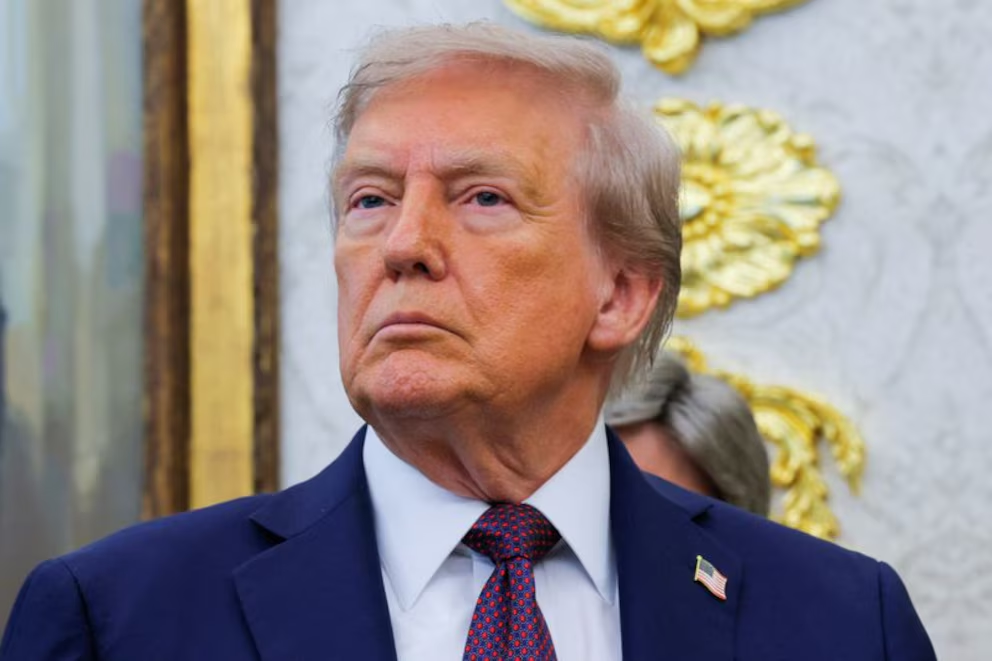
When diplomacy becomes capital, power redraws the economic map.
Global, September 2025
An unprecedented agreement has expanded Donald Trump’s influence over one of the world’s largest economies. Japan has committed 550 billion dollars for deployment inside the United States as part of a trade pact signed this month, granting the U.S. president direct authority to decide where the capital will be invested.
The memorandum was finalized alongside the ratification of a tariff agreement that lowered duties on Japanese goods from 25 percent to 15 percent. In exchange, Tokyo has only 45 days to channel the funds into projects selected by a committee led by Trump himself. If that deadline is not met, Japan risks seeing tariffs rise again to higher levels.
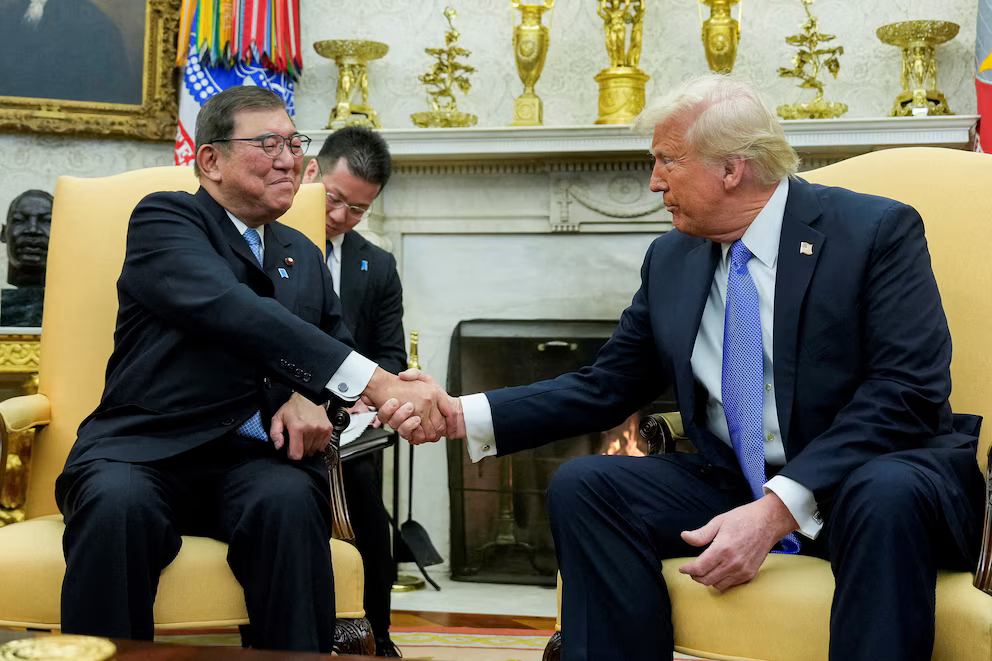
El presidente de Estados Unidos, Donald Trump, estrecha la mano del primer ministro de Japón, Shigeru Ishiba, en la Casa Blanca en Washington, Estados Unidos, el 7 de febrero de 2025. REUTERS/Kent Nishimura
Under the terms, the two nations will share the revenues equally until Japan recovers its initial outlay. After that point, however, the overwhelming majority—90 percent of subsequent profits—will go to the United States. The structure transforms the pact into a fiscal and strategic tool aligned with Trump’s long-standing “America First” doctrine.
Political observers in both countries voiced unease at the implications. The model, in which a foreign government transfers such vast decision-making power over internal U.S. investments, challenges conventional boundaries of economic sovereignty. Yet the need to avoid punitive tariffs appears to have outweighed those concerns, pushing Japanese negotiators to accept the deal.
The framework also stipulates that Japanese suppliers should be included whenever possible in the selected projects, a clause designed to safeguard jobs and industrial continuity in Japan. Analysts note that this provision softens the perception of one-sidedness, allowing Japanese industry to benefit indirectly from its own capital abroad.

Vehículos Honda aparcados en un patio de almacenamiento de vehículos en un puerto industrial de Yokohama, cerca de Tokio, Japón. REUTERS/Kim Kyung-Hoon
Still, the arrangement raises an uncomfortable paradox. On one hand, it offers relief in trade and injects massive resources into the U.S. economy. On the other, it grants a foreign ally limited influence while centralizing final control in the hands of a single American leader. The compromise is pragmatic, yet controversial, revealing how economic recovery and job creation can sometimes be justified even at the expense of traditional autonomy.
In essence, Trump has turned a commercial negotiation into a platform of economic leverage. Japan secures tariff reductions, but the United States retains the decisive voice over how funds are used. The agreement reshapes not only the economic relationship but also the political architecture of influence between two long-standing allies.
Phoenix24: beyond the news, the pattern.
Phoenix24: más allá de la noticia, el patrón.