

 Ren Takahashi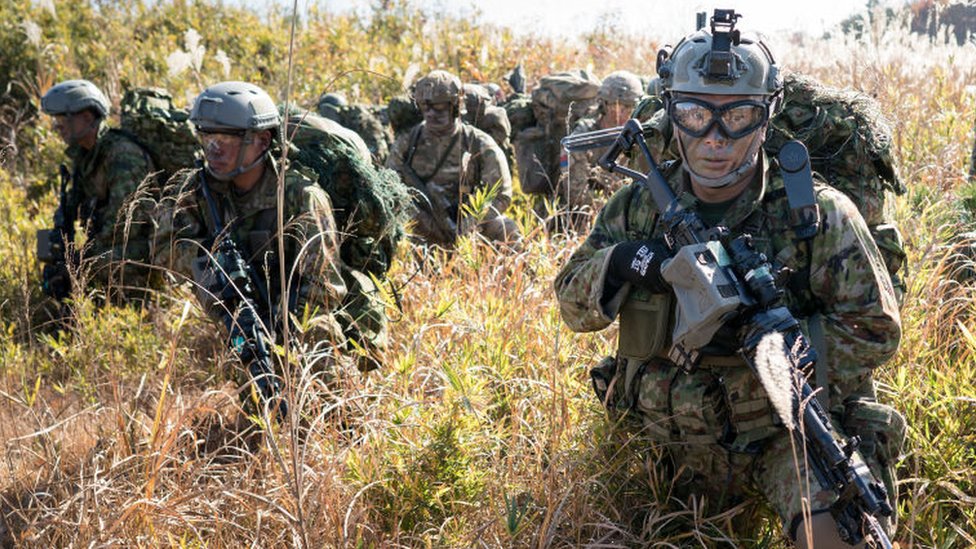
Japan is learning to speak in deterrence.
Tokyo, April 2026. Japan’s military transformation is no longer a theoretical debate hidden inside white papers, alliance statements or academic seminars. It has become a material reality measured in record defense budgets, long-range missiles, drones, coastal defense systems and new arms export ambitions. The country that built much of its postwar identity around restraint is now entering an era where restraint must coexist with deterrence.
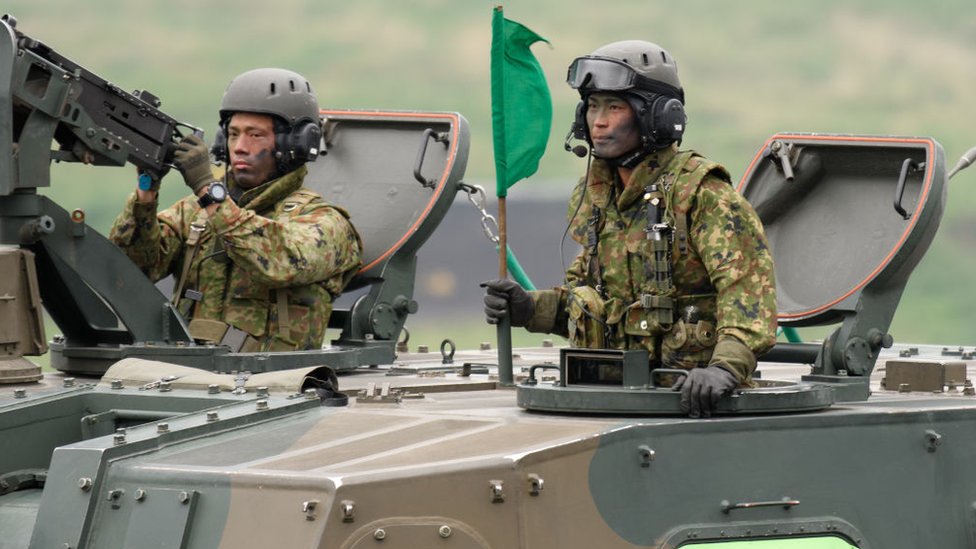
For decades, Japan’s pacifist posture was both moral inheritance and strategic arrangement. Article 9 symbolized a national promise after catastrophe, while the American security umbrella allowed Tokyo to avoid becoming a conventional military power. That architecture did not eliminate insecurity, but it contained it inside a language of self-defense, economic development and diplomatic caution.
That language is now changing. Japan has approved defense spending above nine trillion yen for fiscal 2026, continuing a buildup designed to bring security-related spending toward the two percent of GDP threshold. The number matters not only because it is large, but because it breaks the psychological limits that shaped Japanese defense politics for generations.
The shift is driven by geography. China’s military expansion, North Korea’s missile program, Russia’s pressure in the northern Pacific and uncertainty over future American commitments have compressed Japan’s strategic comfort zone. The Indo-Pacific is no longer a distant diplomatic phrase. It is the water around Japan, the air above its islands and the digital space through which its society now functions.
Tokyo’s new doctrine is built on a difficult assumption: defense is no longer credible if it only waits to absorb impact. Counterstrike capabilities, missile defenses, unmanned systems and hardened infrastructure reflect a country preparing to deter before it is cornered. This does not mean Japan is abandoning democracy or becoming militarist in the old sense. It means the postwar vocabulary is no longer sufficient for the security environment Japan inhabits.
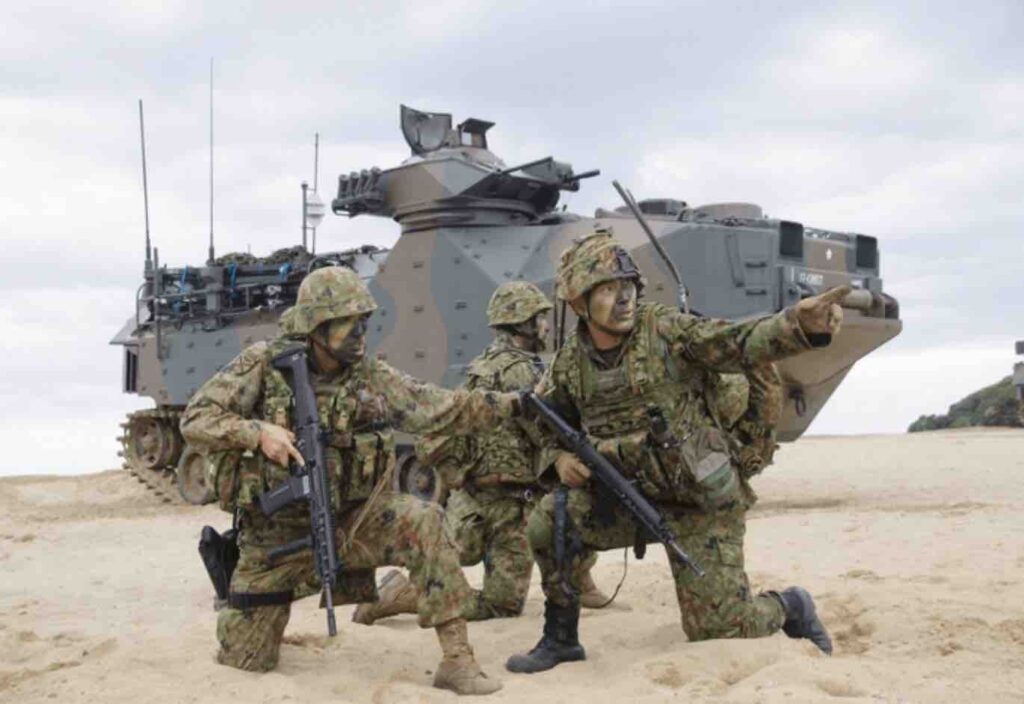
The emotional challenge is profound. Japan’s modern identity was built on the trauma of war and the discipline of not repeating it. Rearmament therefore cannot be understood only as policy modernization. It is also a psychological negotiation with memory, guilt, vulnerability and fear.
This is where postwar innocence ends. Not innocence as ignorance, because Japan has never been naïve about its region. The innocence that ends is the belief that economic power, American protection and constitutional restraint could permanently shelter the country from hard military choices. That belief shaped generations. It is now being revised by missiles, naval expansion and strategic anxiety.
The agreement to supply Australia with upgraded Mogami-class frigates deepens that revision. Japan is no longer only strengthening its own Self-Defense Forces; it is stepping into the role of defense exporter and security partner. The deal is historically significant because it moves Japan beyond passive alliance dependence toward active participation in regional military architecture.
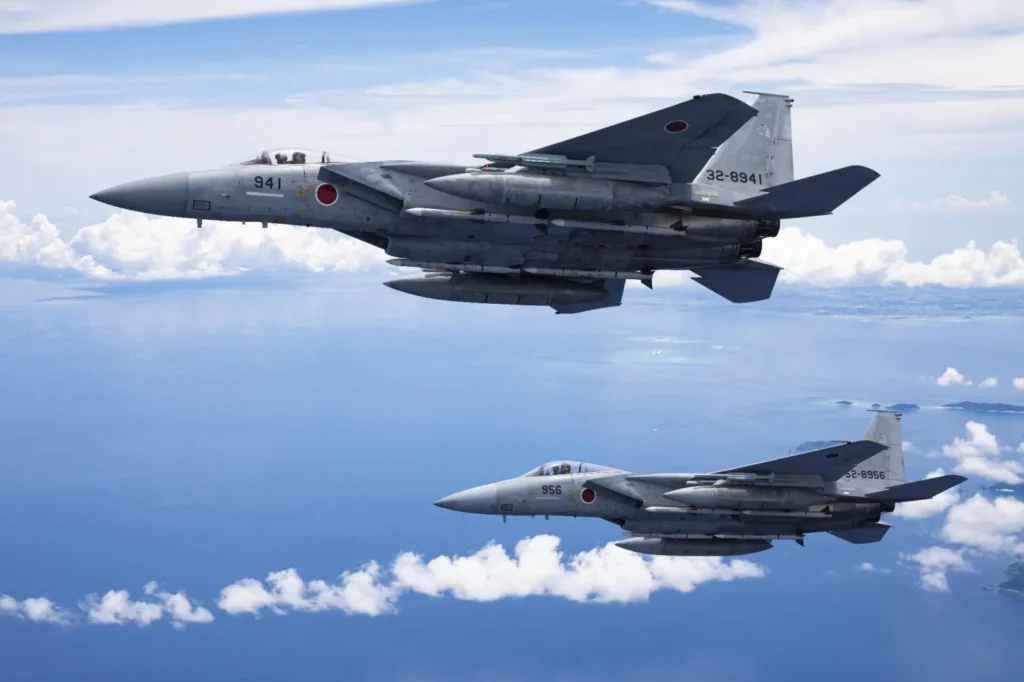
For Australia, the frigates strengthen maritime capacity. For Japan, the symbolism is larger. A country long cautious about exporting lethal or advanced military systems is now helping another Indo-Pacific democracy reinforce its navy. This is not simply commerce. It is strategic alignment built through shipyards.
China will read the move as containment. North Korea will read it as further militarization. The United States will likely welcome it as burden-sharing. Southeast Asian states will study it with mixed feelings, balancing concern over escalation with recognition that Japan is becoming a more capable stabilizing actor. In Asia, every defense decision has several audiences.
Renouncing innocence does not mean embracing recklessness. Japan’s challenge is to become stronger without losing the constitutional and civic habits that made its postwar democracy distinctive. Rearmament can protect sovereignty, but it can also reshape institutions, budgets, industries and public imagination. A society that spends more on defense eventually begins to think differently about danger.
Technology will accelerate that transformation. Japan’s future military posture will not be defined only by soldiers and ships, but by sensors, satellites, drones, artificial intelligence, cyber defense and data integration. The battlefield around Japan is becoming computational. Deterrence increasingly depends on seeing faster, deciding faster and connecting systems before an adversary can exploit hesitation.
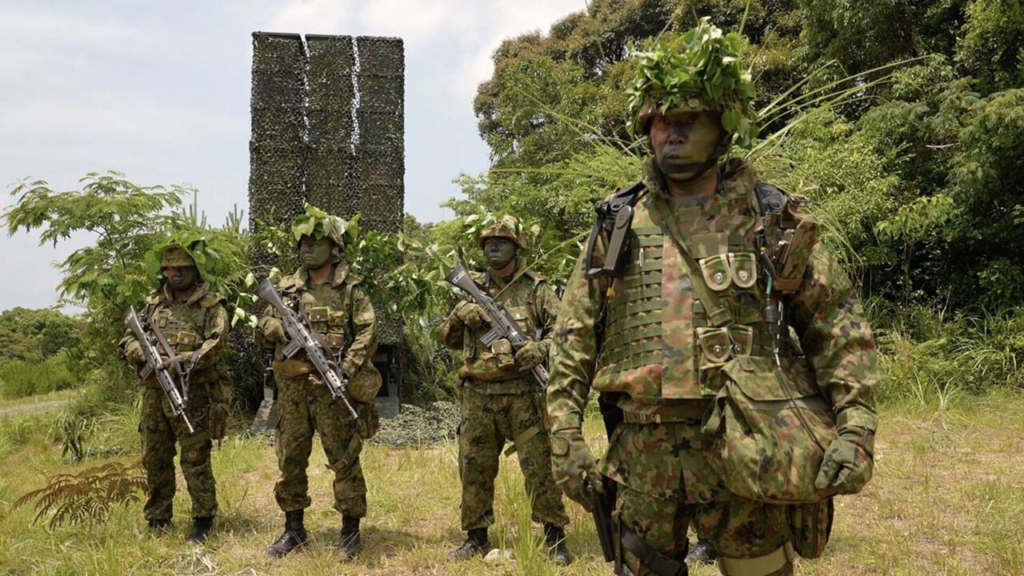
This is why the debate belongs to democracy as much as to defense. If military modernization moves faster than public deliberation, the citizen becomes a spectator to strategic change. Japan cannot allow that. A democratic rearmament requires transparency, parliamentary seriousness, press scrutiny and a public conversation mature enough to hold two truths at once: Japan needs stronger defenses, and military power must remain politically accountable.
There is also a budgetary question. Every yen spent on defense is a yen not spent elsewhere, or a yen that must be justified against aging, social care, education, regional decline and economic stagnation. Security is real, but so is demographic fragility. Japan must avoid building deterrence abroad while neglecting resilience at home.
The cultural dimension is equally delicate. Japanese soft power has long rested on technology, design, culture, food, anime, literature and the quiet credibility of a country that seemed disciplined rather than aggressive. As Japan becomes more visible militarily, it must protect that moral capital. The world can accept a stronger Japan if it trusts the purpose of that strength.
That trust will depend on language and behavior. Tokyo must explain its buildup not as nostalgia for power, but as defense of a rules-based regional order under pressure. It must show that rearmament is tied to deterrence, not domination; partnership, not revisionism; democratic survival, not nationalist theater.
The danger is that fear can be politically useful. If leaders discover that external threat produces domestic obedience, the line between preparedness and securitization can blur. Japan is not immune to that temptation. No democracy is. The test will be whether the country can strengthen its military without weakening its civic skepticism.
The end of postwar innocence is not a tragedy if it leads to strategic adulthood. It becomes dangerous only if adulthood is confused with hardness, secrecy or historical amnesia. Japan must remember why its restraint mattered even as it recognizes why restraint alone no longer suffices.
The region is changing too quickly for old formulas. The Taiwan Strait, the South China Sea, the Korean Peninsula and the northern Pacific now form a connected strategic field. Japan sits at the center of that field, no longer able to pretend that distance will protect it. Geography has returned as destiny.
Tokyo’s rearmament, then, is not merely a budget increase. It is a national transition from protected pacifism to contested deterrence. The question is whether Japan can make that transition without losing the ethical seriousness born from its own history.
A stronger Japan may be necessary. A less reflective Japan would be dangerous. The future will depend on whether Tokyo can carry both the sword and the memory of why it once feared the sword.
Ren Takahashi (高橋 蓮) is a Japanese journalist and global opinion editor at Phoenix24. He specializes in Asian geopolitics, digital democracy, and cross-cultural analysis. Educated at Keio University, LSE, and UBC.