

 Samira El-Khalil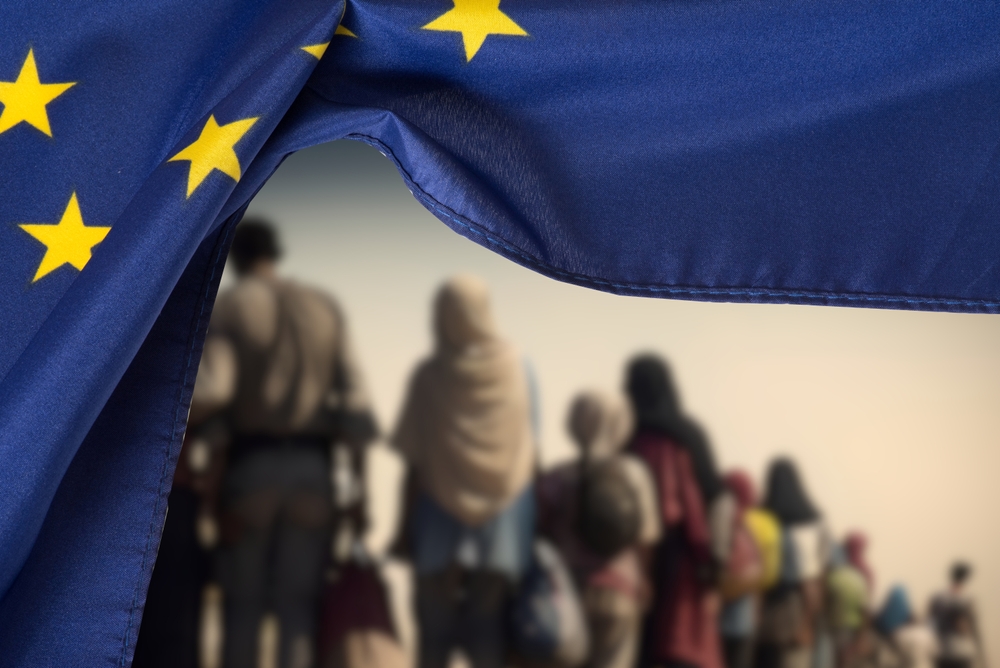
The border now lives inside fragile states.
Tunis, April 2026. Europe no longer needs to move its border south with a flag or a soldier. It moves it through agreements, patrol budgets, biometric databases, detention centers and diplomatic pressure disguised as cooperation. Across North Africa, migration policy has become one of the most powerful instruments through which Europe shapes the internal politics of states it still prefers to call partners.
This is not a new colonialism in the old theatrical sense. There are no governors in white uniforms, no formal mandates, no declared protectorates. The architecture is quieter and more technical. It is written in memoranda, security funding, readmission clauses, coast guard training and the language of “shared responsibility.”
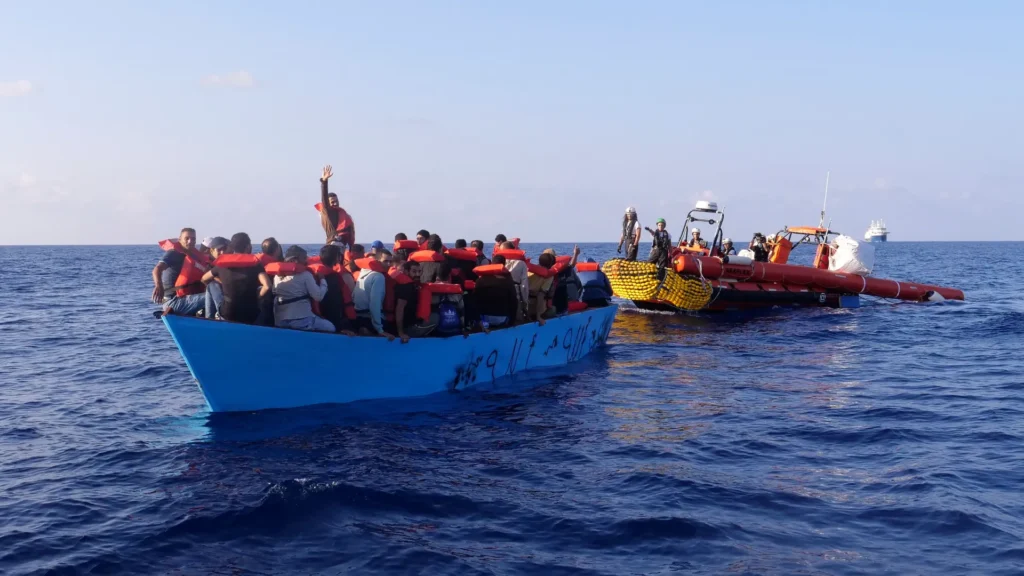
But the effect is political. Tunisia, Libya, Morocco, Algeria and Egypt are increasingly asked to perform the work of European border control before migrants ever reach European soil. Their deserts, ports, police stations and coastlines become extensions of a security imagination born in Brussels, Rome, Paris and Madrid. The Mediterranean is no longer the frontier; North African institutions are.
For European governments, the logic is electorally convenient. Keeping arrivals down reduces pressure from far-right parties, stabilizes domestic narratives and allows leaders to claim control without confronting the deeper causes of displacement. Migration becomes less a humanitarian question than a political thermostat. Turn the pressure outward, and the internal debate cools.
For North African states, these agreements offer money, recognition and leverage. Governments under economic strain can convert border cooperation into diplomatic currency. They can negotiate aid, debt relief, security support and international legitimacy by promising to contain human movement. Migrants become bargaining chips in a market where sovereignty is always partially for sale.
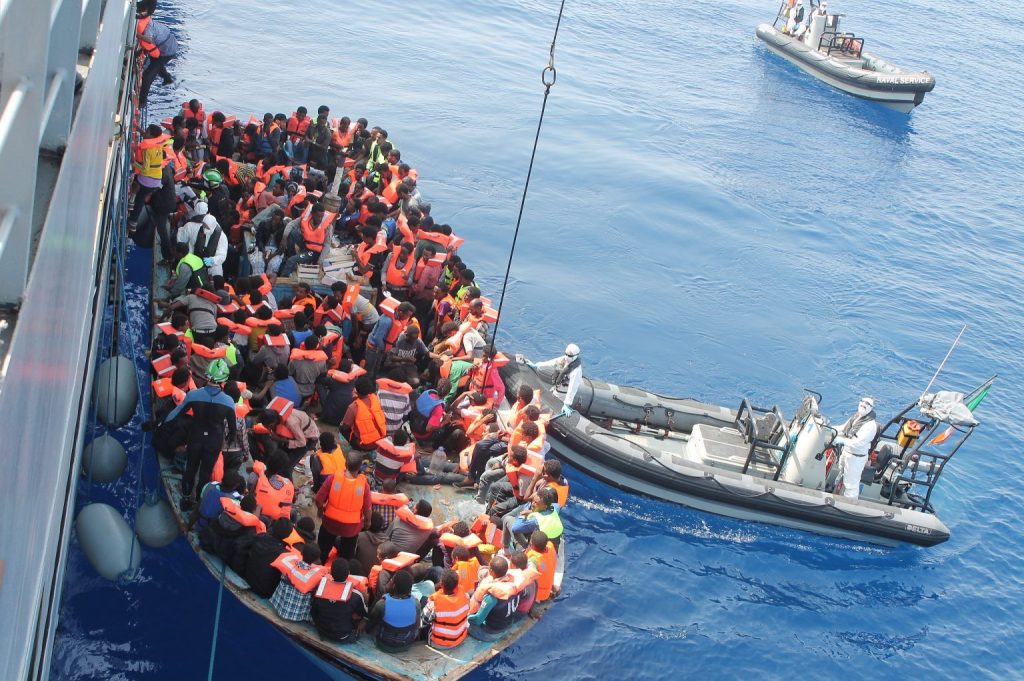
The cost is paid by those who rarely appear in the official vocabulary. Sudanese families, West African workers, Syrian refugees, Eritrean survivors and young men from the Sahel are processed through systems that treat movement as a threat before it is understood as a life story. Their suffering is not accidental. It is part of a deterrence model designed to make the route unbearable enough to discourage others.
Libya remains the clearest warning. Since the collapse of state authority, migration control has become entangled with militias, detention economies and foreign influence. European support for containment has often operated inside a landscape where formal institutions and armed networks cannot be cleanly separated. The result is a border regime that outsources control into zones where accountability is almost impossible.
Tunisia shows a different but equally disturbing pattern. Economic fragility, racialized rhetoric and security cooperation have converged in ways that make sub-Saharan migrants increasingly vulnerable. When European officials praise “partnership,” they often avoid naming the social violence that can follow when a state under pressure turns migrants into symbols of disorder. The language of cooperation can hide the politics of scapegoating.
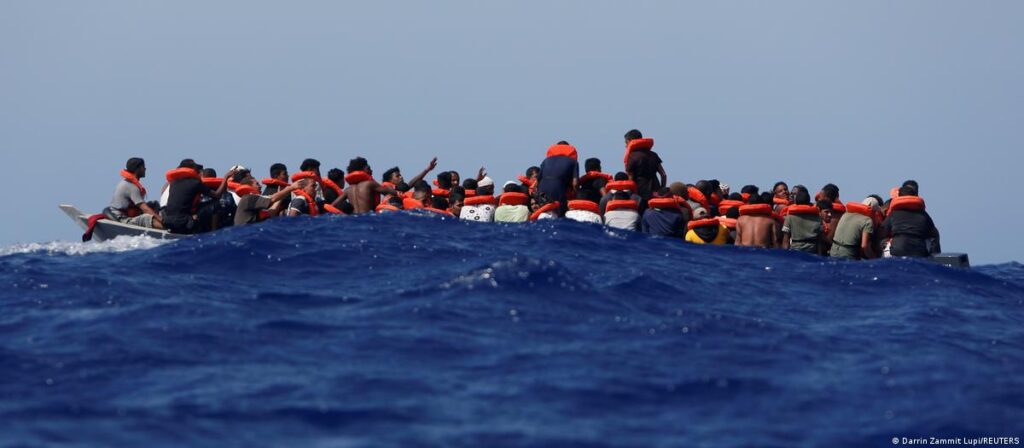
Morocco has long understood the strategic value of border management. Its relationship with Europe is built not only on trade, intelligence and energy, but on the ability to regulate migratory pressure toward Spain. In this equation, migration is not merely a humanitarian file. It is diplomacy by controlled movement, where a crossing, a fence or a rescue operation can carry geopolitical meaning.
Algeria and Egypt occupy their own positions in this system, shaped by security priorities, regional ambition and authoritarian resilience. Europe often speaks of stability when it means containment. It accepts repression as long as migration numbers remain politically manageable. This is the moral transaction at the center of the current order: democracy is encouraged in speeches, but border discipline is rewarded in practice.
The colonial memory matters here because borders in North Africa were never neutral lines. They were drawn, hardened and administered through imperial projects that reorganized movement, labor and belonging. Today’s migration deals do not simply manage mobility; they reactivate old hierarchies in contemporary form. Europe still decides which bodies must be stopped before they become visible.
The technology has changed, but the imagination is familiar. Biometric systems, drones, surveillance platforms and data-sharing agreements now perform functions once carried out by colonial registries and police files. The migrant becomes a tracked object, a risk category, a number in a dashboard. Behind every entry is a person, but the system is designed to see the category first.
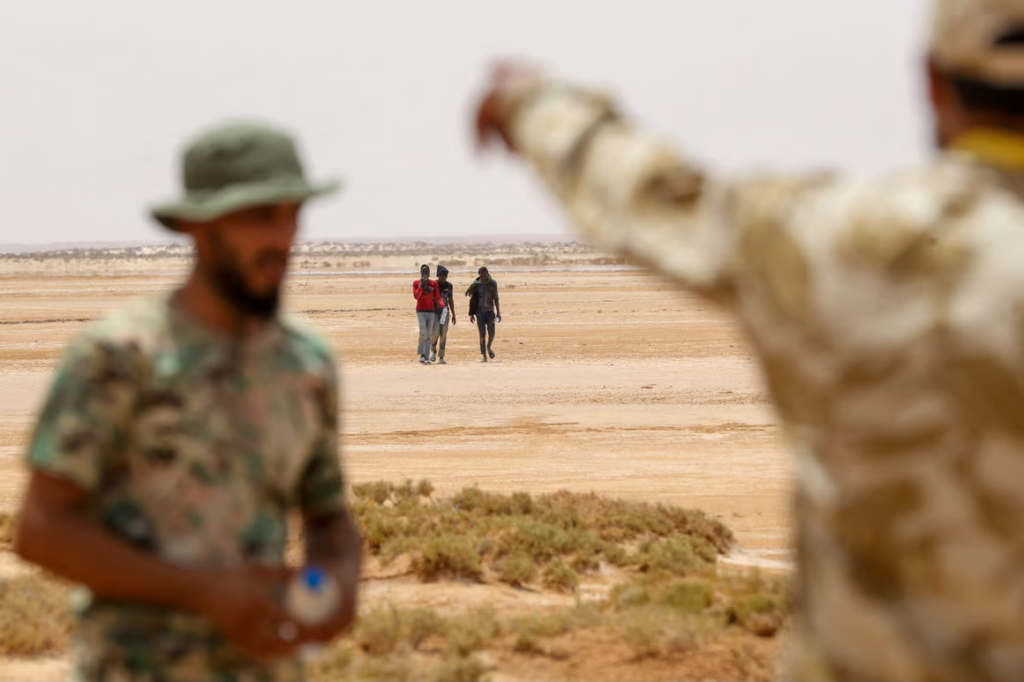
This administrative violence is quieter than physical violence, but it prepares the ground for it. Once a person is classified primarily as a threat, detention becomes easier to justify, deportation easier to normalize and abandonment easier to ignore. Bureaucracy does not need hatred to be cruel. It only needs distance.
Europe’s migration diplomacy also reshapes domestic politics in North Africa. Security institutions gain resources and influence. Civil society groups working on migrant rights face pressure. Journalists who document abuse encounter intimidation. Local communities are encouraged to see mobility not as a regional historical reality, but as an externally induced crisis requiring control.
This is how democratic space narrows without a coup. Policies designed for border management strengthen the least accountable parts of the state. Police, intelligence agencies, coast guards and interior ministries become privileged interlocutors of European power. Meanwhile, parliaments, courts and human rights organizations are left to react after the architecture has already been built.
The Sahel deepens the crisis. Coups, jihadist violence, climate stress and economic collapse continue to push people northward. Yet Europe’s response focuses heavily on containment rather than repair. It wants North Africa to absorb the consequences of instability without fully confronting the political economies that help produce it. The border is asked to solve what diplomacy, development and justice have failed to address.
Russia’s influence and Wagner-linked networks add another layer. Where state collapse, migration routes and mineral corridors overlap, foreign actors find space to manipulate grievances and monetize insecurity. Europe’s fixation on migration control can blind it to the broader strategic contest unfolding across the Sahel and North Africa. A border policy that ignores information warfare becomes strategically naïve.
China’s infrastructure and mineral ambitions also intersect with this geography. Roads, ports, energy corridors and extraction sites are not separate from migration politics. They reorganize labor, displacement and state priorities. North Africa is becoming a corridor of movement, extraction and containment all at once, while Europe still pretends migration can be managed as a separate file.
The tragedy is that human movement has always been part of the region’s history. The Sahara was never an empty barrier; it was a space of trade, kinship, religion, labor and memory. The Mediterranean was not only a wall; it was a bridge of languages, foods, empires and grief. To reduce these geographies to security zones is to amputate their history.
A different policy would begin with honesty. Europe cannot claim to defend human rights while financing systems that push suffering out of sight. North African governments cannot claim sovereignty while using migrant containment as diplomatic rent. And international institutions cannot keep treating deaths in the desert and at sea as unfortunate side effects of an otherwise rational system.
The current model is not failing because migrants still move. It is failing because it produces cruelty as policy, instability as leverage and silence as success. A border that works only by making people disappear is not a border under control. It is a moral injury translated into governance.
North Africa is being rewritten by these deals, but not in the language of liberation or development. It is being rewritten as Europe’s external waiting room, holding cell and political buffer. That transformation will shape institutions, social tensions and regional diplomacy long after the current leaders leave office.
The question is whether Europe understands what it is creating. A continent that exports its border also exports part of its crisis. And when that crisis settles inside fragile states, it does not vanish. It mutates, recruits memory, deepens resentment and returns in forms that no agreement can fully contain.
Samira El-Khalil, North Africa correspondent at Phoenix24. Expert in political violence, disinformation, and post-colonial governance in the Sahel and Maghreb.