

 Phoenix 24
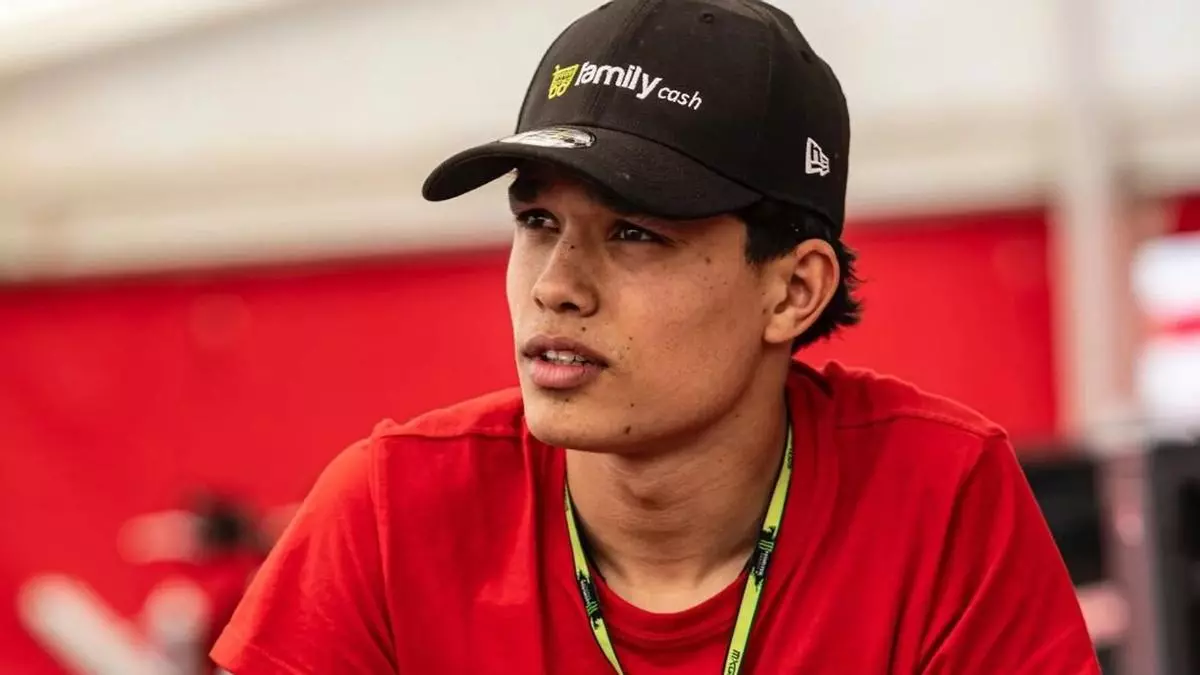
The news travelled through the paddock with a sharp, unsettling speed, leaving behind a silence that felt heavier than any official statement.
Valencia, December 2025
The death of Spanish motocross rider Enzo Badenas, just seventeen years old, stunned the European racing community and brought back long standing debates about risk, training conditions and the collective responsibility that surrounds high impact sports. The accident occurred during a private training session at a circuit in Castellón, a setting routinely used by young athletes who juggle studies, family commitments and the intense rhythm of a sport that demands early specialization. Initial reports confirmed only the fatal outcome, withholding details of the circumstances, yet the emotional shock reverberated instantly due to his rapid ascent through national and continental categories.
European sports outlets recalled that Badenas had been steadily building a reputation since his national championship title in the 85 cc class, a milestone that propelled him into the EMX125 grid and positioned him among the most promising riders of his generation. Analysts referenced by BBC Sport noted that youth motocross in Europe faces a persistent paradox: the more competitive junior divisions become, the more pressure young riders feel to train at intensities that, if not monitored with exacting consistency, increase the likelihood of severe accidents. This interpretation aligns with assessments from the French National Sports Institute, which has been tracking an upward trend in injuries within high velocity disciplines.
The reaction across the Spanish motocross community was immediate. Coaches, former riders and young athletes expressed grief while highlighting Badenas’s discipline, quiet determination and evident potential for progression into higher European championships. Yet beneath the condolences emerged renewed concerns about the regulatory gaps that characterize private training sessions. In such environments, the enforcement of safety protocols depends heavily on coordination between circuit operators, coaching teams and clubs. International federations, including the FIM, have repeatedly emphasized that harmonized standards are essential to prevent disparities in track oversight, particularly for young riders who alternate between official competitions and privately organized sessions with equal frequency.
In a broader perspective, risk management specialists in the United States underscored the psychological dynamics unique to adolescent athletes. The combination of technical capacity, competitive drive and an evolving perception of danger creates a complex environment in which coaches must assume pedagogical and emotional responsibilities, not only mechanical or tactical ones. Research cited by the Colorado based Center for Sports Safety indicates that high performance teenagers often underestimate situational risks during phases of mechanical optimization and speed progression, a pattern frequently observed in motocross.
Badenas’s death also reactivated debates surrounding the infrastructure of European training circuits. While Spain has invested in technification centers and homologated tracks, analysts referenced by German media pointed out that the demand for facilities from emerging clubs sometimes creates gaps in maintenance, supervision or safety equipment. The discussion does not question Spain’s standing as a training hub, but stresses that every major accident requires reviewing whether contractual monitoring between teams and circuits aligns with updated international standards.
The emotional weight of losing such a young athlete transcends statistics and technical evaluations. The motocross community, accustomed to balancing passion and peril, is confronted with the painful rupture of a narrative built around potential, discipline and future achievements. Sports psychologists consulted by Scandinavian outlets noted that collective grief often exposes broader conversations about mental health in high risk sports, particularly where danger is an inherent part of identity and performance.
The investigation into the causes of the accident will continue, and its conclusions may take time. What is already evident is that Badenas’s death reopens a recurring question in European motocross: how prepared is the system to reconcile the development of young talent with comprehensive safety expectations. The sport evolves, technology advances, pedagogy improves, yet each loss signals that the pursuit of a fully secure motocross environment remains a work in progress.
Phoenix24: narrative is power too. / Phoenix24: la narrativa también es poder.