

 Phoenix 24
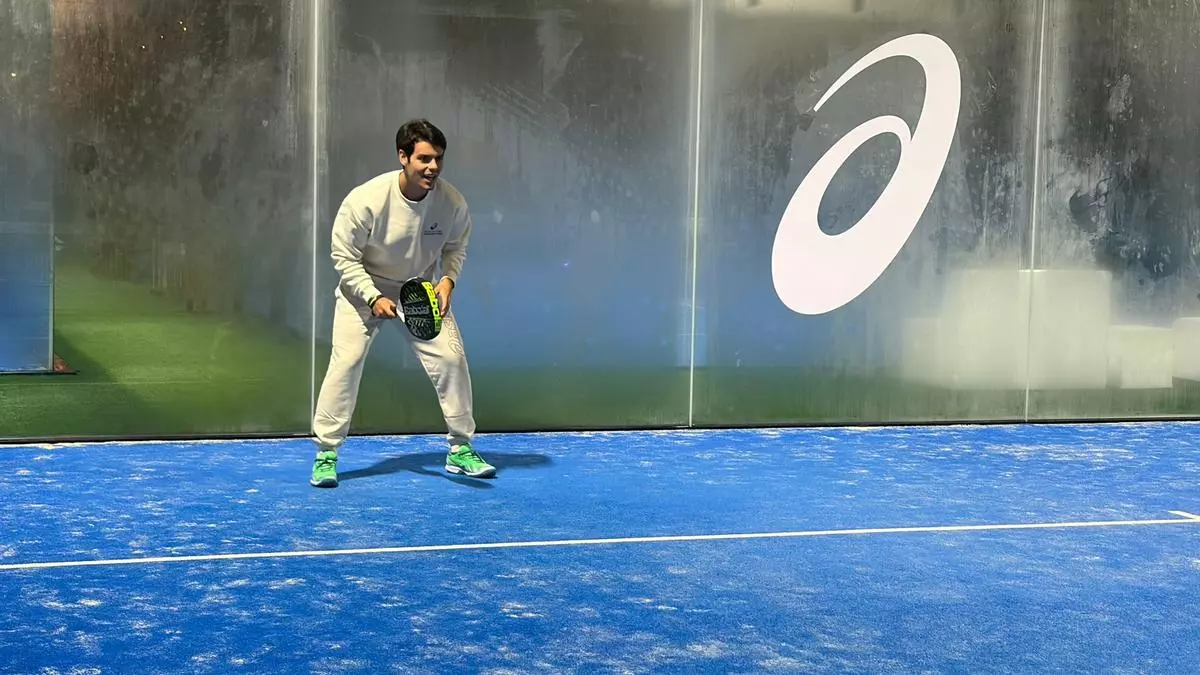
A brief comment after a difficult defeat has shifted the attention of the professional padel tour toward a pair that once promised long term stability.
Madrid, December 2025.
Coki Nieto’s remarks following an early exit in Acapulco introduced an unexpected layer of doubt about the future of his partnership with Mike Yanguas. Although both players began the season with optimism and with the intention of consolidating their experience into a stable project, the tone of Nieto’s post match reflections suggested that the trajectory of the pair may be reaching a natural limit. His message about needing to rethink objectives and evaluate the foundations of their work resonated strongly within the circuit and immediately prompted speculation among analysts in Europe and Latin America who follow the sport closely.
The duo has navigated a season marked by inconsistency. They reunited at the start of the year with the expectation that their contrasting styles would create balance and allow them to compete reliably at the highest tier. Early performances offered flashes of promise, yet the results proved uneven. Coaches who observe the tour from academies in Spain, Argentina and Sweden note that their strengths did not always align during extended rallies or tactical shifts. At times their transitions from defense to attack lacked synchronization, a detail particularly costly against pairs that specialise in controlling the tempo of the game.
After the defeat in Acapulco, Nieto acknowledged that he and Yanguas had held internal conversations to examine their future. His words did not confirm a separation, but they pointed toward a moment of evaluation that many interpreted as a sign that the cycle could be approaching its conclusion. Reporters from established sports outlets in Madrid and Buenos Aires described his tone as deliberate and reflective rather than emotional, indicating that the issue had been considered for some time. Observers associated with training centres in Portugal also commented that the pressure generated by a long season can magnify structural differences that exist within any partnership.
The broader context of the padel circuit intensifies the attention placed on their situation. The end of the year traditionally initiates a period of reconfiguration across the competitive landscape, with pairs dissolving and forming as players evaluate ranking points, sponsor requirements and long term development strategies. In recent seasons this period has become even more dynamic due to growing international participation and the increasing influence of academies in the Middle East and North America that offer alternative training environments. Within this globalised ecosystem, a single announcement can alter the balance of the rankings and shift competitive expectations for the following year.
For many specialists who follow tactical evolution in the sport, the potential breakup of Nieto and Yanguas reflects a familiar pattern. When partnerships rely heavily on momentum rather than structural harmony, prolonged periods of inconsistent results often lead athletes to reconsider the viability of their collaboration. Analysts with experience in psychological preparation in team sports highlight that pairs in padel function as micro units where communication, conflict management and shared perception of the court play roles just as critical as technical execution. If those elements weaken, even slightly, performance can fluctuate in ways that undermine confidence.
Despite the uncertainty surrounding their future, both players remain respected figures in the tour. Nieto is recognised for his discipline and court intelligence, while Yanguas is valued for his physicality and ability to generate offensive pressure through quick transitions and creative shot choices. The challenge lies in determining whether these qualities still combine in a manner that offers competitive consistency. Some former players who now work as analysts in Italy and the United States believe that a period of separation could allow each of them to explore strategic adjustments that may be difficult to pursue within the constraints of a fixed partnership.
The silence that followed Nieto’s comments added another layer of intrigue. Neither he nor Yanguas has issued an official statement to clarify their position. Their reluctance to offer immediate explanations suggests that decisions are still under discussion and that they intend to avoid premature conclusions. Within the professional environment, such silence is often interpreted as a sign that both sides are weighing not only sporting implications but also the impact on their support teams, sponsors and competitive plans for the next season.
Fans have responded with a mixture of curiosity and concern. Social media discussions across Spain and Latin America reveal a recognition of the pressures faced by professional athletes in a sport that has expanded rapidly and now demands constant adaptation. Many followers express hope that the pair can resolve differences and continue building their project, while others believe that a new start could benefit both players. The diversity of reactions underscores how closely players are observed and how narrative shifts can influence expectations within the community.
For now the only certainty is that a decision looms. As the professional calendar approaches its final events, every performance and every statement from the pair will be examined intensely. Whether they choose to continue together or to part ways, the outcome will shape not only their individual paths but also the competitive dynamics of the upcoming season. Their partnership has been marked by commitment, ambition and flashes of high quality play. The question now is whether those elements are enough to carry them forward or whether a new configuration will better serve their evolution as elite athletes.
Every silence speaks.
Cada silencio habla.