

 Phoenix 24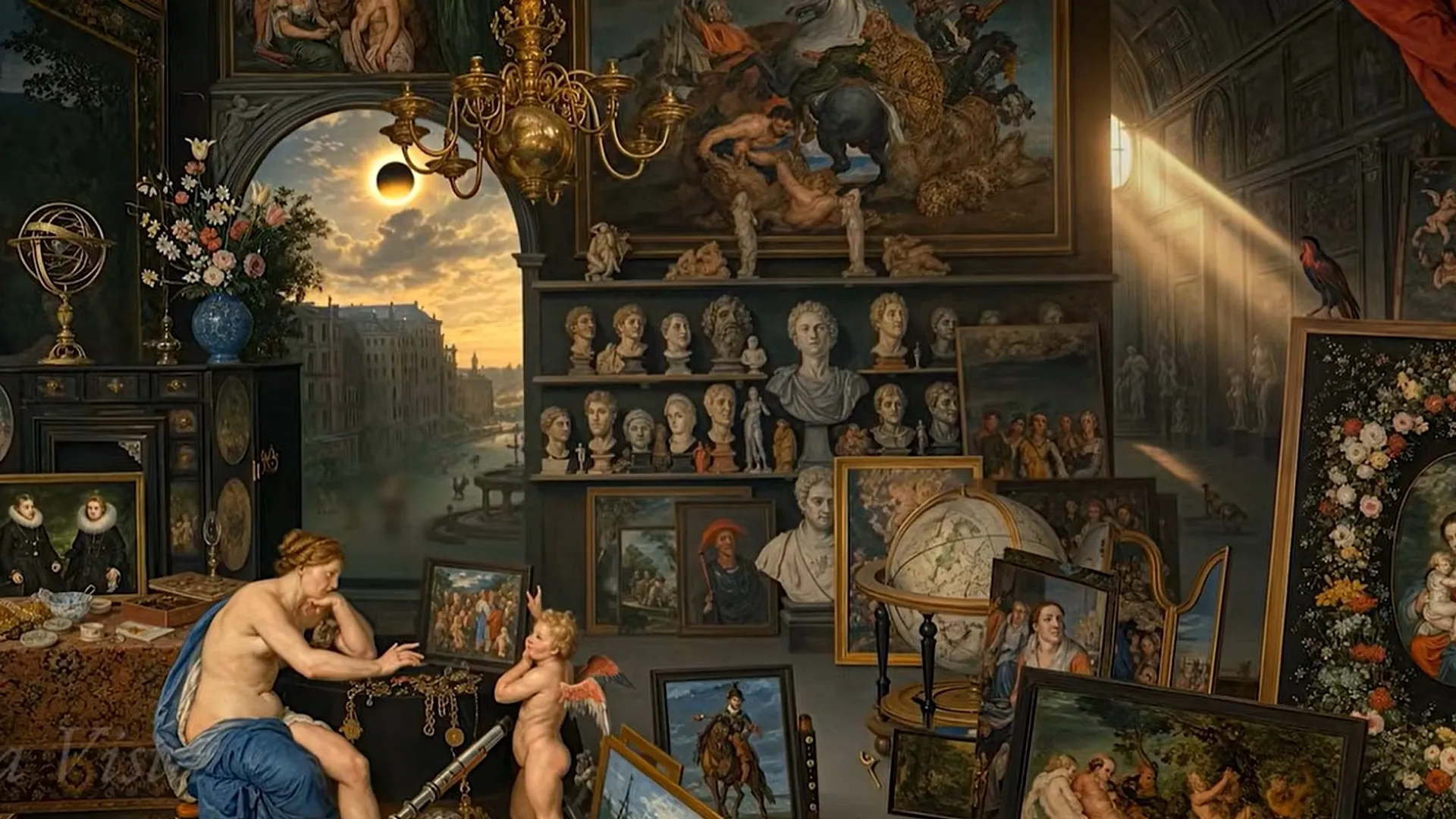
Artificial intelligence and digital creation transform some of Spain’s greatest paintings through an extraordinary experiment with light.
Madrid, Spain | August 2026
Madrid’s Prado Museum has unveiled “El Prado a la luz del eclipse,” an audiovisual project created for the total solar eclipse of August 12 that explores how some of the museum’s most celebrated masterpieces might appear as daylight gradually disappears. The initiative combines artificial intelligence, digital production and traditional graphic intervention to recreate the changing atmosphere produced by an eclipse.
Among the works selected are Diego Velázquez’s Las Meninas and The Forge of Vulcan, Francisco de Goya’s The Parasol and The Meadow of San Isidro, Albrecht Dürer’s Self-Portrait, José de Ribera’s Jacob’s Dream and paintings by Rubens, Jan Brueghel the Elder, Claude Lorrain and other major European artists.
Rather than simply darkening the paintings, the project progressively modifies their illumination, allowing colors, shadows, reflections and spatial relationships to change as the simulated eclipse advances. The result demonstrates how dramatically the perception of a painting can shift when the conditions under which it is observed are altered.
The production was developed by the studio AMB Piensa using artificial intelligence models capable of generating video, recreating depth and simulating camera movement. Digital tools were used to reproduce the gradual evolution of sunlight and shadow across figures, landscapes and architectural elements represented in the paintings.
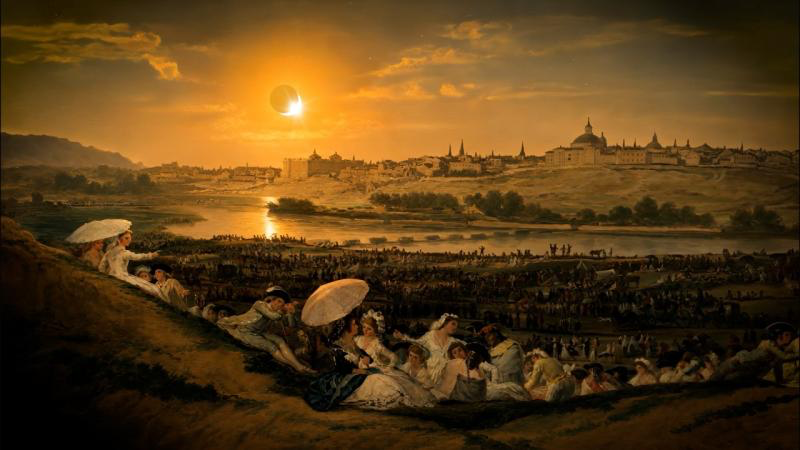
Human intervention, however, remained essential. Every sequence was manually reviewed and adjusted to preserve the original composition, pictorial technique and character of the artworks, ensuring that technological experimentation did not distort the identity of the paintings themselves.
The Prado also views the initiative as a new form of cultural outreach. By translating part of its collection into an accessible audiovisual experience, the museum hopes to connect with audiences who may not ordinarily visit museums while demonstrating how emerging technologies can contribute to the interpretation of cultural heritage.
The project ultimately connects a phenomenon occurring in the sky with questions artists have explored for centuries on canvas. As Spain prepares to experience the August 12 eclipse, the Prado proposes a deceptively simple question: how much of what we see in a work of art depends on the light through which we see it?
Phoenix24: journalism without borders.
Phoenix24: periodismo sin fronteras.