

 Phoenix 24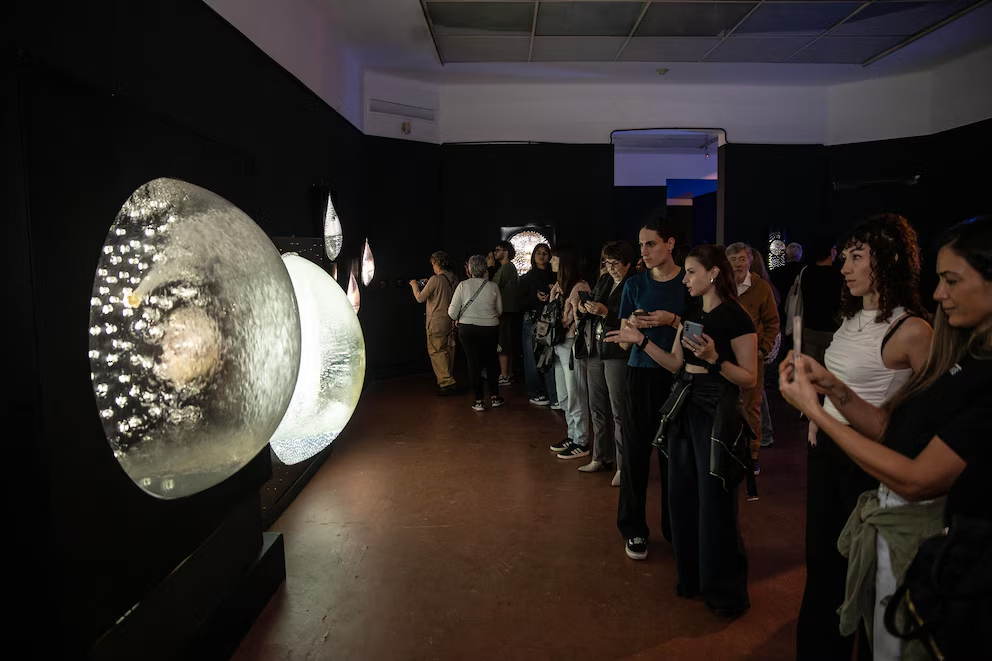
Water, light and movement became vision.
Rosario, May 2026. The exhibition Gyula Kosice: In Real Time at Rosario’s Museo Castagnino reactivates one of Argentina’s most radical artistic legacies: the idea that art could think like science without losing its poetic force. The show brings together works that explore water, light, movement and technological imagination, placing Kosice not merely as a historical avant-garde figure, but as a precursor of today’s debates on art, innovation and future cities.
Kosice’s trajectory began in the 1940s, when he emerged as one of the key figures of Argentina’s concrete, kinetic and luminal avant-garde. His early mobile sculpture Röyi, created when he was only twenty, already announced a break with static art and traditional form. From that point forward, his work refused to remain inside a single discipline. Sculpture, poetry, engineering intuition and utopian urbanism became part of the same intellectual system.
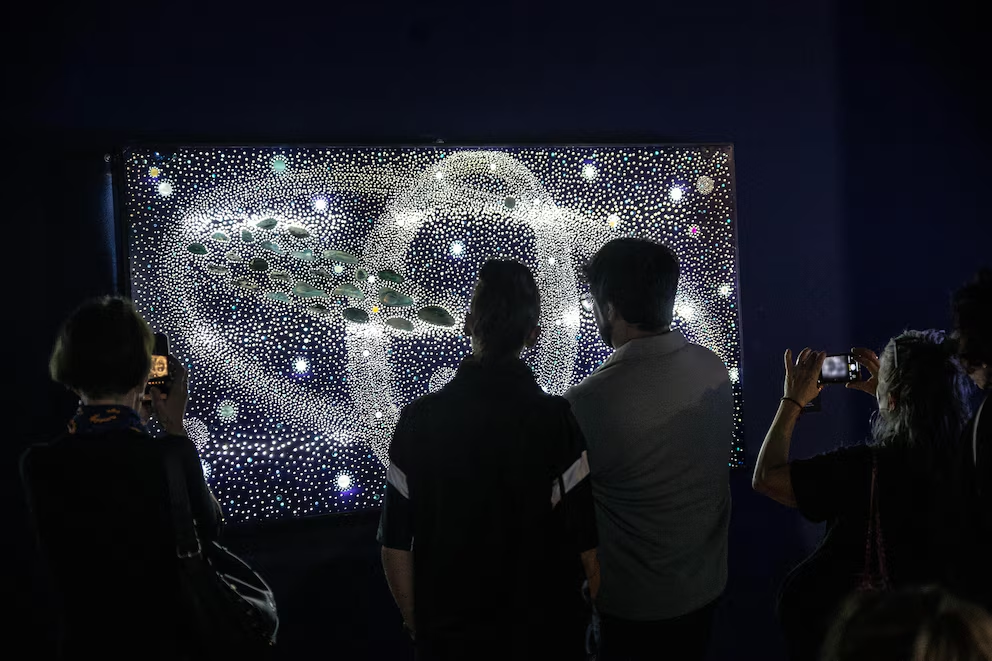
The exhibition’s force lies in that interdisciplinary tension. Kosice did not use technology as decoration. He treated it as an expressive material capable of changing perception itself. Water was not simply represented; it moved. Light was not merely illumination; it became structure. Motion was not an effect; it was a way of thinking about space, instability and time.
His project Ciudad Hidroespacial remains the clearest expression of that ambition. Long before sustainability, space habitats and post-terrestrial urbanism became fashionable terms, Kosice imagined suspended cities shaped by water, mobility and human reinvention. The project may seem utopian, but its value is precisely there: it shows an artist thinking beyond the limits of the present without surrendering to pure fantasy.
Rosario’s exhibition also matters because it places Kosice back into a contemporary conversation about the future of creativity. In an era dominated by artificial intelligence, immersive media and technological acceleration, his work reminds viewers that innovation is not only computational. It can also be sensory, material, poetic and civic. Kosice anticipated a world where art, science and technology would no longer operate as separate languages.
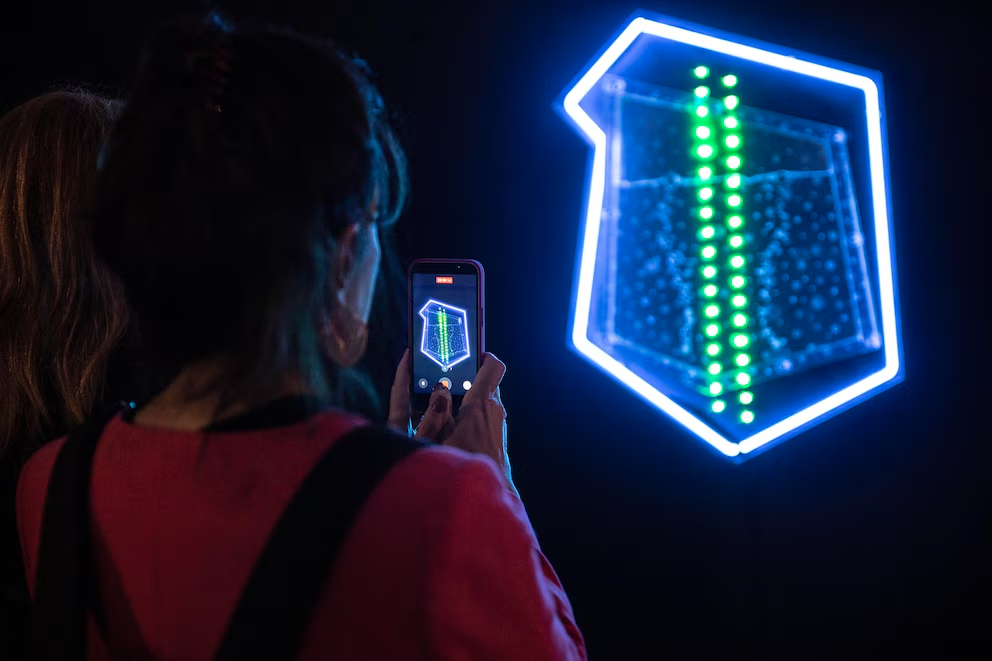
The deeper lesson is cultural. Latin American modernity is often read as imitation or delay, but Kosice disrupts that narrative. His work proves that the region also produced original models of futurism, abstraction and technological imagination. From Argentina, he projected an artistic vocabulary that was not provincial, but global in ambition and experimental in method.
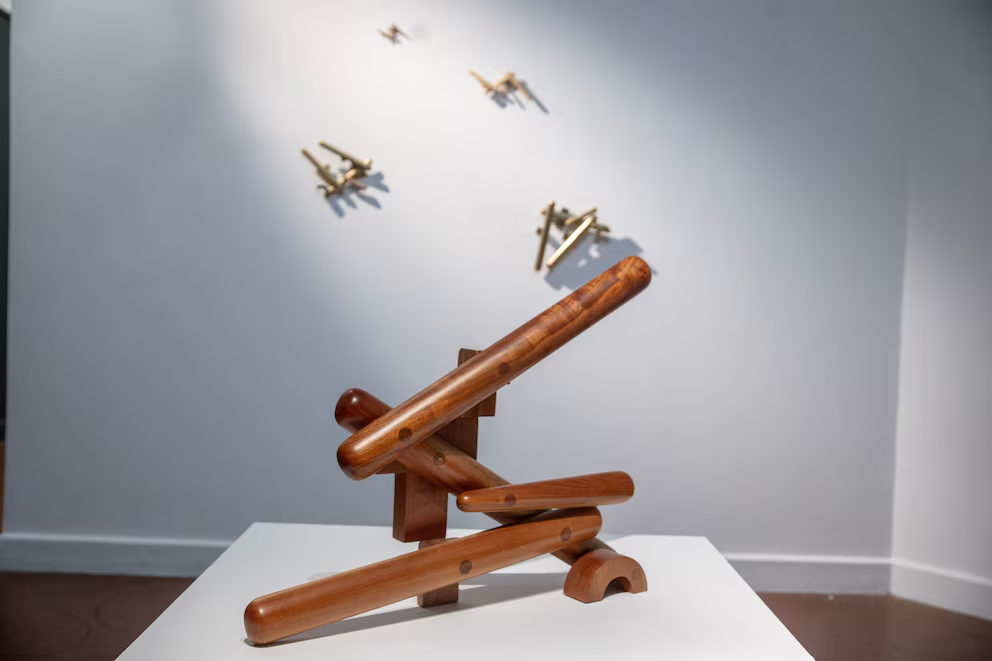
The exhibition therefore does more than recover a major artist. It repositions him as a thinker of possible worlds. Kosice understood that art could build prototypes of perception before institutions were ready to name them. In Rosario, his legacy returns not as nostalgia, but as evidence that the future was already being imagined from the margins.
Lo visible y lo oculto, en contexto. / The visible and the hidden, in context.