

 Phoenix 24
Cargo is becoming airborne infrastructure.
London, February 2026.
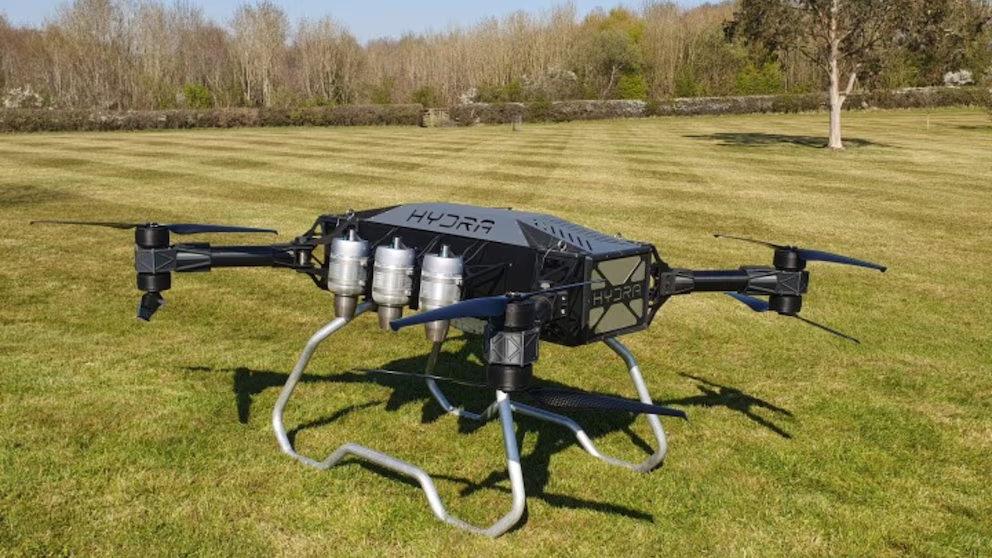
The HYDRA-400 has entered the public conversation as a proof that heavy logistics no longer needs a cockpit to leave the ground. Built by Hybrid Drones Limited, the aircraft is described as a vertical takeoff and landing platform that can lift up to 400 kilograms, a threshold that pushes drones out of “deliveries” and into “operations.” Its first flight was framed as a milestone not because it was flashy, but because it demonstrated controlled lift with a payload that resembles real world constraints, not lab conditions. In this segment, credibility is measured by repeatable performance under load, not by sleek renders.
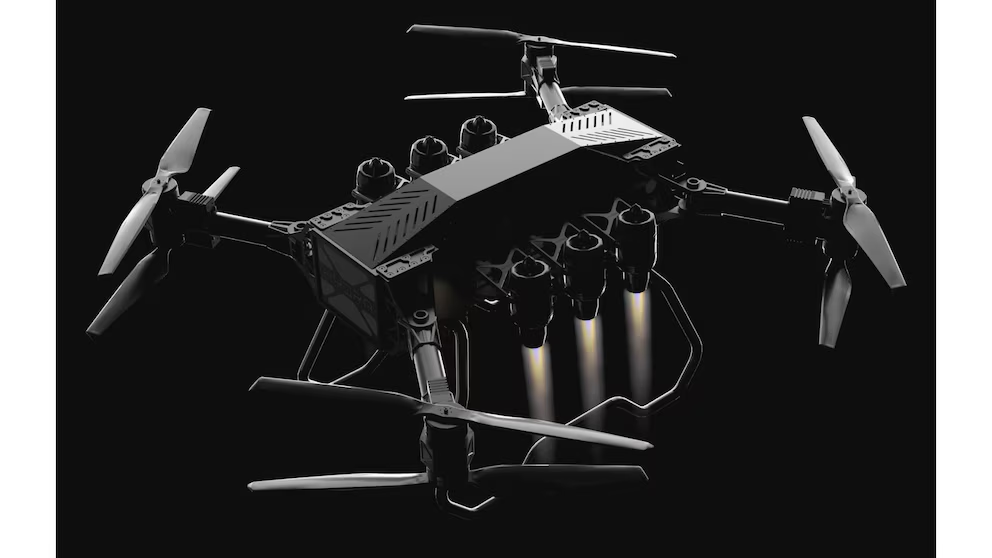
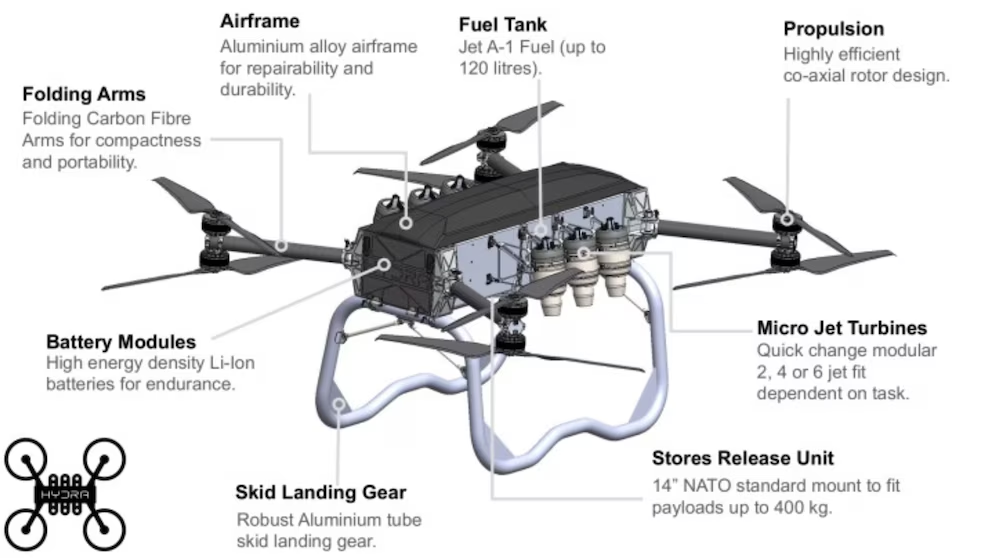
The design logic is modular and pragmatic, emphasizing deployment speed over runway dependence. The system can be transported in a truck and assembled in minutes, which matters because the most valuable logistics asset is often time, especially in disaster response or remote industrial sites. HYDRA-400 can be configured to operate fully electric or as a hybrid by adding up to six microturbines, letting operators trade endurance and power against noise, complexity, and fuel logistics. That configurability signals a platform strategy, meaning one airframe intended to serve multiple missions rather than a single optimized niche.
The headline figure, 400 kilograms, changes the use cases that planners can consider without rewriting their entire operational doctrine. A payload at that level can move a medical stretcher, generator modules, water containers, firefighting equipment, or spare parts that keep critical infrastructure online. During its demonstration, the drone reportedly carried a medical stretcher, a deliberate choice because medevac imagery communicates urgency while also proving stability and control. The point is not that it replaces helicopters, but that it can offload tasks that are too small to justify crew risk and too heavy for conventional delivery drones.
Propulsion is the technical differentiator because the platform blends electric rotors with microturbine thrust to reach its lift envelope. Each microturbine is described as providing about 50 kilograms of thrust, adding up to the maximum payload in the highest configuration, which implies a scalable power architecture rather than a single fixed mode. The hybrid option also hints at a concept of operations where the drone can be tuned for short heavy lifts or for lighter, longer sorties depending on mission demands. A maximum flight time of up to roughly 25 minutes, depending on payload, is not a weakness in this category, it is a realistic tradeoff when the goal is moving mass with precision.
This is where civilian utility and strategic interest overlap, because heavy lift drones compress the distance between a depot and a point of need. In humanitarian logistics, the World Food Programme has long stressed that the last mile is often the most expensive and dangerous segment, especially when roads are damaged or contested. A platform that can drop supplies accurately without risking a crew can become an enabling layer, provided it is integrated with ground teams and deconflicted airspace procedures. That is why dual use is not a hypothetical here, it is structural, and any serious discussion must treat rescue, industry, and security as intertwined markets.
The regulatory challenge is just as central as the engineering, because carrying hundreds of kilograms changes the risk profile of unmanned flight. The UK Civil Aviation Authority, the FAA, and EASA all treat heavier unmanned systems with stricter certification expectations because failure modes scale with mass, energy, and operating environment. A drone that can be assembled quickly is operationally attractive, but regulators will still demand reliable safeguards for command links, geofencing, lost link behavior, and emergency procedures. The adoption curve will therefore hinge on whether heavy lift drones can demonstrate not only capability, but consistent safety cases that survive public scrutiny.
Security realities also shape the market, because a drone that can carry cargo can also carry sensitive equipment, and that invites both legitimate defense procurement and illicit adaptation. Modern battlefields are saturated with electronic warfare, and any unmanned platform becomes a question of resilience under jamming, spoofing, and interception. That is why claims about stability and confidence should be read as more than marketing language, since the real test is whether the platform can maintain controlled flight when the spectrum is hostile. If heavy lift drones become common, countermeasures will evolve quickly, and the advantage will shift from raw payload to hardened navigation and secure control.
The economics behind the project are revealing because they show how this sector is trying to industrialize without waiting for perfect conditions. Hybrid Drones Limited is described as having invested six years and about £1.1 million to reach this generation, and it is seeking additional funding to finalize development and prepare for production. That sequence reflects a familiar pattern: prove a dramatic capability in prototype form, then raise capital to stabilize manufacturing, compliance, and supply chain. In this model, flight footage is not marketing, it is leverage, because it turns engineering into an investable narrative.
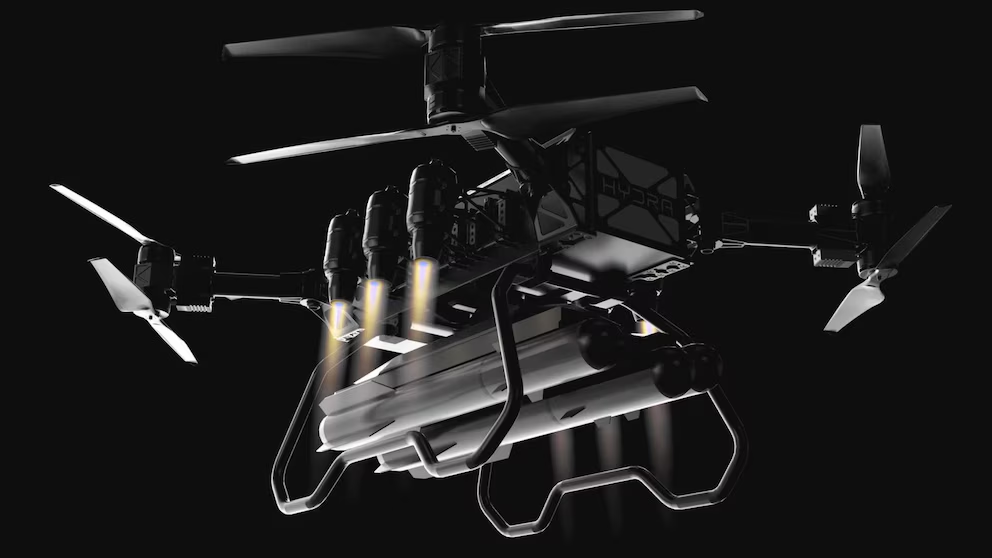
Operationally, the HYDRA-400 concept points toward a near future where heavy lift drones become a standard tool for emergency managers and industrial operators, not an exotic exception. Fire response teams could move pumps or retardant support kits to terrain where trucks cannot reach quickly, while energy and mining operators could move parts to remote sites without building new access roads. The platform reportedly uses a cargo handling and release solution associated with L3Harris, a detail that signals interoperability thinking rather than a one off rig. In other words, the payload interface matters almost as much as the airframe, because logistics is a system, not a single machine.
The deeper pattern is that aviation is fragmenting into tiers, with crewed aircraft reserved for high judgment missions and unmanned systems taking over repetitive, risky, or time critical transport tasks. Heavy lift drones sit in the middle, too capable to be treated as hobbyist tech, yet too flexible to remain a defense novelty. The key constraint will be trust, earned through safe operations, transparent incident handling, and clear rules for where these aircraft can fly and under what conditions. If that trust is built, platforms like HYDRA-400 will not simply deliver cargo, they will redefine what “reach” means when roads, crews, or time are limited.
Behind every data point, the intention. / Detrás de cada dato, la intención.