

 Phoenix 24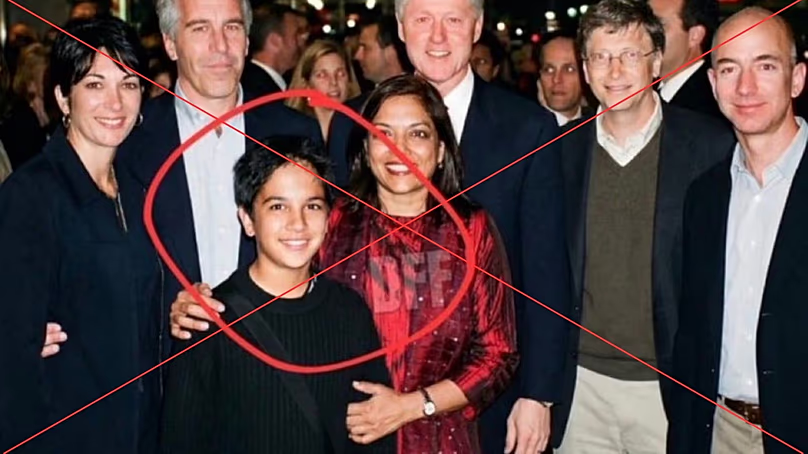
When archives surface, fakes surge faster.
Brussels, February 2026.
A fresh release of U.S. Justice Department material linked to Jeffrey Epstein has detonated a predictable second explosion online, not of verified revelations, but of synthetic imagery designed to manufacture guilt by association. Within hours, social platforms filled with AI generated photos and forged “screenshots” that place public figures beside Epstein in scenes that never occurred. The mechanism is simple and effective: a real archive event supplies legitimacy, then fabricated visuals supply emotion, and the audience supplies distribution. Euronews reporting describes watermarks, visual anomalies, and bot style amplification that turn a document release into a high velocity reputational weapon. The result is not merely misinformation, but a noise field engineered to collapse the difference between documentation and insinuation. In that environment, the question stops being who appears in the files, and becomes who can be made to appear believable.
What makes this episode strategically potent is that it exploits a cognitive shortcut that even sophisticated audiences struggle to resist. Epstein’s name functions as a narrative accelerant, so an image only needs to look plausible for a few seconds to do its work. Fact checkers have already identified synthetic images targeting figures in both the United States and Europe, including content that is internally inconsistent in ages, lighting, anatomy, and contextual details. Tools designed to watermark or detect generative media have been used to validate that some of these visuals are not edited photographs but fully synthetic outputs. Yet detection arrives after distribution, and by then the allegation has already been laundered into commentary, reaction videos, and partisan framing. That lag is the real vulnerability, because modern smear campaigns are built around speed asymmetry rather than evidentiary strength. The archive event is real, but the viral layer is engineered.
Europe is not a bystander in this cycle, because the same tactics now operate as a cross border interference template. Reuters reporting, echoed by European coverage, points to a campaign falsely linking France’s president to Epstein through fabricated email screenshots and a fake site designed to mimic a legitimate outlet. French officials have attributed amplification to coordinated networks and have treated the incident as part of a broader pattern of digital interference rather than a one off scandal. The important detail is not the specific forgery, but the operational design: create a false “release,” wrap it in institutional language, and push it through high reach platforms until repetition becomes proof for a segment of the audience. This is how geopolitical contestation enters domestic politics without tanks or treaties, using reputational sabotage as a pressure instrument. The smear does not need to convince everyone, it only needs to harden distrust in enough people to degrade cohesion. In that sense, the Epstein archive becomes raw material for information warfare.
The U.S. dimension illustrates how easily synthetic content can be fused with real documents to create counterfeit certainty. Associated Press fact checks have documented AI images falsely depicting a U.S. mayor and family members alongside Epstein, with telltale features consistent with generative fabrication and watermark based verification. Parallel reporting citing NewsGuard describes how multiple leading image generators can produce convincing Epstein composites with prominent political figures in seconds, demonstrating that capability is no longer niche. Once generation is trivial, the bottleneck becomes distribution, and distribution is increasingly automated through bot nets and engagement farming. That automation is why the same fakes appear across languages and regions, often with minor edits tailored to local political fault lines. The narrative payload is consistent, only the target changes. The archive is the spark, but the system is the fuel.
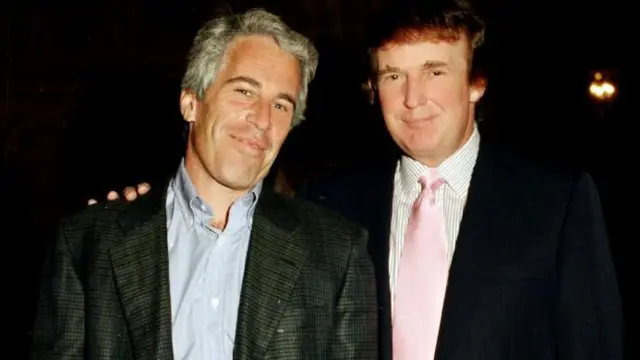
This wave also exposes a governance gap in how institutions and platforms handle “archive triggered disinformation.” The release of large document tranches creates an attention vacuum that bad actors fill before journalists and investigators can responsibly contextualize what is inside. Platforms then face a dilemma: rapid takedowns risk accusations of censorship, while slow responses allow fabricated “evidence” to metastasize into durable belief. European regulators have increasingly pushed for transparency and risk mitigation under digital services rules, but enforcement is still chasing a moving target that evolves faster than policy cycles. Meanwhile, verification organizations can demonstrate falsity, yet cannot force equal distribution of corrections. The imbalance is structural, because outrage is more algorithmically rewarded than nuance. In this climate, the archive becomes less a pathway to truth and more a pretext for engineered confusion.
The human impact is not abstract, because synthetic smears convert public life into an involuntary vulnerability. Targets are forced to respond, which extends the life of the fake, and silence is framed as confirmation, which creates a no win loop. The psychological payload is also broader than the individual, since audiences learn that any image could be fake, and that lesson can be weaponized to dismiss authentic evidence later. This is the deeper danger, a degradation of shared reality where truth becomes just another factional claim. Institutions like the International Atomic Energy Agency rely on verification norms that separate allegation from proof, and the disinformation ecosystem is attacking that norm at the cultural level. Once verification is culturally weakened, every future controversy becomes easier to manipulate. That is why synthetic Epstein content is not only scandal bait, it is a training exercise in post truth politics.
A realistic response has to operate on two timelines at once, immediate containment and long horizon resilience. Immediate containment means treating AI imagery as suspect by default during high attention events, expanding rapid response verification, and deprioritizing engagement with untraceable visuals even when they confirm priors. Long horizon resilience means building public literacy around provenance, normalizing watermark and detection signals, and demanding platform level friction for accounts that repeatedly seed forged “documents.” It also means governments and media learning to prebrief archive releases with context and guardrails, because silence creates the vacuum that manipulation fills. None of this will eliminate synthetic smears, but it can raise the cost and reduce the reach. The underlying pattern is stable: when a real archive appears, a counterfeit archive will follow. The only durable defense is to make verification faster than virality.
La narrativa también es poder. / Narrative is power too.