

 Phoenix 24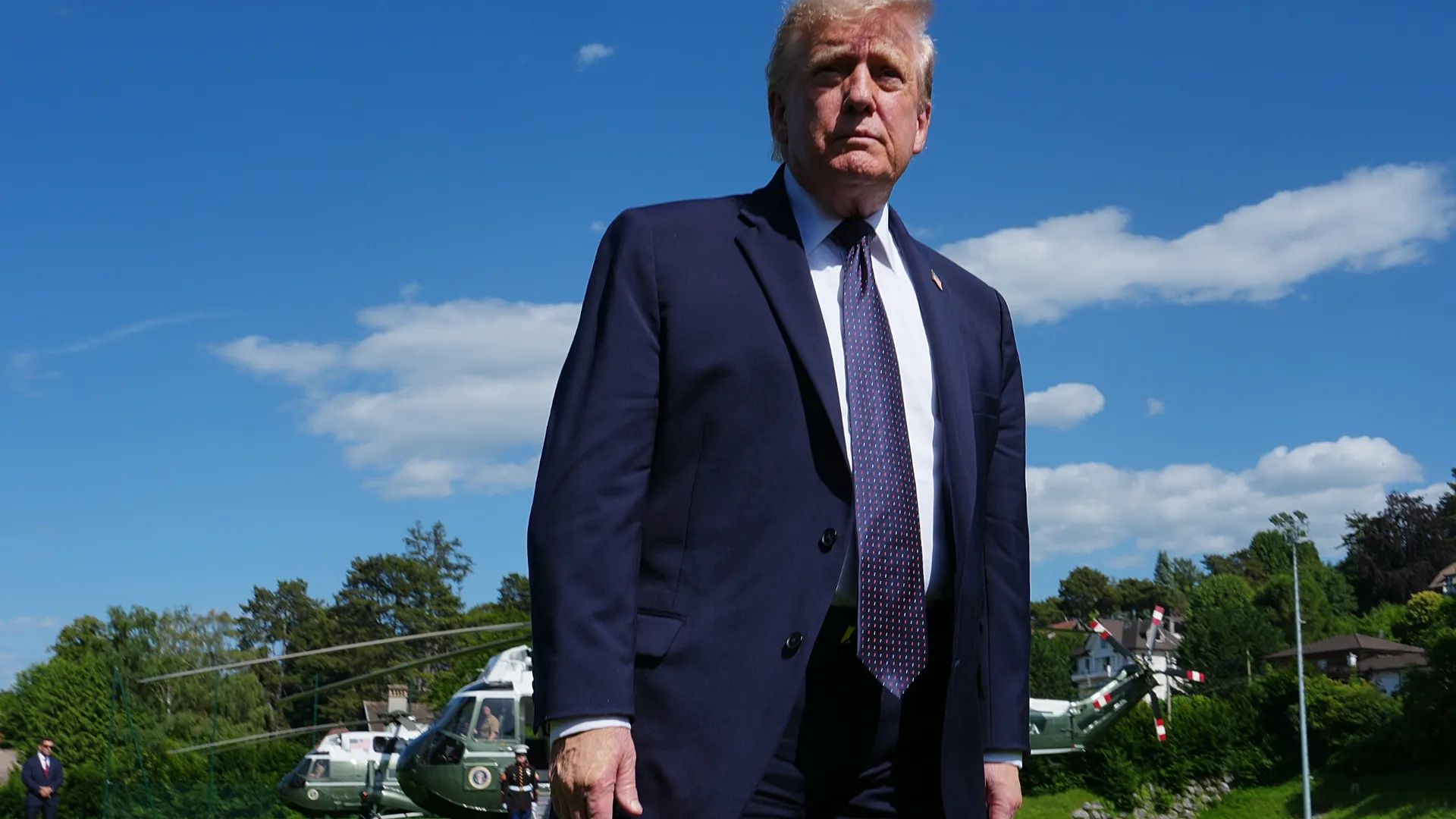
Washington draws a line against uncontrolled regional escalation
ÉVIAN, FRANCE | JUNE 2026. United States President Donald Trump publicly urged Israeli Prime Minister Benjamin Netanyahu to act more responsibly toward Lebanon after an Israeli strike on Beirut killed three people and injured more than twelve. Speaking during the G7 summit in France, Trump described the latest Israeli operation as excessive and questioned the destruction of entire residential buildings when military forces are pursuing individual Hezbollah members. The unusually direct criticism came during a bilateral meeting with Qatar’s Emir Tamim bin Hamad Al Thani, whose government has been mediating negotiations between Washington and Tehran. Trump maintained that Hezbollah remains a serious regional threat, but argued that Israel’s military response has crossed a threshold where the civilian and political costs may outweigh its immediate security gains. His remarks did not constitute a break with Netanyahu, whom he continued to describe as a close partner, but they revealed growing frustration inside Washington over Israeli actions capable of undermining broader American diplomatic objectives.
The immediate source of tension was an Israeli attack on a building in the Lebanese capital. The Israel Defense Forces said the target was a Hezbollah command center, yet the casualties and destruction renewed questions about proportionality, civilian protection and the expanding geographic scope of Israeli operations. Trump’s intervention was especially significant because it challenged not Israel’s right to confront Hezbollah, but the methods being used. His message was that identifying a legitimate military target does not automatically justify destroying an entire residential structure or exposing surrounding civilians to disproportionate danger. That distinction carries strategic consequences. Lebanon remains politically fragile, economically weakened and institutionally constrained, with limited capacity to absorb another sustained confrontation between Israel and Hezbollah. Repeated strikes on Beirut risk weakening the Lebanese state, strengthening narratives of collective punishment and creating the conditions in which Hezbollah can rebuild political support by presenting itself as the defender of a population under attack.
Trump also introduced a controversial alternative by suggesting that Syria should assume greater responsibility for containing Hezbollah. He described Syrian President Ahmed al-Sharaa as capable of confronting the armed group and implied that Damascus could act where Israel’s operations have produced unacceptable civilian consequences. The proposal reflects a major reconfiguration of regional power. Hezbollah’s military and logistical strength historically depended on an axis connecting Iran, Syria and Lebanon. A Syrian government willing to obstruct Hezbollah’s supply lines, restrict its movements or challenge its armed infrastructure would alter the strategic balance more effectively than isolated Israeli airstrikes. However, delegating the problem to Damascus carries considerable uncertainty. Syria continues to face internal fragmentation, competing armed actors, damaged institutions and unresolved security pressures. Any direct campaign against Hezbollah could trigger cross-border retaliation, sectarian tension or renewed instability inside Syria itself. Trump’s suggestion therefore represents both an opportunity and a gamble: it seeks to replace repeated Israeli military escalation with regional containment, but relies on a Syrian government whose long-term authority and operational capacity remain under construction.
The timing of Washington’s warning is equally important. The United States is attempting to secure a framework agreement with Iran, while Qatar is helping mediate talks intended to end the wider confrontation and restore a degree of predictability to regional energy and security systems. A major Israeli escalation in Lebanon could derail that effort by forcing Tehran to respond politically or through allied armed networks. It could also place pressure on Qatar and other mediators, weaken emerging diplomatic channels and reopen multiple fronts at a moment when Washington is trying to reduce the risk of a broader war. From the American perspective, Netanyahu’s freedom of action is no longer being evaluated solely through the lens of Israeli security. It is also being measured against oil flows, maritime stability, relations with Arab governments, negotiations with Iran and the credibility of United States diplomacy. Trump’s criticism therefore signals a more transactional approach: American support remains strong, but it is not intended to provide unlimited political cover for operations that threaten a wider strategic settlement.
Netanyahu now faces a difficult calculation. Restraint could preserve coordination with Washington and reduce pressure on Lebanon, but it may be portrayed by his domestic opponents as allowing Hezbollah additional room to reorganize. Continued large-scale attacks could satisfy demands for military firmness while deepening Israel’s diplomatic isolation and increasing friction with its most important ally. The central issue is no longer whether Hezbollah poses a threat; that assessment is widely shared among Israel, the United States and several regional governments. The dispute concerns who should contain that threat, by what means and at what human cost. Trump’s intervention suggests that Washington wants to shift the burden from repeated Israeli bombardment toward Syrian pressure, Lebanese institutional recovery and a regional diplomatic arrangement. Whether such a strategy can succeed remains uncertain. What is clear is that the White House is warning Israel that tactical superiority does not eliminate strategic responsibility—and that destroying the environment surrounding an adversary can ultimately make that adversary harder to defeat.
The truth is structure, not noise.