

 Phoenix 24
Non kinetic attacks thrive in the grey zone.
Beijing, February 2026.
Chinese researchers have unveiled a compact pulse power “driver” that could significantly lower the barrier to fielding high power microwave systems aimed at disrupting satellite constellations such as Starlink. According to Euronews, the device is presented as a technological enabler rather than a finished weapon, but enablers are often the decisive step because they make once bulky concepts deployable, mobile, and repeatable. High power microwave effects target electronics and communications pathways, which means the goal is not necessarily to destroy a satellite but to degrade it, confuse it, or intermittently deny service in ways that are hard to attribute in real time. This matters because modern warfare relies on resilient connectivity, and low Earth orbit constellations have become a backbone for battlefield communications, navigation support, and rapid data exchange. The implied message is that space conflict is drifting from kinetic collisions toward spectrum and electronics warfare, where the damage can be deniable and reversible, at least on paper. In that environment, a compact driver is not a lab curiosity, it is a portability milestone.
The technical claim gaining attention is the scale of power described and the promise of sustained bursts rather than momentary pulses. South China Morning Post has reported on Chinese work describing extremely high output microwave systems that could operate in longer firing windows, which would expand the operational envelope from demonstration to persistent threat. The strategic relevance is simple: a constellation like Starlink is designed to be resilient through numbers and rapid replenishment, so disabling a few satellites is less effective than stressing the network, saturating its links, or degrading ground segment connectivity. Microwaves also sit in a category of directed energy where the line between electronic attack and physical damage blurs, because the same energy can create transient malfunction or permanent component failure depending on intensity, targeting, and shielding. Unlike missile intercepts, directed energy leaves less visible debris and can be framed as technical anomaly, which complicates escalation management. That ambiguity is precisely why militaries study these options, because the grey zone is where coercion becomes cheaper. The innovation, if it scales beyond prototypes, is less about a single strike and more about making repeated disruption operationally routine.
Starlink has become a focal point for counterspace planning because it changes the cost curve of communications in conflict zones and reduces the effectiveness of traditional jamming strategies. AP has documented how Chinese researchers and analysts increasingly treat large commercial constellations as national security variables, citing the lessons drawn from Ukraine where satellite connectivity supported drones, targeting workflows, and resilient command links. If a state cannot fully block a constellation through conventional jamming without massive resources, the incentive shifts toward more asymmetric options that aim at weak points, including terminals, gateways, or segments of the electromagnetic spectrum the network depends on. Directed energy is one of those options, and microwaves are attractive because they can target electronics without needing precise kinetic interception. From a governance perspective, this also expands the threat surface from orbit to Earth, because ground based systems can be mobile and can blend into broader air defense or electronic warfare architectures. The result is a strategic environment where civilian commercial infrastructure is increasingly treated as military relevant, whether the company intends it or not. This is the structural pattern that makes “anti Starlink” claims travel quickly, because they map onto a real shift in the character of conflict.
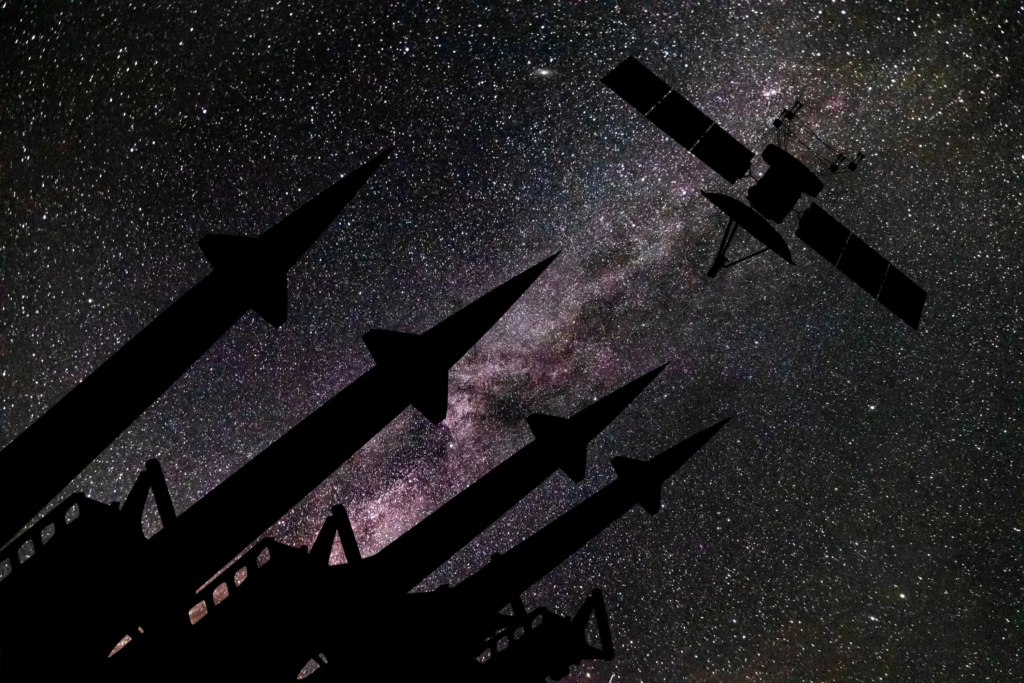
The broader geopolitical signal is that counterspace competition is accelerating across multiple tracks, with the United States and Russia running their own programs and doctrinal debates. Air University affiliated research has noted that concerns about high power microwave weapons, lasers, and other non kinetic capabilities are increasingly embedded in assessments of China’s space trajectory. The logic is not that a single technology will “kill” a constellation, but that layered disruption tools can impose enough uncertainty to degrade operational trust in the network during a crisis. For Europe, this resonates with the parallel push to build autonomous communications resilience, such as the EU’s planned IRIS² constellation, because dependence on a single commercial provider creates political and strategic vulnerabilities. Euronews has previously reported European officials acknowledging that they cannot yet replace Starlink’s capacity, which underscores why counterspace developments are not just an American or Chinese issue. In Asia, the Taiwan scenario often serves as the implied stress test, because communications resilience can shape deterrence calculations and crisis stability. The microwave driver story therefore sits inside a larger competition over who can deny connectivity without triggering uncontrollable escalation.
The key analytical question is feasibility at scale, because laboratory claims do not automatically translate into operational reliability, especially against hardened space systems with redundancy and shielding. Even if high power microwaves can disrupt satellites or terminals, effective use requires tracking, targeting, power management, and a doctrine for when and how to employ the capability without exposing one’s own forces to retaliation. There is also a signalling trap: publicising “Starlink killer” narratives can inflate expectations and invite countermeasures, including hardened terminals, frequency agility, adaptive software, and distributed gateway architectures that make disruption harder. That dynamic is already visible in how constellations respond to jamming attempts through rapid updates and network reconfiguration, which turns the contest into a cycle of measure and countermeasure. Still, the political utility of such announcements is real, because they signal intent and capability development even before full maturity. In modern deterrence, perceived capability can influence planning almost as much as proven capability, especially when attribution is uncertain. The deeper takeaway is that the contest is moving toward deniable disruption as a routine option, not as an exceptional act.
Lo visible y lo oculto, en contexto. / The visible and the hidden, in context.