

 Phoenix 24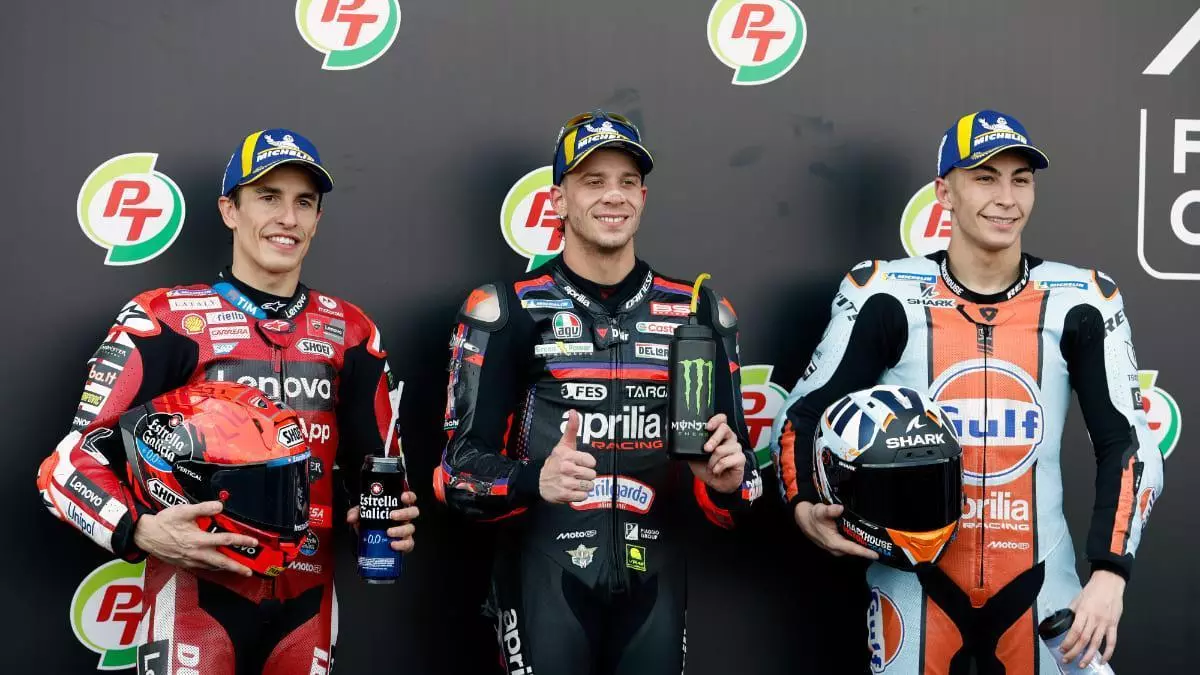
The first row is already a warning.
Buriram, February 2026.
The starting grid for the Thailand Grand Prix has done more than organize positions for race day. It has exposed, from the opening round, the competitive fault lines that may define the early shape of the MotoGP season: Aprilia’s speed over one lap, Marc Márquez’s immediate threat profile, KTM’s capacity to stay in the fight, and Ducati’s internal pressure when not all of its front line starts where it expects. In a championship that often reveals its true hierarchy gradually, Thailand has delivered a compressed preview in one weekend.
Marco Bezzecchi’s pole position carries strategic weight beyond the headline itself. A fast lap can be dismissed as a qualifying spike, but in Buriram his pace has been read as part of a broader pattern of confidence and control through the weekend. Starting at the front in the opening round matters because it changes the race geometry for everyone behind him. It forces rivals to attack earlier, take more risk on tire management, and expose race pace before they would prefer to. In a field this tight, the rider who dictates the first laps often dictates the emotional tempo of the race.
Marc Márquez lining up near the front reinforces the other major signal from Thailand: the championship pressure is already immediate. Even before the season settles into rhythm, his presence in the top positions alters behavior across the grid. Riders around him do not race only for points, they race under the expectation of constant aggression, late braking pressure, and tactical unpredictability. That psychological effect is not reflected in lap charts, but it shapes decisions in every braking zone. In a season opener, that matters almost as much as raw speed.
The grid also suggests that Aprilia’s competitiveness is not isolated to a single rider. Raúl Fernández’s strong starting position adds depth to the team’s weekend narrative and increases the possibility of strategic interference in the front group. When two machines from the same manufacturer begin near the top, race management becomes more complex for opponents because they can no longer focus on a single attack vector. This is how a strong qualifying session becomes a broader statement: not just speed, but tactical density. Thailand has hinted that Aprilia may be entering the year with more than occasional brilliance.
Behind the front rows, the layout of the grid underlines another recurring MotoGP truth. A rider can remain a title threat while suffering a damaging Saturday. Francesco Bagnaia’s position outside the ideal launch zone places him in a familiar but costly situation, one that demands overtaking volume, clean race craft, and risk control from the opening laps. The problem is not simply lost track position. It is exposure to turbulence, contact, tire overheating, and strategic delay while rivals at the front begin building rhythm. Over a season, these are the weekends that quietly widen championship gaps.
KTM’s placement, with Pedro Acosta positioned to attack from the upper part of the grid, adds a separate layer of intrigue. The Thailand weekend has already shown that Acosta can generate race intensity, and his grid slot keeps him within striking distance of the podium fight if the opening phase breaks in his favor. For KTM, this is important not only for points but for narrative momentum. A strong start to the year changes how teams allocate belief, development urgency, and strategic patience. In MotoGP, confidence is not cosmetic. It is a performance variable.
What makes this grid especially relevant is the contrast between qualifying order and race volatility. Buriram tends to punish assumptions. A pole sitter can lose command through tire drop, a second row rider can become the main protagonist by lap five, and one contact can redraw the podium battle instantly. That is why the Thailand grid should be read less as a prediction and more as a map of initial probabilities. It tells us who begins with leverage, not who will finish with control. The difference between those two things is where MotoGP usually becomes compelling.
There is also a broader championship implication in how closely packed the front of the grid appears. When multiple manufacturers and riding styles coexist near the top, the season becomes less about a single dominant machine and more about adaptation across circuits, weather windows, and sprint to race transitions. Thailand, as an opener, amplifies this effect because teams arrive with data, but not yet with full strategic certainty. What emerges is a paddock operating in partial information, where small margins in setup or track temperature can produce major positional swings.
The deeper pattern is that the Thailand Grand Prix grid has already framed 2026 as a season of contested authority rather than inherited hierarchy. There are fast bikes, proven champions, rising disruptors, and vulnerable favorites all occupying the same space. That combination rarely produces calm weekends. It produces pressure, and pressure is where championships begin to reveal who is merely quick and who can actually govern chaos from lights out to the checkered flag.
Facts that do not bend. / Hechos que no se doblan.