

 Phoenix 24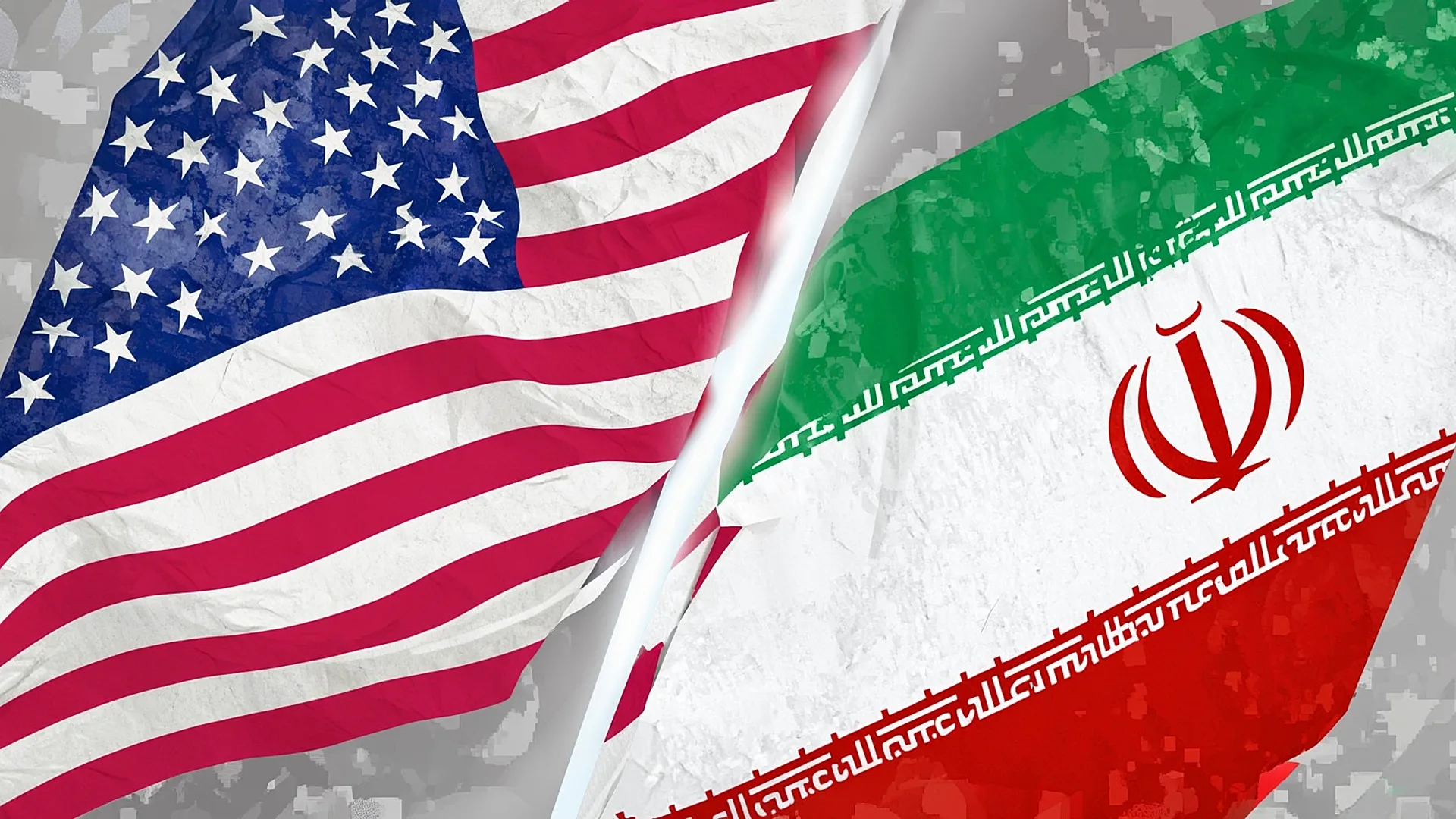
This war did not begin this morning.
Brussels, February 2026.
The current U.S. and Israeli strike on Iran is being presented as an acute military episode, but its real meaning sits inside a much longer architecture of distrust, intervention, retaliation, and strategic memory. What happened now is not simply the result of recent nuclear tensions or a sudden deterioration in regional security. It is the latest escalation point in a relationship shaped for decades by mutual threat perception, asymmetrical responses, and political narratives that treat compromise as vulnerability. That is why the present crisis cannot be read as an isolated event. It is the compressed expression of a conflict history that has repeatedly changed form without ever truly ending.
The historical fracture most analysts return to begins in 1953, when the overthrow of Prime Minister Mohammad Mossadegh, backed by U.S. and British intelligence, became a foundational trauma in Iranian political memory. For Washington, that intervention belonged to Cold War logic and energy security calculations. For many Iranians, it became proof that sovereignty could be subordinated to external strategic interests when domestic politics collided with geopolitical priorities. The significance of that moment is not only what happened then, but how it remained active in state ideology, public memory, and elite discourse across generations.
The 1979 Islamic Revolution transformed that resentment into a governing framework. The fall of the Shah, the rise of the Islamic Republic, and the U.S. embassy hostage crisis severed formal relations and converted mutual suspicion into a permanent state of confrontation. From that point forward, the relationship stopped functioning as a damaged alliance and became a structured antagonism. Sanctions, proxy conflicts, intelligence operations, and symbolic confrontation replaced diplomacy as the dominant language. Even when communication existed, it was usually indirect, tactical, and shaped by crisis management rather than trust.
The 1980s deepened that antagonism through war and militarized insecurity. Iran’s war with Iraq, U.S. involvement in the Gulf, and later the downing of Iran Air Flight 655 by the USS Vincennes hardened Iranian views of American power as both hostile and capable of catastrophic error. In Washington, meanwhile, Iran became increasingly framed through the lens of revolutionary militancy, hostage trauma, and regional destabilization. These were not just policy disagreements. They were narrative foundations that influenced intelligence cultures, military planning, and the political vocabulary of threat in both countries.
In the decades that followed, the conflict evolved rather than softened. Iran expanded its regional footprint through aligned movements and security networks, while the United States strengthened sanctions regimes, military deployments, and pressure campaigns. The nuclear file intensified the confrontation because it concentrated nearly every element of distrust into a single arena: deterrence, regime survival, proliferation risk, regional power balance, and domestic political signaling. The dispute was never only about centrifuges or uranium levels. It was about who gets to define security legitimacy in a region already saturated with rival deterrence systems.
The 2015 nuclear agreement briefly suggested that a managed coexistence was possible, at least on a narrow technical basis. Yet the deal also revealed the fragility of any diplomatic architecture built without deeper political normalization. Once the agreement was undermined and sanctions pressure returned, the old cycle reactivated with greater bitterness because the failure of diplomacy became evidence, for hardliners on all sides, that their original assumptions had been correct. What followed was not just policy reversal, but psychological reinforcement of maximalist positions.
The killing of Qassem Soleimani in 2020 pushed the relationship into a new phase of direct risk, even as both sides still tried to avoid full scale war. Since then, confrontation has expanded across proxy theaters, maritime routes, cyber operations, and regional deterrence signaling. More recently, the interaction between Iran’s missile capacity, its nuclear trajectory, Israeli threat perception, and U.S. military posture has tightened the escalation timeline. The result is a strategic environment in which diplomacy and military planning now run in parallel, but not at the same speed. Talks can continue while strike options mature in real time.
That is the context in which the current attack must be understood. It is not simply a reaction to one incident, one leader, or one intelligence claim. It emerges from a long conflict structure in which each side sees itself as acting under accumulated threat, historical grievance, and shrinking room for strategic patience. This does not make escalation inevitable, but it does explain why deterrence failures now travel so quickly from rhetoric to action. When decades of hostility are embedded into institutions, security doctrines, and public narratives, the threshold for crisis becomes lower even when the costs of war are obvious.
The deeper pattern is that the U.S.-Iran relationship has become one of the clearest examples of how geopolitical memory shapes present violence. Every new clash is interpreted through prior betrayals, prior losses, and prior episodes of coercion. That makes de-escalation harder because the dispute is no longer only about current behavior. It is about incompatible histories of legitimacy and survival. The strike may dominate headlines today, but the strategic danger lies in something older and more durable: a conflict system that repeatedly converts unresolved history into new military decisions.
Against propaganda, memory. / Contra la propaganda, memoria.