

 Phoenix 24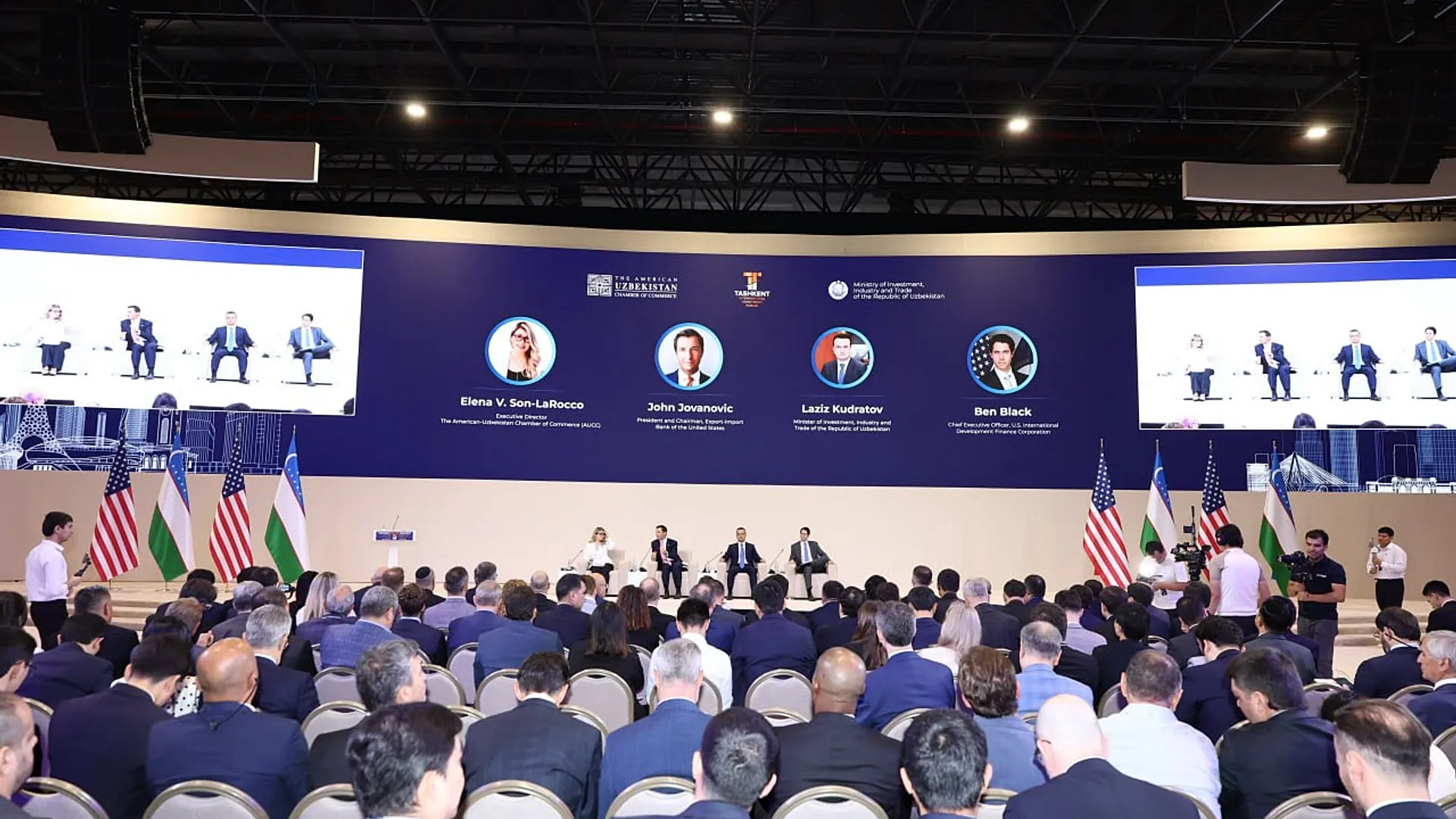
Uzbekistan is positioning itself as Central Asia’s investment gateway.
TASHKENT, UZBEKISTAN — June 2026. Foreign leaders, international investors, corporate executives and representatives of global financial institutions have gathered in Uzbekistan for the fifth Tashkent International Investment Forum, opening a week in which diplomacy, infrastructure, technology and access to long-term capital are converging around the country’s economic ambitions. The inaugural sessions addressed private investment, industrial development, artificial intelligence and the conditions required to attract international financing, while President Shavkat Mirziyoyev held bilateral meetings with government delegations and senior business leaders. The forum is unfolding alongside an intensive diplomatic agenda, including an official visit by German President Frank-Walter Steinmeier focused on trade, industrial cooperation, green technologies, transportation and logistics.
One of the event’s most significant diplomatic developments was the first summit between Uzbekistan and Albania, during which Mirziyoyev and Albanian President Bajram Begaj discussed expanding cooperation in trade, investment, renewable energy, digital technologies, tourism and agriculture. Particular attention was given to the Albanian port of Durrës, which could serve as a logistical hub for Uzbek exports seeking access to southern Europe and Mediterranean markets. The proposal reflects Uzbekistan’s effort to diversify its commercial routes as a landlocked country and strengthen connections with European supply chains beyond its traditional regional corridors. Both governments also agreed to establish an intergovernmental commission that would coordinate economic initiatives, support investment projects and provide a permanent institutional framework for bilateral cooperation.
The expanding presence of American businesses was another central feature of the opening day. Uzbekistan’s Investment Minister Laziz Kudratov reported that 193 United States companies were participating in the forum, presenting their attendance as evidence that American corporations increasingly regard Uzbekistan not simply as a consumer market but as a long-term investment partner. The US-Uzbekistan Business Forum followed a roundtable chaired by Mirziyoyev with executives from Boeing, Visa, JPMorgan, Meta, Air Products and Franklin Templeton, among other major companies and financial institutions. Discussions concentrated on critical minerals, energy, artificial intelligence, digital services and industrial development, sectors that Uzbek authorities consider essential for transforming the economy and attracting higher-value investment. Separate meetings with the Export-Import Bank of the United States and the US International Development Finance Corporation examined financing for infrastructure, energy modernisation, data centres, technology projects and logistics facilities, concluding with the exchange of cooperation agreements between American and Uzbek partners.
Beyond bilateral negotiations and corporate meetings, the forum examined the structural factors shaping investment decisions across emerging markets. Participants discussed how governments can mobilise private capital for large infrastructure and industrial projects while improving corporate governance and maintaining investor confidence. Political risk, blended finance and the role of export credit agencies featured prominently because major developments often require public guarantees or institutional support before private investors are prepared to commit resources. Additional sessions addressed special economic zones, responsible corporate conduct and the growing influence of environmental, social and governance standards. Speakers stressed that economic growth potential alone is no longer sufficient to attract sustained international capital, as investors increasingly demand transparent institutions, regulatory predictability, legal protection and clear mechanisms of accountability before making long-term commitments.
The programme also reflected wider changes in global finance and entrepreneurship. Sessions explored the expansion of Islamic finance, competition among cities seeking to attract investment and specialised talent, and the economic contribution of women-owned businesses. Women account for almost 40% of entrepreneurs in Uzbekistan but receive only 14% of the country’s total credit, revealing a substantial financing gap that could restrict business expansion and broader economic participation. Addressing that imbalance would require more inclusive lending practices, investment products designed for smaller enterprises and stronger institutional support for women seeking to scale their companies. Forum participants presented the issue not only as a question of equality but also as an economic opportunity, since improving access to finance could increase productivity, job creation and the number of businesses capable of entering regional and international markets.
Artificial intelligence and the infrastructure required to support it emerged as another strategic priority. Digital Technologies Minister Sherzod Shermatov said Uzbekistan wants to connect the expansion of renewable energy with investment in digital infrastructure and data centres. The government’s objective is to use electricity domestically to provide computing capacity and AI-related services rather than exporting energy only as a raw commodity. This approach would allow Uzbekistan to capture more value from its energy resources while building a technology sector capable of serving international clients. However, such ambitions depend on reliable power generation, high-capacity communications networks, skilled personnel and access to substantial financing. The same relationship between infrastructure and innovation appeared throughout discussions on industrial development, digital transformation and the country’s ability to compete for technology-intensive investment.
Capital markets were similarly prominent, with international financial executives pointing to growing interest in Uzbekistan as the government continues its economic reforms. Franklin Templeton’s Central Asia leadership indicated that investors are increasingly examining opportunities in the country’s financial markets, while representatives of the Asian Development Bank emphasised that confidence remains the essential condition for long-term participation. Investors continue to assess political stability, legal certainty and predictable commercial conditions before committing capital, regardless of the potential returns offered by individual projects. The opening day therefore served primarily as a platform for discussion, relationship-building and preliminary agreements ahead of the main plenary session, where Mirziyoyev is expected to present the government’s economic priorities. The decisive measure of the forum’s success will be whether diplomatic engagement and corporate interest are converted into funded projects, sustainable partnerships and measurable investment across Uzbekistan’s economy.
Investment follows opportunity, but lasting capital depends on trust.