

 Phoenix 24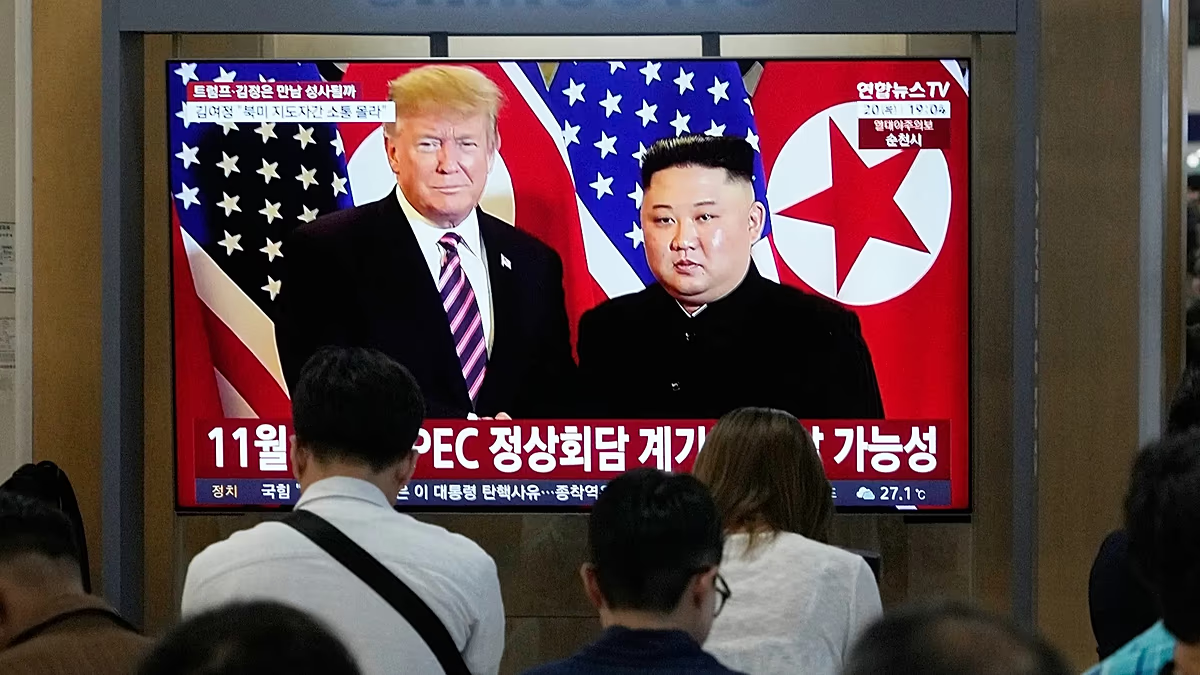
Seoul draws a boundary between alliance and war.
Seoul, South Korea.
South Korean President Lee Jae-myung has ruled out deploying troops to the Middle East in any capacity that would involve his country in the war with Iran, establishing a clear limit on military cooperation with Washington. Speaking at a presidential press conference on September 18, Lee confirmed that Seoul would not send combat forces or military assets intended to participate in the conflict, despite pressure from US President Donald Trump. However, the government remains prepared to undertake limited operations to protect South Korean merchant vessels, oil transportation routes and citizens. The distinction reflects Seoul’s attempt to preserve its alliance with Washington without becoming a participant in another regional war.
The decision follows American requests for greater allied involvement in securing maritime routes affected by the conflict. South Korea depends heavily on imported energy, making disruptions around the Strait of Hormuz particularly consequential for its economy. Lee acknowledged the need to safeguard commercial navigation but emphasized that protective operations must remain separate from direct military intervention. His government is examining whether to expand the activities of the Cheonghae naval unit, which already conducts antipiracy operations in the Gulf of Aden.
The disagreement has introduced additional tension into the longstanding security relationship between Seoul and Washington. In August, Trump announced reductions in joint military exercises with South Korea, describing the drills as costly and counterproductive to relations with North Korea. He also publicly criticized Seoul’s refusal to participate in military operations against Iran. These developments illustrate differences between the allies over the geographical scope of their military cooperation.
Nevertheless, Lee is seeking to maintain diplomatic engagement with Washington on another critical security issue. He revealed that South Korea is conducting preliminary coordination to facilitate a possible meeting between Trump and North Korean leader Kim Jong-un. Although organizing such an encounter remains difficult, the South Korean president indicated that diplomatic efforts would continue. No summit has been confirmed, and Pyongyang has offered little indication that negotiations are imminent.
North Korea has responded to the regional security environment with renewed warnings. Kim Yo-jong, the North Korean leader’s influential sister, condemned American military activities and reiterated Pyongyang’s commitment to strengthening its nuclear deterrent. Her statements underscore the difficulties facing any attempt to revive negotiations while military tensions persist on the Korean Peninsula.
Seoul’s position reveals a distinction increasingly relevant to international security arrangements. Military alliances establish obligations and mechanisms for cooperation, but they do not necessarily require participating governments to support every operation undertaken by their partners. South Korea must balance the protection of maritime commerce, its defense relationship with the United States and its immediate security responsibilities on the Korean Peninsula.
Lee’s announcement therefore establishes two separate priorities: avoiding direct involvement in the Middle Eastern conflict while maintaining defensive cooperation and pursuing dialogue over North Korea. Whether Washington accepts that distinction without further disagreements remains an open diplomatic question.
Phoenix24: periodismo sin fronteras. / Phoenix24: journalism without borders.