

 Phoenix 24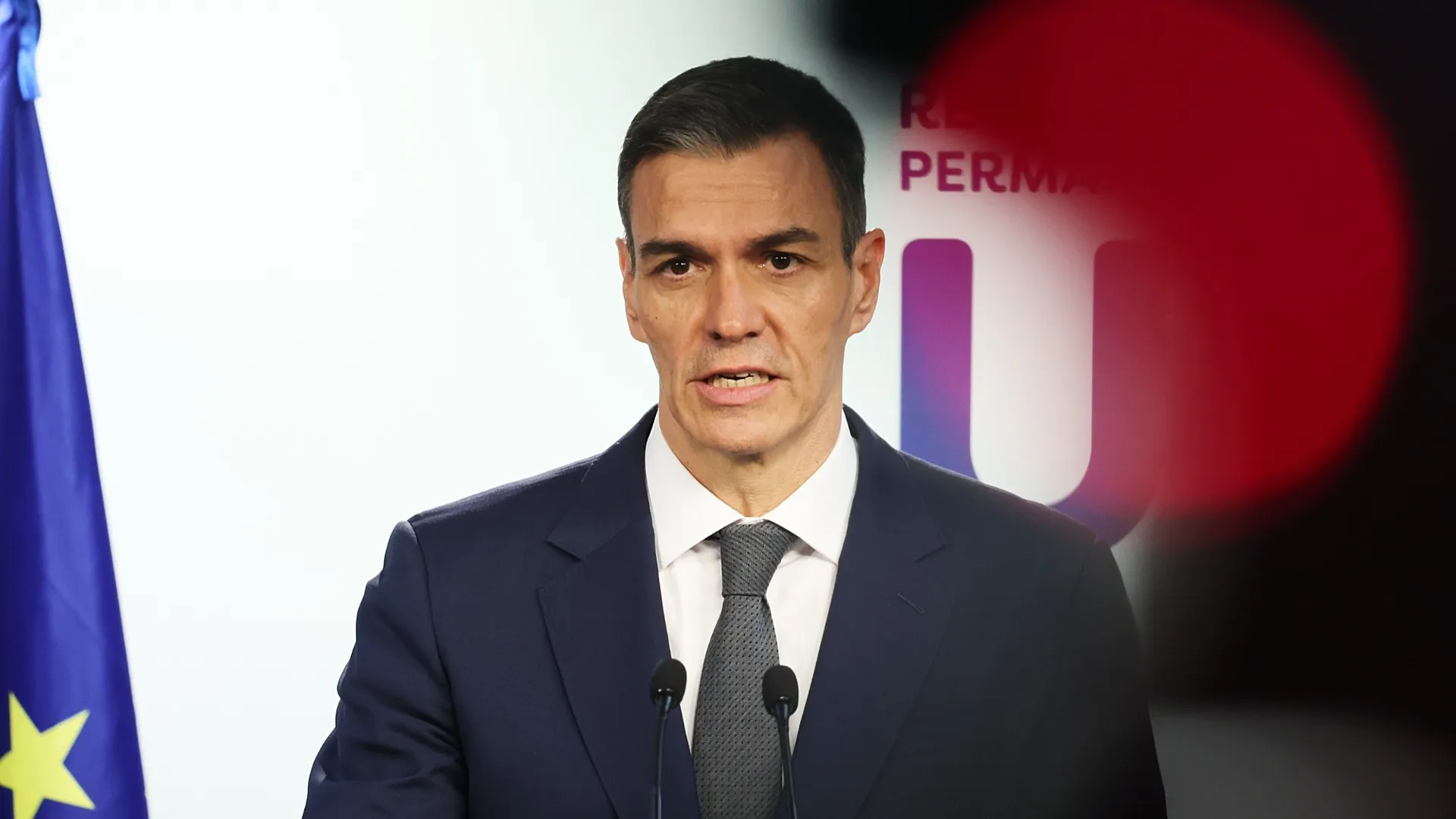
Madrid is no longer speaking in footnotes.
Brussels, February 2026.
Spain’s condemnation of the joint United States and Israeli strikes on Iran was not just another call for de-escalation inside a crowded European news cycle. It marked a sharper diplomatic posture that reflects a wider reordering in Madrid’s foreign policy language, one that increasingly combines legal framing, strategic autonomy, and public political signaling. While many governments in Europe emphasized restraint, civilian protection, and respect for international law in general terms, Spain moved faster into explicit criticism of the military action itself, making its position stand out within the European response.
The distinction matters because wording is policy in moments of high volatility. Reporting indicates that Prime Minister Pedro Sánchez rejected what he described as a unilateral military action by the United States and Israel, warning that it escalates tensions and contributes to a more hostile and uncertain international order. That formulation does two things at once. It rejects the strike on procedural and strategic grounds, and it places Spain’s reaction within a broader critique of how force is being used to shape regional outcomes without a stabilizing diplomatic framework.
At the same time, Madrid’s position is not reducible to alignment with Tehran or to a simplistic anti-Western reflex. The same reporting notes that Sánchez also condemned the Iranian government and the Islamic Revolutionary Guard Corps, while calling for immediate de-escalation and full respect for international law. This dual framing is central to understanding the shift. Spain is not trying to replace one camp narrative with another. It is trying to claim a space from which it can criticize military escalation, reject Iranian repression, and still defend multilateral legality as the core language of legitimacy.
What has been identified as a broader change in Spanish foreign policy has been visible for some time, but this crisis gives it a sharper outline. Spain has increasingly positioned itself as one of the more outspoken European voices on Washington’s external posture, on Israel’s war in Gaza, and on the repression of anti-government protests in Iran. In practical terms, this has meant a willingness to use stronger public language where other capitals often prefer diplomatic ambiguity. In strategic terms, it suggests Madrid is seeking a more autonomous profile inside Europe, one defined less by reflexive bloc discipline and more by an attempt to shape the moral and legal terms of debate.
That repositioning is also tied to how Spain is trying to project influence in the Arab world and the Gulf. Madrid has made efforts to build ties with Arab states, including high-level participation in regional summits and a more visible diplomatic presence in conversations around Middle East peace and crisis management. This does not automatically make Spain a decisive power broker, but it does help explain why its rhetoric has become more assertive. If Madrid wants to be treated as a credible interlocutor beyond Europe, it cannot appear to outsource its voice every time a major security crisis erupts.
The domestic political dimension should not be ignored either. Foreign policy statements in moments like this are read by multiple audiences at once: allies, rivals, markets, diasporas, and voters. A government that frames a strike as unilateral and destabilizing is not only signaling to international actors. It is also communicating to domestic constituencies that legal norms and diplomatic process remain the preferred instruments of statecraft. In a polarized information environment, that language can function as both external positioning and internal legitimacy management, especially when the conflict involves nuclear risk, regional war spillover, and energy insecurity.
Within Europe, Spain’s tone highlights a widening tactical gap rather than a full strategic rupture. Other European leaders, including top EU officials and France’s president, also described the situation as deeply concerning and warned against further escalation, while emphasizing the protection of civilians and the importance of international law. The difference is that Spain’s message more directly named and rejected the action by Washington and Israel, instead of staying primarily within the language of generalized concern. This nuance may look semantic, but in crisis diplomacy semantic differences often reveal where future coalitions, objections, or mediation roles may emerge.
There is also a structural reason this matters now. The current Middle East escalation is forcing European states to clarify whether their foreign policy vocabulary still has independent strategic content, or whether it functions mainly as post-facto damage control after military decisions taken elsewhere. Spain’s response suggests an effort to resist that drift. By explicitly condemning the strike while also condemning Iranian conduct, Madrid is attempting to preserve a rules-based frame without collapsing into selective legalism. That is a difficult balance, and it invites criticism from all sides, but it also gives Spain a clearer diplomatic identity than the standard formula of concern without attribution.
The deeper pattern is not simply that Spain spoke more harshly than some of its partners. It is that Madrid appears increasingly willing to convert moral language into geopolitical positioning, especially in conflicts where Western alliances, regional legitimacy, and multilateral institutions are under simultaneous strain. Whether this strengthens Spain’s influence or isolates it inside key negotiations will depend on what follows: consular management, coalition building, diplomatic outreach, and consistency across future crises. For now, the signal is clear. Spain is trying to be read not as a secondary echo within Europe, but as a state with an increasingly defined voice in the argument over how order is defended and who gets to define legality under pressure.
Every silence speaks. / Cada silencio habla.